Temperature20 – 24 °C
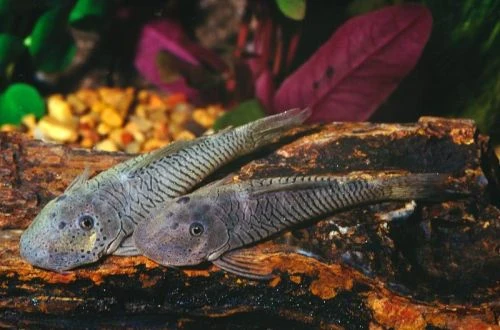
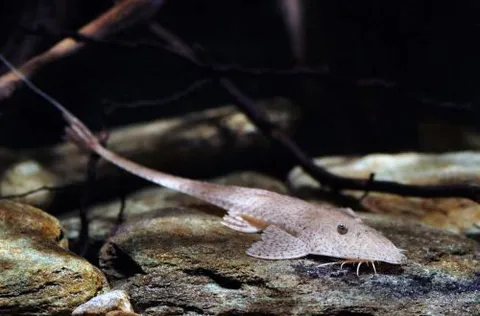
The "Striped Bulldog Pleco" catfish, scientifically known as Chaetostoma formosae, is a member of the armored catfish family (Loricariidae). Keeping this fish presents certain challenges, as it has strict requirements for both diet and living conditions. Therefore, this fish is not recommended for inexperienced aquarists.
Adult males of this species reach a length of 9–10 cm, while females remain somewhat smaller, not exceeding 7 cm. The catfish is characterized by an elongated, slightly flattened body and a large head, on the underside of which is a suckermouth. This mouth structure allows the fish to firmly attach to surfaces, resisting strong currents, and effectively scrape off algae. The first rays of the fins are thickened and modified into sharp spines. The body is covered with rigid plates, each studded with small spines. The coloration is usually gray with dark stripes running along the plate joints, and a pattern of dots can be seen on the head.
The natural habitat of the "Striped Bulldog Pleco" extends across South America. It is found in the upper reaches of the Orinoco River basin, including the Meta (río Meta) and Guaviare (río Guaviare) river systems, which flow through eastern Colombia. These fish prefer to live in fast-flowing streams and rivers. Their typical environment consists of a rocky riverbed with boulders, often covered with a layer of algae. Aquatic vegetation is usually absent in such biotopes. The water here is semi-transparent, and its hydrochemical composition can undergo significant fluctuations throughout the day due to abundant tropical downpours.
The fish is known for its peaceful nature, and although it tends to occupy certain territories, no aggression is observed in its behavior. Nevertheless, selecting tank mates can be quite challenging, as only a limited number of fish species can comfortably exist in such strong current conditions. Suitable tank mates include some related species from the armored catfish family, as well as loaches.
For keeping 2–3 individuals, the optimal aquarium volume starts from 100 liters. Successful keeping of the "Striped Bulldog Pleco" is possible only in very clean water, saturated with dissolved oxygen. A powerful filtration system is recommended, capable of providing at least 10 full turnovers of the aquarium volume per hour. This means that for a 100-liter tank, a filter that pumps more than 1000 liters of water per hour is necessary. Such filters will also create a strong internal current, which is a perfectly acceptable condition for this species of catfish. Given these turbulent conditions, aquarium decoration is limited to using large substrate of rocks and boulders, as well as massive natural snags, whose surfaces serve as an excellent place for algae growth. Bright lighting further stimulates their development. To add more variety to the internal landscape, several artificial plants can also be added.
In natural conditions, these fish feed on algae and microorganisms, such as invertebrates and insect larvae, that live among the algae. In a home aquarium, their diet should be as close to natural as possible. Unlike other herbivorous catfish species, the "Striped Bulldog Pleco" cannot subsist solely on pieces of green vegetables or fruits as a primary food source. The presence of fresh algae is mandatory, supplemented with frozen or live artemia, daphnia, bloodworms, and similar foods. If the growth of natural algae in the main aquarium is difficult, it may be necessary to set up a separate tank with powerful lighting, where ideal conditions for their active reproduction will be created. "Overgrown" decorative elements are then alternately moved to the main aquarium for cleaning by the fish, after which they are returned to the algae tank.
At the time of preparing this information, data on breeding this species in captivity was very scarce. It is likely that the breeding strategy involves the male taking on all care for the future offspring, guarding both the clutch and the fry until they begin to swim freely.
Most health problems in fish often arise from unsuitable keeping conditions. Maintaining a stable and comfortable habitat is a key factor for successful keeping. If symptoms of illness appear, the first step is to check the water quality. If deviations are found, it is important to take immediate measures to eliminate them. If the symptoms do not disappear or worsen, medicinal treatment may be required.
When selecting individuals, attention should be paid to the fish's activity: a healthy catfish should firmly attach to surfaces, not lie motionless on its side or be sluggish. It is important to inspect the skin for the absence of ulcers, white spots, fin damage, or signs of emaciation, where the fish's belly appears sunken. It is recommended to purchase specimens that show interest in food and actively explore the bottom of the aquarium. Avoid buying fish from communal tanks where dead individuals or fish with visible symptoms of disease have been observed.
The essentials: size, tank volume, water parameters and care
An adult reaches 10 cm in length. Plan the tank around the maximum size: the fish quickly outgrows a cramped setup.
The recommended volume is 100 L. A smaller tank speeds up nitrate build-up and raises stress levels.
Temperature 20–24 °C, pH 6.5–7.8, hardness 8–26 dGH. Stability matters more than exact values: sudden swings are harder on the fish than a small deviation from the ideal.
Around 10 years when kept properly. Lifespan depends directly on tank volume, water quality and a varied diet.
Temperament: peaceful (regular). Keep this in mind when choosing tank mates.
Recommended setup: both solitary and in group (flexible). Ignoring this is a common cause of stress and disease.
Diet type: plant-based with meat additives. Feed small portions that are finished within a couple of minutes — overfeeding does more harm than underfeeding.
The scientific name of the species is Chaetostoma formosae, family Armored Catfishes (Loricariidae).
The water suits 196 of 208 plants in the catalogue — the easiest ones are shown first.
Afzelius's AnubiasAnacharisAnubiasBrazilian PennywortDwarf CloverDwarf CloverDwarf HygrophilaDwarf SagittariaDwarf ValGuppy GrassHornwortJava FernJava MossMoneywortMud SwordNarrow Leaf AnacharisNarrow-leaf CloverStringy MossSüsswassertangTaiwan MossTape GrassTemple PlantUssuri WatermilfoilWater Wisteria
Matched by family, categories and overlapping keeping conditions
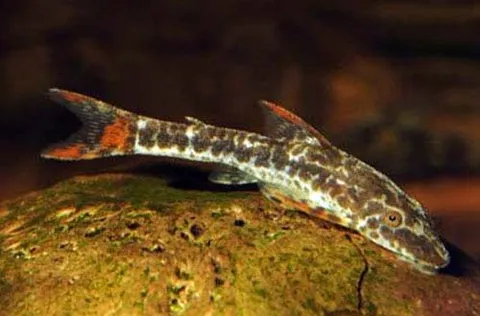
Parotocinclus maculicauda
Parotocinclus maculicauda, known as the Red-finned Parotocinclus, belongs to the family Loricariidae, which includes the Armored Catfishes. This fish is a native of South America, found in the coastal river systems of…
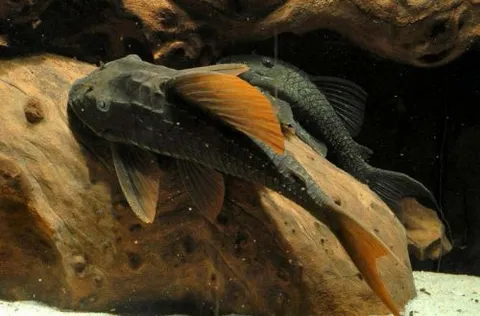
Hypostomus cochliodon
Hypostomus cochliodon, known as the Cochliodon Pleco, is a member of the family Loricariidae, or armored catfish. This catfish originates from the waters of South America, specifically found in the large river basins of…
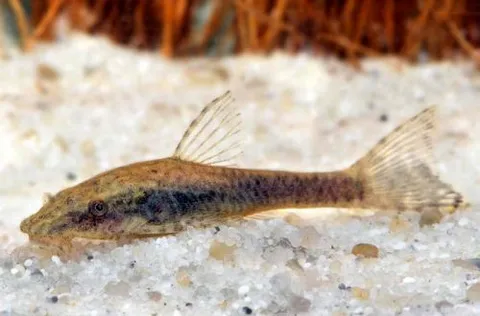
Otothyropsis piribebuy
Otothyropsis piribebuy, known as Otocinclus negros (formerly Otocinclus sp. "Negros"), belongs to the family Loricariidae, which includes armored catfishes. The native habitat of this small catfish is the waters of…
Pseudohemiodon laticeps
Pseudohemiodon laticeps, known as the Narrow-headed Catfish, is a member of the armored catfish family (Loricariidae). Its unusual appearance combined with its unpretentious nature makes this catfish highly desirable…