Temperature22 – 28 °C
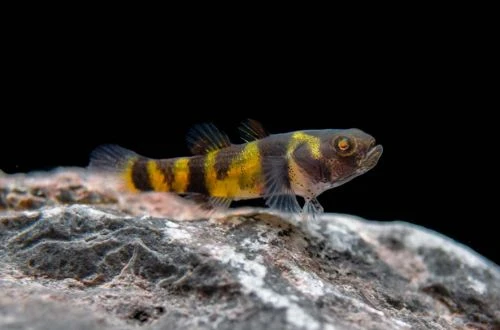
The fish Brachygobius xanthomelas, known as the Brachygobius goby, belongs to the family Gobiidae (Gobies). Its native habitat is Southeast Asia, specifically the marshy waters in southern Thailand and Malaysia, located on the Malay Peninsula. These gobies make their home in tropical swamps, shallow backwaters, and forest streams.
Adults of these gobies reach a length of only about 2 centimeters. Their body has a light coloration with various shades of yellow or orange. The pattern on the body consists of dark spots and irregular streaks. There are several species that are strikingly similar to each other in both coloration and body structure. Their differences often come down only to the number of scales in a row from head to tail. All these similar fish can inhabit very similar biotopes, so for the average aquarist, precise identification of the species status is often not critically important.
The species is known from Peninsular Malaysia and southern Thailand, as well as the island of Bangka. Typical habitats for these gobies are shallow bodies of water where riparian vegetation grows lushly along the edges, and thickets of Cryptocoryne and Barclaya longifolia are found in the water. The bottom is usually covered with silty substrate, on which layers of fallen leaves and submerged snags lie. The water acquires a rich brown color due to the high concentration of tannins, which are formed during the decomposition of plant organic matter. It is important to note that, unlike its relatives, such as the bumblebee goby, Brachygobius is an exclusively freshwater species and cannot live in brackish water.
Males of these gobies tend to be territorial, so to maintain harmony in the aquarium, it is recommended to keep a group of 6 or more individuals. This approach helps distribute potential aggression among a larger number of fish, significantly reducing the stress on each individual inhabitant. When kept in a group, Brachygobius display their natural behavior, showing activity and moderate 'grumpiness' towards each other, whereas when alone, they can become overly timid. They get along well with peaceful fish of comparable size. When choosing tank mates, it is preferable to select species that inhabit the water column or near the surface.
For a group of 6 fish, an optimal aquarium size is considered to be 40 liters or more. When setting up the tank, it is recommended to use a soft substrate and a moderate amount of aquatic plants. It is crucial to provide many shelters, spaced approximately equally from each other, so that the Brachygobius gobies can find refuge from their conspecifics. Such shelters can be created from natural snags, tree bark, large leaves, or artificial decorative elements. These fish have high demands regarding water parameters. Experienced aquarists maintain very soft, slightly acidic water, rich in tannins. Tannins can be added to the aquarium as a solution or they will form naturally from decomposing leaves and bark. Long-term keeping requires stable water composition. During regular aquarium maintenance, especially during partial water changes, it is necessary to carefully monitor pH and GH values. Gobies do not tolerate strong currents well. Usually, water movement in the aquarium is caused by the filtration system. In small tanks, a simple air-lift filter can be an excellent alternative. As for feeding, these gobies are considered quite selective. Their diet should be based on high-protein foods, such as dried, fresh, or live bloodworms, Artemia, Daphnia, and other similar feeds.
Gobies show selectivity in their food preferences. Their diet should consist primarily of protein-rich foods. These include dried, fresh, or live bloodworms, Artemia, Daphnia, and other similar foods.
Breeding in an aquarium is possible but is considered a complex process. Spawning occurs in shelters, such as ceramic tubes, flower pots, or shells. The male chooses a spot, actively guards it, and cares for the clutch, which the female attaches to the inner walls of the shelter. Stimulation for spawning often comes from maintaining high water quality and the presence of suitable substrates. Hatched fry require very fine starter food, such as infusoria or Artemia nauplii.
The species is sensitive to water quality and stress levels, which can provoke the development of infections under unfavorable conditions. The most common are ichthyophthiriasis (white spots on the body) and various fungal infections. Fish can also suffer from bacterial infections, which often arise as secondary diseases against a background of weakened immunity or parasitic invasions. Prevention involves maintaining stable environmental parameters, regular water changes, and providing quality nutrition.
When purchasing, it is important to assess the overall condition of the individuals, as fish often arrive for sale emaciated after transport. Healthy fish should show activity, have bright coloration, and have no visible damage, spots, or signs of emaciation. In the store, pay attention to their behavior: fish should be curious and interested in their surroundings, not appear apathetic or constantly hiding. It is recommended to clarify what type of food the fish are accustomed to, as they may refuse dry mixes.
The essentials: size, tank volume, water parameters and care
An adult reaches 2 cm in length. Plan the tank around the maximum size: the fish quickly outgrows a cramped setup.
The recommended volume is 40 L. A smaller tank speeds up nitrate build-up and raises stress levels.
Temperature 22–28 °C, pH 7–8, hardness 8–20 dGH. Stability matters more than exact values: sudden swings are harder on the fish than a small deviation from the ideal.
Around 3 years when kept properly. Lifespan depends directly on tank volume, water quality and a varied diet.
Temperament: semi-peaceful (including aggression during spawning / intraspecific conflicts). Keep this in mind when choosing tank mates.
Recommended setup: medium group (6–8 individuals). Ignoring this is a common cause of stress and disease.
Diet type: high protein (predominantly meat). Feed small portions that are finished within a couple of minutes — overfeeding does more harm than underfeeding.
The scientific name of the species is Brachygobius xanthomelas, family Gobiidae.
The water suits 114 of 208 plants in the catalogue — the easiest ones are shown first.
African Onion PlantAfzelius's AnubiasAmazon FrogbitAmazon SwordAnacharisAnubiasArrowhead CryptDwarf CloverDwarf CloverDwarf HygrophilaDwarf SagittariaDwarf ValGuppy GrassHornwortJava MossMoneywortMud SwordNair's LagenandraNarrow Leaf AnacharisNarrow-leaf CloverStringy MossTaiwan MossTape GrassUssuri Watermilfoil
Matched by family, categories and overlapping keeping conditions
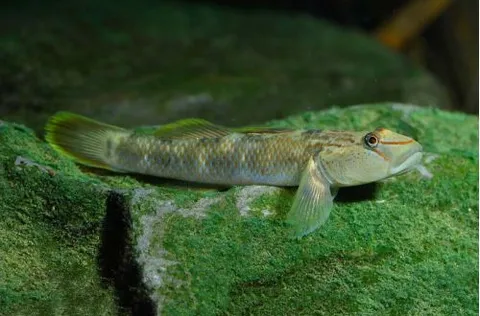
Rhinogobius nantaiensis
The Taiwan Goby, known scientifically as Rhinogobius nantaiensis, belongs to the Gobiidae family. As its name suggests, this species inhabits the island of Taiwan, located 180 km east of the Chinese coast. Its natural…
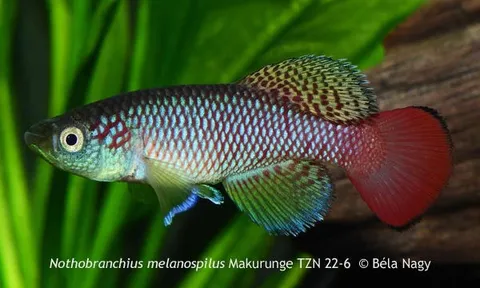
Nothobranchius melanospilus
The fish, known scientifically as Nothobranchius melanospilus, or the Black-spotted Nothobranchius, belongs to the family Nothobranchiidae, which unites all Nothobranchius species.
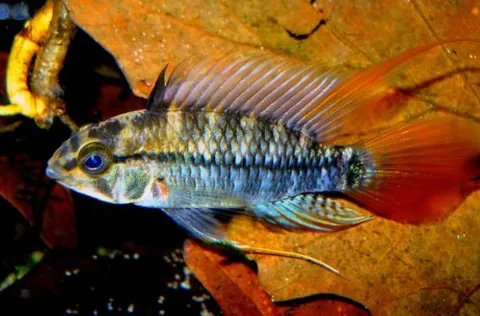
Apistogramma eunotus
The High-fin Apistogramma (Apistogramma eunotus), a representative of the Cichlidae family, is one of the popular South American cichlids. Its keeping does not present particular difficulties for experienced aquarists,…
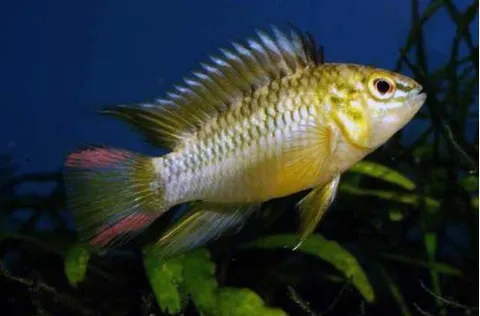
Apistogramma hoignei
Apistogramma hoignei, known as Hongslo's Dwarf Cichlid, belongs to the Cichlidae family. This is an energetic fish, especially the males, which are distinguished by their bright coloration. Experienced aquarists usually…