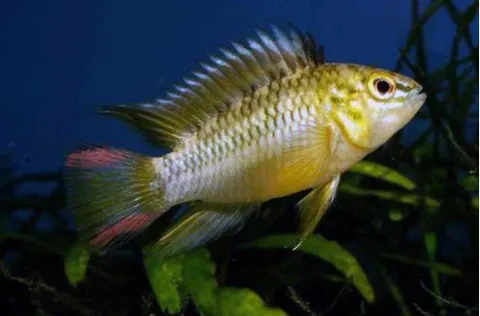
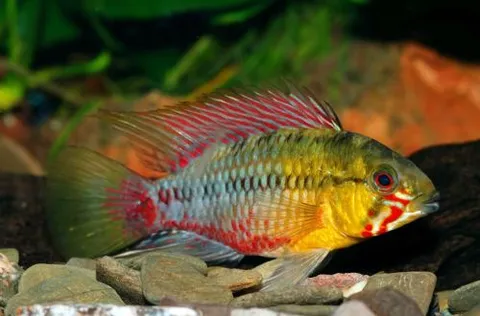
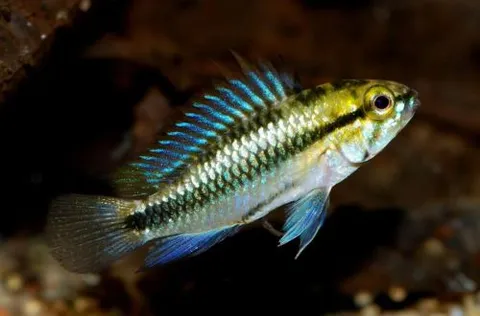
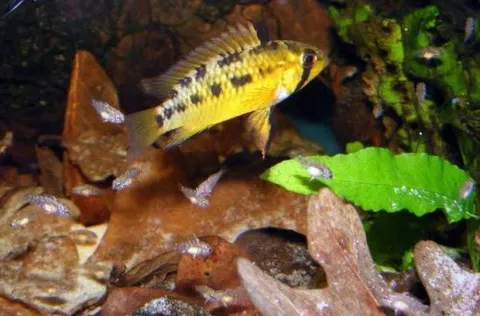
For keeping a pair of these fish, an aquarium of at least 40 liters will be required. It is important to decorate it in such a way as to create conditions that closely resemble their natural habitat. It is recommended to use a soft substrate, such as sand, and to add many snags and live or artificial plants. Lighting should be subdued. In addition, it is necessary to provide a sufficient number of shelters where the fish can find refuge, which is especially important during the spawning period when the male may actively pursue the female. Experienced aquarists often add dried leaves from certain trees. During decomposition, they release tannins, which acidify the water and color it a characteristic brown, helping to recreate the hydrochemical composition of the natural waters where Apistogramma eunotus lives. For successful and long-term keeping of these cichlids, maintaining stable water parameters is key: temperature, hydrochemical composition, and low concentrations of nitrogen cycle products (ammonia, nitrites, nitrates). This requires regular procedures: weekly partial water changes, timely removal of organic waste (excrement, food remnants, biofilm), and monitoring of equipment condition. It is also critically important to regularly check water parameters. The filtration system plays an important, and perhaps decisive, role. Before choosing a specific filter model, it is advisable to consult with a specialist who can help select a suitable option based on the aquarium volume and the number of inhabitants.