Temperature23 – 29 °C
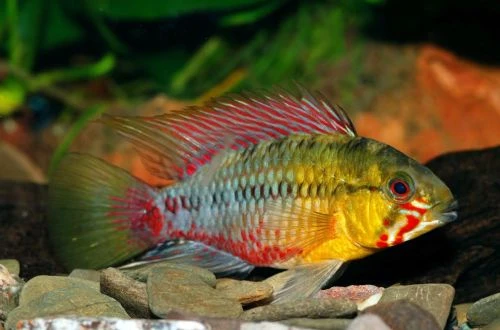
Apistogramma hongsloi, known as Hongslo's Dwarf Cichlid, belongs to the Cichlidae family. It is a beautiful and vibrant fish, relatively easy to care for, but characterized by complex intraspecific relationships. Previously, several subspecies were supplied under this name, which have now largely interbred, forming hybrid offspring, although their external differences are minimal.
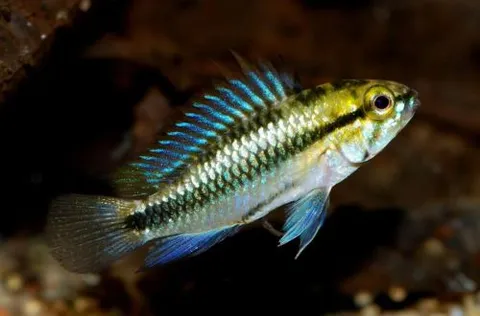
Adult males reach a length of 6 cm, and females up to 4.5 cm. The fish's coloration predominantly consists of red and yellow hues, with a dark stripe running along the lateral line. Males typically display more saturated and brighter colors compared to females.
Its natural habitat is in South America, within modern-day Colombia and Venezuela. This species is found in the river systems of the Vichada (Rio Vichada) and Meta (Rio Meta), as well as downstream after their confluence with the Orinoco. The fish prefers to inhabit small tributaries with slow-moving water and calm pools.
Apistogramma hongsloi coexists well with other non-aggressive species of comparable size. Within its own species, relationships are based on the dominance of an alpha male. It is recommended to keep these fish in pairs (male/female) or in a harem format.
For keeping a single pair of fish, an aquarium of at least 40 liters will be required. Hongslo's Dwarf Cichlid does not have strict requirements for decor and can thrive in various conditions, provided that suitable water chemistry is maintained. Nevertheless, using decorative elements that mimic its natural habitat will be beneficial. These can include a sandy substrate, dense plantings of shade-loving plants, and branched driftwood creating secluded spots. Lighting should be subdued. In natural waters, the bottom is often covered with plant debris and fallen leaves. Dry oak leaves, pre-soaked to sink, can also be added to the aquarium. Indian almond leaves are most effective in this regard. As they decompose, the leaves release tannins, staining the water a tea-like hue, which is characteristic of the species' habitat, and also serve as an important food source for fry. An important condition for successful keeping is maintaining high water quality. This requires an efficient filtration system, regular cleaning of the aquarium from organic waste, and weekly water changes of 10–15% with fresh water. It is important to avoid creating a strong current when selecting and placing the filter.
Apistogramma hongsloi is a carnivorous species. In the wild, its diet consists mainly of benthic invertebrates. However, in the aquarium, these fish adapt well to dry foods. For full development, it is recommended to diversify their diet with live or frozen foods such as Artemia, bloodworms, or Daphnia.
During spawning, males become overly aggressive, so for breeding, it is desirable to use a separate or very spacious aquarium to avoid conflicts with other inhabitants. The female lays eggs in cracks or hollows of decorations and remains near the clutch to protect it. She continues to care for the offspring even after the fry hatch. After spawning, the male is returned to the community tank.
The main cause of most diseases in these fish is unsuitable keeping conditions and poor-quality nutrition. If initial symptoms are observed, it is first necessary to check water parameters and the concentration of dangerous substances such as ammonia, nitrites, and nitrates. If the indicators deviate from the norm, they should be brought back into order, and only then should treatment begin.
When selecting individuals, pay attention to the fish's activity and the cleanliness of their skin. Healthy fish should show curiosity, have vibrant coloration, clean fins without signs of erosion or white film, and tightly closed gill covers. Avoid purchasing fish with sunken bellies, signs of emaciation, or unnatural behavior, such as constantly hovering near the surface or attempting to rub against the substrate and decorations. In the store, it is advisable to clarify the water parameters in which the fish are kept, as an abrupt change in water chemistry can be a stressful factor for the species.
The essentials: size, tank volume, water parameters and care
An adult reaches 4–6 cm in length. Plan the tank around the maximum size: the fish quickly outgrows a cramped setup.
The recommended volume is 40 L. A smaller tank speeds up nitrate build-up and raises stress levels.
Temperature 23–29 °C, pH 5.5–7, hardness 1–15 dGH. Stability matters more than exact values: sudden swings are harder on the fish than a small deviation from the ideal.
Around 4 years when kept properly. Lifespan depends directly on tank volume, water quality and a varied diet.
Temperament: semi-peaceful (including aggression during spawning / intraspecific conflicts). Keep this in mind when choosing tank mates.
Recommended setup: harem (1 male and several females). Ignoring this is a common cause of stress and disease.
Diet type: sinking (any). Feed small portions that are finished within a couple of minutes — overfeeding does more harm than underfeeding.
The scientific name of the species is Apistogramma hongsloi, family Cichlids (Cichlidae).
The water suits 198 of 208 plants in the catalogue — the easiest ones are shown first.
Afzelius's AnubiasAnacharisAnubiasBrazilian PennywortDwarf CloverDwarf CloverDwarf HygrophilaDwarf SagittariaDwarf ValGuppy GrassHornwortJava FernJava MossMoneywortMud SwordNair's LagenandraNarrow Leaf AnacharisNarrow-leaf CloverStringy MossSüsswassertangTaiwan MossTape GrassTemple PlantUssuri Watermilfoil
Matched by family, categories and overlapping keeping conditions
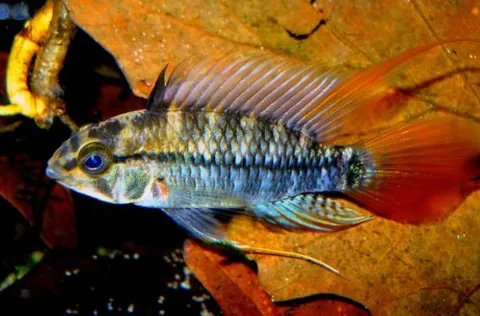
Apistogramma eunotus
The High-fin Apistogramma (Apistogramma eunotus), a representative of the Cichlidae family, is one of the popular South American cichlids. Its keeping does not present particular difficulties for experienced aquarists,…
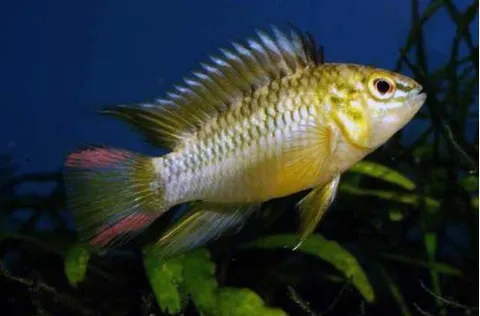
Apistogramma hoignei
Apistogramma hoignei, known as Hongslo's Dwarf Cichlid, belongs to the Cichlidae family. This is an energetic fish, especially the males, which are distinguished by their bright coloration. Experienced aquarists usually…
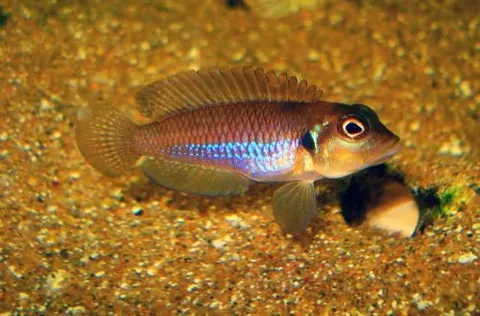
Lamprologus ocellatus
Lamprologus ocellatus, known as the Lamprologus ocellatus, belongs to the Cichlidae family. This fish is a miniature and vibrant creature, distinguished by its ease of care and successful breeding. With sufficient…
Apistogramma trifasciata
The Three-striped Apistogramma, or Apistogramma trifasciata by its scientific name, belongs to the Cichlidae family. These fish are suitable for experienced aquarists, as they are quite undemanding, breed easily, and…