Temperature20 – 26 °C
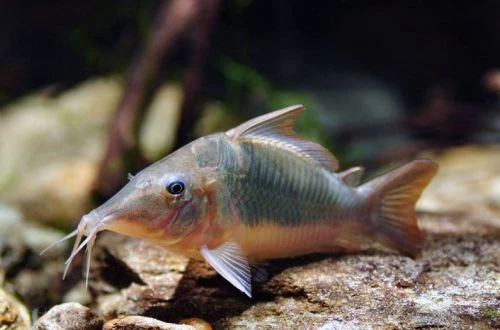
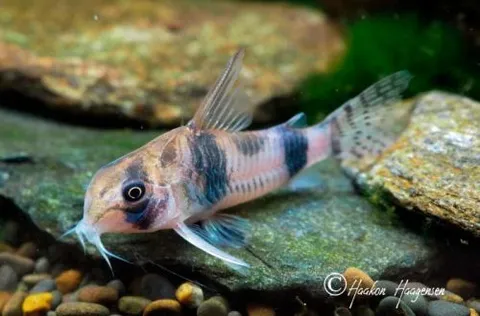
Brochis multiradiatus, also known as the Long-finned Corydoras (scientific name Corydoras multiradiatus), is a member of the Callichthyidae family. The second part of its scientific name comes from the Latin words “multi” (many) and “radiatus” (rayed), which refers to the characteristic large number of rays in the dorsal fin of this species.
These fish reach a length of about 10 cm as adults. Outwardly, they resemble their closest relative, the Emerald Brochis, but differ in having a slightly enlarged head and a more elongated mouth. Their body coloration can shimmer from orange to emerald-green hues, depending on the lighting conditions. Barbels are located near the mouth, which the catfish uses to search for food by sifting through the substrate. Sexual dimorphism is weakly expressed, and distinguishing males from females without special knowledge is quite difficult. One of the most striking features is the dorsal fin, which extends all the way to the tail and has 17–18 rays. For comparison, most other Corydoras typically have 6–8 rays.
Its natural habitat is the northwestern part of the Amazon River basin, covering the territories of modern Ecuador and Peru. These fish are found in numerous tributaries, streams, and backwaters, as well as in clusters of interconnected lakes.
This peaceful and calm species of catfish is compatible with most tropical fish. They can also coexist with aggressive neighbors if they are similar in size to Brochis. It is recommended to keep them in a group of 6–8 individuals. With fewer numbers or when kept alone, the catfish may become timid, constantly hide, and refuse food.
An aquarium of at least 240 liters is recommended for a group of these catfish. The decor can be chosen arbitrarily, based on the aquarist's preferences and the needs of other aquarium inhabitants. A key requirement is the presence of a soft sandy substrate to avoid damaging the fish's barbels. Brochis multiradiatus thrives in slightly acidic water with low carbonate hardness. Maintaining proper water quality is ensured by an effective filtration system, regular cleaning of the substrate from organic debris, and weekly replacement of 15–20% of the water volume with fresh water.
Brochis multiradiatus readily accepts all common types of dry, frozen, and live foods. An important condition is that the offered food must sink. A varied diet contributes to the overall well-being of the fish and favorably affects their appearance.
At the time of preparing this article, no reliable data on the successful breeding of Brochis multiradiatus in home aquariums could be found. These fish are sold either from fish farms or, less commonly, are caught from natural bodies of water.
The main cause of most diseases in these fish is unsuitable keeping conditions and poor-quality nutrition. If initial symptoms are observed, it is first necessary to check water parameters and the concentration of dangerous substances such as ammonia, nitrites, and nitrates. If the indicators deviate from the norm, they should be brought back into order, and only then should treatment begin.
When choosing Brochis multiradiatus in a store, pay attention to the activity of the fish: healthy individuals should swim in the bottom layer, actively exploring the substrate, and periodically rise to the surface for a gulp of air. Avoid specimens with damaged barbels, signs of fin erosion, white spots on the body, or sunken bellies. The fish should look well-fed, and its coloration should be clear and uniform. Since the species is schooling, purchase at least 6 individuals to reduce stress during adaptation. Carefully inspect the aquarium in the store for the absence of dead fish in the same tank, as any signs of infection in tankmates may indicate problems with the entire batch.
The essentials: size, tank volume, water parameters and care
An adult reaches 8–10 cm in length. Plan the tank around the maximum size: the fish quickly outgrows a cramped setup.
The recommended volume is 240 L. A smaller tank speeds up nitrate build-up and raises stress levels.
Temperature 20–26 °C, pH 6–7, hardness 2–12 dGH. Stability matters more than exact values: sudden swings are harder on the fish than a small deviation from the ideal.
Around 8 years when kept properly. Lifespan depends directly on tank volume, water quality and a varied diet.
Temperament: peaceful (regular). Keep this in mind when choosing tank mates.
Recommended setup: medium group (6–8 individuals). Ignoring this is a common cause of stress and disease.
Diet type: any (universal). Feed small portions that are finished within a couple of minutes — overfeeding does more harm than underfeeding.
The scientific name of the species is Corydoras multiradiatus, family Armored Catfish (Callichthyidae). It also appears in the literature as: Chaenothorax multiradiatus.
The water suits 197 of 208 plants in the catalogue — the easiest ones are shown first.
Afzelius's AnubiasAnacharisAnubiasBrazilian PennywortDwarf CloverDwarf CloverDwarf HygrophilaDwarf SagittariaDwarf ValGuppy GrassHornwortJava FernJava MossMoneywortMud SwordNair's LagenandraNarrow Leaf AnacharisNarrow-leaf CloverStringy MossSüsswassertangTaiwan MossTape GrassTemple PlantUssuri Watermilfoil
Matched by family, categories and overlapping keeping conditions
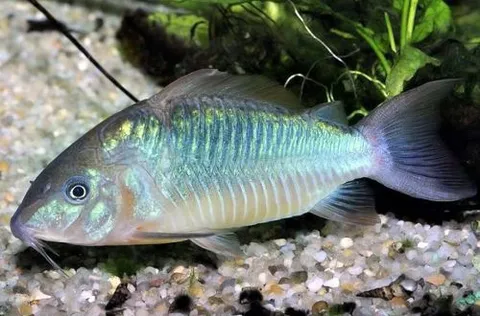
Corydoras britskii
Brochis britskii, also known as the Giant Corydoras or Giant Emerald Catfish, bears the scientific name Corydoras britskii and belongs to the family Callichthyidae, or Armored Catfish. It was named in honour of the…
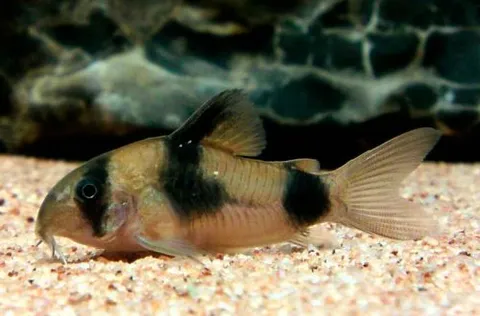
Corydoras weitzmani
The scientific name Corydoras weitzmani is given to Weitzman's Corydoras, belonging to the family Callichthyidae (armored catfish). This fish is named after Dr Stanley Weitzman, an American ichthyologist.
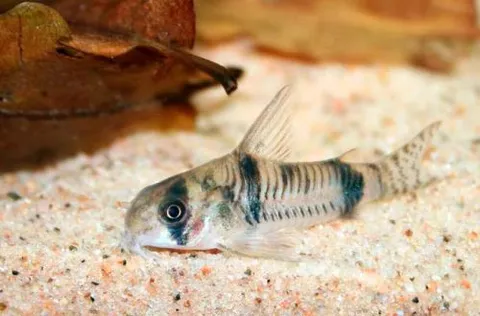
Corydoras reynoldsi
Corydoras reynoldsi, also known as the Bumblebee Corydoras, or by its scientific name Corydoras reynoldsi, belongs to the armored catfish family (Callichthyidae). The homeland of this catfish is South America, where it…
Corydoras tukano
Corydoras tukano, scientifically known as Corydoras tukano, belongs to the armored catfish family, Callichthyidae. This catfish received its name from the Tucano indigenous group, whose settlements are located in the…