Pantodontidae

Butterflyfish

Pantodon buchholzi

The butterflyfish, or Pantodon buchholzi, belongs to the family Pantodontidae and has a distinctly unusual appearance. Its peaceful nature and ease of care make it an excellent choice for aquarists looking to add something special to their collection. Despite being relatively inactive, this fish is capable of impressive jumps out of the water over several metres, so the tank must have a secure, tight-fitting lid.

Tank
from 80 L (21 gal)
Temperature
23 – 30 °C (73 – 86 °F)
Size in aquarium
12 cm (4.7 in)
Acidity
pH 6–7.5

Dangerous to small fish

Natural rangeRange on the map
  • Congo River Basin
  • West Africa area
  • Benin
  • Cameroon
  • Central African Republic
  • Democratic Republic of the Congo
  • Gabon
  • Nigeria
  • Republic of the Congo
  • Sierra Leone

Tank conditions

Plan the tank stocking
Temperature
23 – 30 °C (73 – 86 °F)
Water pH
Slightly acidic (6) – Neutral (7.5)
Water dH
Soft (5) – Hard (15)
Water salinity
no salt (freshwater)
Size in aquarium
12 cm (4.7 in)
Lifespan
5 years
Temperament
Semi-peaceful dangerous to smaller ones
Toward small fish
a risk to small fish
Required aquarium volume
from 80 L (21 gal)
Lighting
dimmed
Substrate
any (no restrictions)
Water flow
none or stagnant (no flow)
Swimming level
near the surface
Feeding
Meat / protein live, frozen, fresh
Keeping
Mixed solitary / pair / group
Jumping
high a tight-fitting lid is essential
  • Lifespan. A lifespan to expect under good care, not a measured value: it depends heavily on tank volume, water quality and diet — and for selectively bred forms, on their origin as well.
  • Toward small fish. Based on the Predators category in the catalog or the temperament in the species parameters. “A risk to small fish” means the species is not a predator by habit, yet will swallow any fish that fits in its mouth.
  • Required aquarium volume. This is a husbandry recommendation, not a measured value: the volume depends on the keeping mode (mixed (solitary / pair / group)), footprint, decor and tank mates.

Care and keeping

Description

The butterflyfish has a highly distinctive look. Viewed from above, it is easy to see why it bears its name. The enlarged pectoral fins resemble wings and serve two key functions: camouflage and assistance in jumping. The fish can remain still at the surface for long periods, disguised as a fallen dry leaf. When needed, a sharp movement of the broad tail allows it to leap out of the water over a considerable distance, either to hunt a passing insect or to escape a predator. Adults grow to about 12 cm long, but their large fins and tail make them appear more substantial. The body is grey with dark pigmentation throughout, and the fin rays appear as dotted lines.

Habitat

Pantodon buchholzi originates from regions of West Africa. It is found in modern countries including the Republic of the Congo, the Central African Republic, Chad, Nigeria, Sierra Leone, Niger, Gabon and others. The fish inhabits the basins of the Niger and Congo rivers, Lake Chad and the Ogooué River, preferring numerous lakes, swamps and slack waters of small rivers and streams where dense aquatic vegetation and fallen wood are abundant.

Behavior and Compatibility

The butterflyfish is twilight-active and relatively inactive, becoming mobile only to hunt surface insects or escape predators. It is a reasonably peaceful species, but may show aggression towards other fish that live at the surface. Any small fish that fits in its mouth will be eaten. It is incompatible with species that bite fins, such as barbs.

Care and Maintenance

Tank size depends on the number of inhabitants: for one or a pair, at least 80 L is recommended. The lower level can be decorated as desired, for example with dark substrate and plenty of wood. The surface zone should include some floating plants, but they should not cover the entire area. Open water surface must account for at least half the total surface area. Optimal water conditions are slightly acidic pH and low carbonate hardness. If desired, a few dried leaves can be added; as they break down they will enrich the water with tannins and give it a characteristic tea tint. Replace these leaves every two weeks or more often. Water movement should be minimal, which limits filter choice. Consult a specialist before buying equipment to find a model that combines high flow with minimal internal current. The basic equipment also includes a heater, air pump and light. Tank care consists of weekly water changes of 15–20% of the volume and regular cleaning of the substrate and glass.

Diet

This fish eats only meat foods, live or frozen. In the home aquarium it takes bloodworm, brine shrimp, small worms and various flying insects of suitable size, such as flies or mosquitoes. Feeding occurs only at the surface; any food that sinks will be ignored.

Breeding and Reproduction

Breeding this fish at home is challenging but possible. If other species are kept in the main tank, a separate breeding tank is needed. Fill it with water from the main tank. Use clusters of floating plants that need no bright light; substrate may be anything or absent. You will need a simple sponge air-lift filter and a heater. Natural light from the room is sufficient. Place a pair in the prepared tank. Over three weeks, gradually reduce the water volume to about half the original amount. By this point, water pH should be slightly acidic and temperature maintained at 26–28°C. Then over two to three days, add small portions of cool water to lower the temperature to 23°C. This mimics natural seasonal change from drought to rain. The female then spawns, laying up to a hundred eggs daily over several days. The eggs are lighter than water and rise to the surface immediately. Since parental care is weak, carefully transfer the eggs to a separate temporary container to prevent the parents eating them. When spawning ends, return both eggs and parents to their original places. Fry appear in three to four days and can only eat microscopic live food. The fry do not actively search for food, so you must deliver it to them with a pipette. Feeding the young is the main difficulty in breeding butterflyfish.

Diseases

Balanced feeding and proper tank conditions are the best prevention for disease in freshwater fish. If the first signs of illness appear—changes in colour or behaviour—first check and correct water parameters and quality if needed, then begin treatment.

How to choose

When choosing a butterflyfish, first observe its behaviour in the shop. A healthy fish should stay at the surface, showing interest in its surroundings. Avoid specimens that look thin, have damaged fins, cloudy eyes or unusual spots on the body. A key sign of vitality is active feeding response: ask the seller to feed the fish in your presence. If it ignores the food or seems lethargic, do not buy it. Be aware of these risks and characteristics: — butterflyfish are specialized predators and may refuse dry foods in the shop, preferring live or frozen foods; — during transport ensure adequate air, as the fish is very sensitive to water quality and oxygen levels; — damage to the body or fins may indicate recent fights with tank mates or poor keeping conditions, often leading to secondary bacterial infection after moving to a new tank.

Compatibility

There are no pair reviews for this species yet — check tankmates in the matcher.

All tankmates

Plants and this fish

Matching water does not mean the plant will stay intact.

Frequently asked questions

The essentials: size, tank volume, water parameters and care

How big does Butterflyfish get?

An adult reaches 12 cm in length. Plan the tank around the maximum size: the fish quickly outgrows a cramped setup.

What size aquarium does Butterflyfish need?

The recommended volume is 80 L. A smaller tank speeds up nitrate build-up and raises stress levels.

What water parameters does Butterflyfish need?

Temperature 23–30 °C, pH 6–7.5, hardness 5–15 dGH. Stability matters more than exact values: sudden swings are harder on the fish than a small deviation from the ideal.

How long does Butterflyfish live?

Around 5 years when kept properly. Lifespan depends directly on tank volume, water quality and a varied diet.

Is Butterflyfish aggressive?

Temperament: semi-peaceful (dangerous to smaller ones). Not a predatory species, but small fish that fit in its mouth will eventually be eaten.

How many Butterflyfish should be kept together?

Recommended setup: mixed (solitary / pair / group). Ignoring this is a common cause of stress and disease.

What does Butterflyfish eat?

Diet type: meat / protein (live, frozen, fresh). Feed small portions that are finished within a couple of minutes — overfeeding does more harm than underfeeding.

What is the scientific name of Butterflyfish?

The scientific name of the species is Pantodon buchholzi, family Pantodontidae. It also appears in the literature as: Pantodon buchholtzi.

Similar fishes

Matched by family, categories and overlapping keeping conditions

Black Knife Fish

Black Knife Fish

Xenomystus nigri

Notopteridae

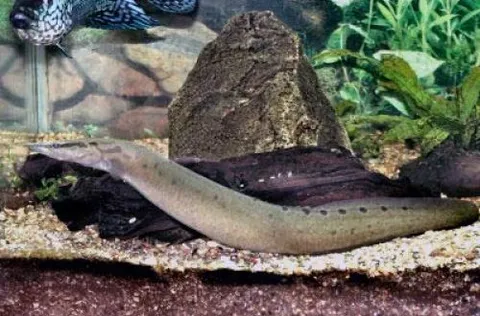
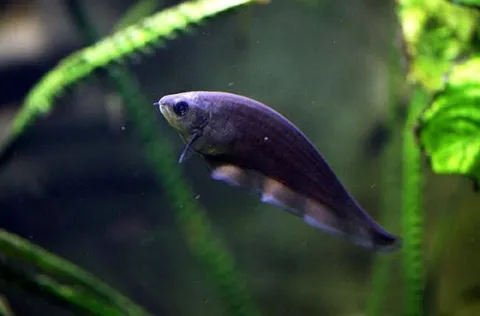
The African knife fish, scientifically known as Xenomystus nigri, belongs to the Notopteridae family. This species is notably hardy and can coexist well with many aquarium inhabitants of appropriate size. For novice…
Glass Knifefish

Glass Knifefish

Eigenmannia virescens

Sternopygidae

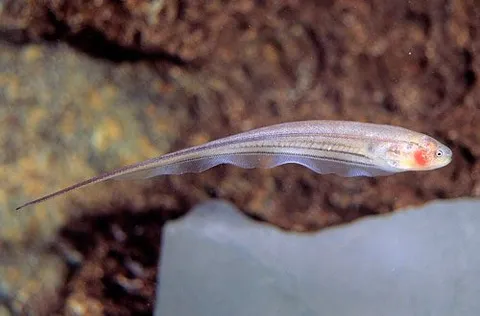
Eigenmannia virescens, known as the Glass Knifefish or Green Knifefish, belongs to the family Sternopygidae. Its name reflects its unusual body shape, resembling a knife blade or scalpel. With proper aquarium setup,…

Reedfish

Reedfish

Erpetoichthys calabaricus

Polypteridae (Bichirs)

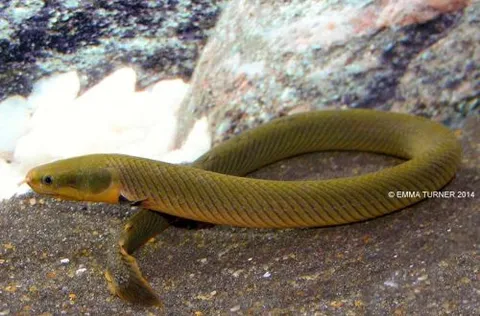
The scientific name Erpetoichthys calabaricus belongs to the family Polypteridae, known as the bichirs, and denotes the species known as the Reedfish or Ropefish. These amazing fish are the closest relatives of the…

Siamese Spiny Eel

Siamese Spiny Eel

Macrognathus siamensis

Spiny Eels (Mastacembelidae)

The Siamese spiny eel, scientifically known as Macrognathus siamensis, belongs to the family Mastacembelidae, or spiny eels, and is classified as an eel. It can be found in the wild in Southeast Asia, particularly in…

Other scientific names and conservation status

Other scientific names
Pantodon buchholtzi
Categories
Unusual
Conservation status
Least concernLC