Temperature15 – 25 °C
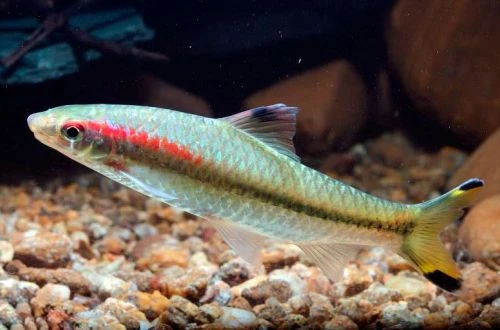
A representative of the carp family (Cyprinidae), the Chalakkudi Barb, known scientifically as Dawkinsia chalakkudiensis, only appeared in aquaristics in 2001, making it a relatively new species for hobbyists. It received its name from the Chalakudy River in the Indian state of Kerala, where it was first discovered. Keeping this species is considered not very difficult, however, its breeding poses certain challenges, and the choice of tank mates should be approached with particular care.
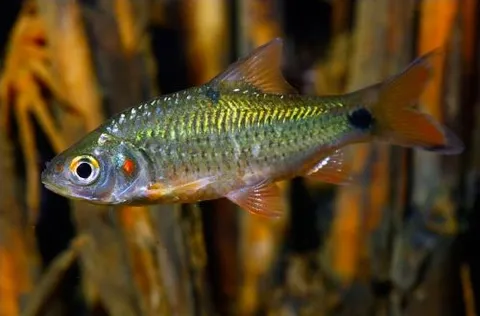
Adults of this species reach about 12 cm in length. Their body is characterized by a silvery hue, with a thin dark stripe running along the entire lateral line. The tips of the caudal and dorsal fins are adorned with black markings. Particularly noteworthy is a red line that starts near the eyes and extends to the middle of the body. Differences between sexes are indistinct. Males and females are practically indistinguishable, except that females are usually slightly larger and plumper, which becomes especially evident during spawning.
Its natural habitat is located in southern India, where it inhabits rivers such as the Chalakudy, Periyar, Pamba, and Achenkovil, flowing down the western slopes of the Western Ghats mountain range. Primarily, these fish are found in the middle reaches of rivers, preferring areas with rocky banks, combined with dense riparian vegetation and sand and gravel substrates.
This species is not particularly friendly towards other aquarium inhabitants. Relatively good compatibility is observed with fish of similar or slightly larger size, belonging to carps, loaches, characins, or some catfish species. It is recommended to keep them in a group of at least 6 individuals. With fewer numbers, a stronger individual may show aggression towards weaker ones, whereas in a large school, the fish's attention is dispersed.
The optimal aquarium volume for keeping a small group of these fish starts from 200 L. The most suitable decor will be one that maximally imitates their natural environment. An example could be placing large stones and boulders on a sandy substrate, as well as creating zones with dense aquatic vegetation along the edges of the tank. The Chalakkudi Barb, being an inhabitant of flowing mountain rivers, has specific requirements for keeping conditions. It does not tolerate the accumulation of organic waste (food remnants, excrement), requires high-quality, oxygen-rich water, and prefers moderate current. All these conditions can be provided by an efficient filtration system, supplemented with aeration. Furthermore, regular cleaning of the aquarium and weekly replacement of a significant portion of the water (at least 50% of the volume) with fresh water are extremely important. Attention should also be paid to equipment maintenance and maintaining stable pH and dGH parameters.
This species is omnivorous and readily accepts most common foods in an aquarium setting. Their diet can include dry flakes, pellets, as well as live or frozen foods such as Artemia, bloodworms, Daphnia, and others. Studies have shown that if astaxanthin is included in the composition of dry food, the fish's coloration becomes more intense and vibrant. Information about the presence of this component can be found on the product packaging.
The natural breeding season for these fish coincides with the rainy season, which serves as a powerful stimulus for spawning. Recreating these changing external conditions in a home aquarium presents significant difficulties. Currently, there are no recorded cases of successful breeding of Chalakkudi Barbs in artificial conditions.
In a balanced aquarium ecosystem that meets the needs of this species, diseases are rare. Most often, ailments are provoked by deteriorating environmental conditions, contact with already sick fish, or mechanical damage. If the fish shows clear signs of illness, medicinal treatment should be applied.
When choosing a Chalakkudi Barb, preference should be given to active individuals with bright coloration and clean scales. A healthy fish should show curiosity, swim confidently in the water column, and not show signs of apathy or emaciation. It is important to avoid specimens with sunken bellies, which may indicate prolonged stress or internal diseases, as well as fish that constantly hide in the corners of the aquarium. Upon inspection, it is necessary to thoroughly check the condition of the fins and skin. Signs of ill health include: — presence of white spots resembling salt grains or a powdery coating; — damaged, torn, or “nibbled” fin edges; — redness in the gill area or the presence of ulcers, spots, and unnatural slimy coating on the body; — cloudy eyes or their unnatural bulging. Since the species is schooling, it is recommended to purchase a group of 8 or more individuals simultaneously to minimize stress during adaptation. If the fish in the store appear sluggish, refuse food, or if individuals with obvious signs of disease are present in the same tank, you should refrain from purchasing.
The essentials: size, tank volume, water parameters and care
An adult reaches 10–12 cm in length. Plan the tank around the maximum size: the fish quickly outgrows a cramped setup.
The recommended volume is 200 L. A smaller tank speeds up nitrate build-up and raises stress levels.
Temperature 15–25 °C, pH 6.5–7.5, hardness 5–21 dGH. Stability matters more than exact values: sudden swings are harder on the fish than a small deviation from the ideal.
Around 4 years when kept properly. Lifespan depends directly on tank volume, water quality and a varied diet.
Temperament: semi-peaceful (including aggression during spawning / intraspecific conflicts). Keep this in mind when choosing tank mates.
Recommended setup: medium group (6–8 individuals). Ignoring this is a common cause of stress and disease.
Diet type: any (universal). Feed small portions that are finished within a couple of minutes — overfeeding does more harm than underfeeding.
The scientific name of the species is Dawkinsia chalakkudiensis, family Cyprinids (Cyprinidae). It also appears in the literature as: Dawkinsia chalakkudiensis, Puntius chalakkudiensis, Puntius chalakudaiensis.
The water suits 196 of 208 plants in the catalogue — the easiest ones are shown first.
Afzelius's AnubiasAnacharisAnubiasBrazilian PennywortDwarf CloverDwarf CloverDwarf HygrophilaDwarf SagittariaDwarf ValGuppy GrassHornwortJava FernJava MossMoneywortMud SwordNarrow Leaf AnacharisNarrow-leaf CloverStringy MossSüsswassertangTaiwan MossTape GrassTemple PlantUssuri WatermilfoilWater Wisteria
Matched by family, categories and overlapping keeping conditions
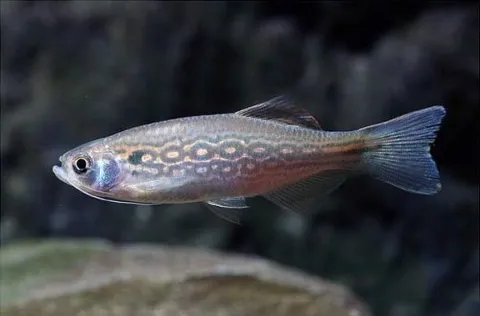
Danio dangila
Danio dangila, or Whiskered Danio (scientific name Danio dangila), belongs to the family Cyprinidae, known as carps. This fish stands out from other Danios due to its noticeably longer barbels. Its ease of care,…
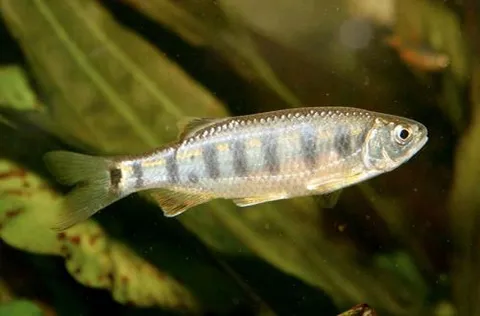
Opsarius dogarsinghi
The fish, known by the scientific name Opsarius dogarsinghi, or Dogarsingh's Baril, belongs to the Carp family (Cyprinidae). It received its name in honour of Sardar Dogar Singh, State Overseer of Manipur, India, who…
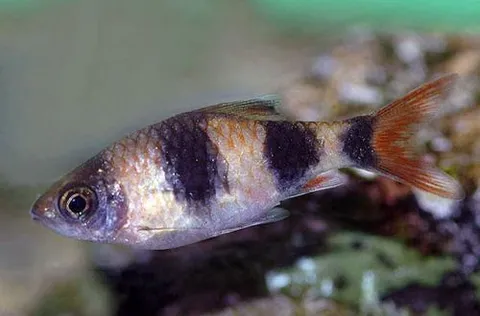
Dawkinsia arulius
The Arulius Barb, scientifically known as Dawkinsia arulius and belonging to the family Cyprinidae, does not impress with its bright coloration or unique body pattern. However, its lively activity and unpretentiousness…
Systomus rubripinnis
The Java Barb, scientifically known as Systomus rubripinnis, is a member of the Cyprinidae family. This rather large fish exhibits remarkable hardiness and relatively low maintenance requirements. It is rarely…