Temperature20 – 28 °C
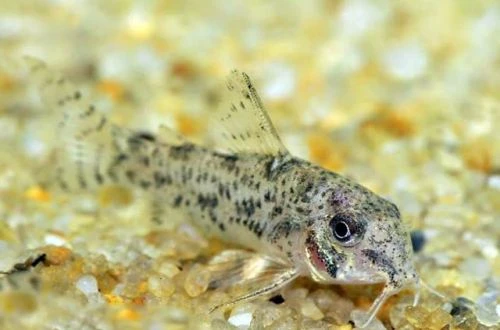
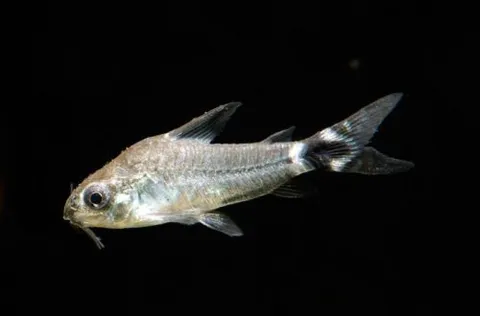
Corydoras cochui, known as Cochu's Corydoras or Dwarf Corydoras, belongs to the family Callichthyidae – Armored or Callichthyid Catfishes. The fish was named in honor of Fred Cochu, a major exporter of tropical fish. The homeland of this fish is central Brazil, a region of South America, where its natural habitat is located in the upper Araguaia River basin.
Adults of this species reach approximately 3 cm in length. Their main coloration consists of a gray background adorned with large black speckles. Their fins are translucent, with characteristic dotted stripes. The Dwarf Corydoras is a natural form of the Elegant Corydoras but has been recognized as a separate species. The main difference from the original species lies in the number of dark markings on the sides of the body: Corydoras cochui has 4–5, while the Elegant Corydoras has 2–3.
The species inhabits South America, in the upper Araguaia River basin in Brazil. The fish live in freshwater bodies with a tropical climate.
A peaceful schooling fish, showing the most activity in a group. It is recommended to keep at least 4–6 individuals for their comfort. They are compatible with most non-aggressive freshwater fish of a comparable size, as they lead a calm lifestyle and do not show territoriality.
Cochu's Corydoras, like other Corydoras catfish, do not require specific keeping conditions. On the contrary, they easily adapt to environments where other fish species already reside (with some exceptions). This adaptability is due to their ability to adjust to various conditions. For example, they are undemanding regarding aquarium decor elements and thrive in a wide range of hydrochemical parameters. As for feeding, this is another important aspect that makes the Pygmy Corydoras unpretentious. It is an omnivorous species, accepting most appropriately sized foods intended for aquarium fish. It is recommended to choose sinking foods, as Corydoras spend a significant amount of time at the bottom. In terms of behavior and compatibility, this catfish will be an excellent addition to a community of other freshwater fish. The number of compatible species is quite large, and any fish that will not perceive the catfish as prey will be suitable.
An omnivorous species. In nature, it feeds on small invertebrates such as worms, crustaceans, insects, as well as plant debris. In the aquarium, they accept any high-quality sinking foods intended for bottom-dwelling fish, as they prefer to gather food from the bottom.
Spawning is paired or in groups; eggs are laid in dense vegetation or on hard surfaces. Adults do not show parental care. To stimulate breeding, water changes with a temperature decrease are often used.
The species is sensitive to water quality and substrate condition. If kept in unsanitary conditions, fin and skin damage from bacterial infections is possible. An important element of prevention is maintaining substrate cleanliness and regular filtration.
When purchasing, choose active individuals without visible fin damage, ulcers, or spots on the body. It is important to ensure that the fish are not emaciated and their eyes remain clear and prominent. In the store, the fish should show interest in foraging for food at the bottom.
The essentials: size, tank volume, water parameters and care
An adult reaches 3 cm in length. Plan the tank around the maximum size: the fish quickly outgrows a cramped setup.
The recommended volume is 50 L. A smaller tank speeds up nitrate build-up and raises stress levels.
Temperature 20–28 °C, pH 6.5–7.5, hardness 1–10 dGH. Stability matters more than exact values: sudden swings are harder on the fish than a small deviation from the ideal.
Around 5 years when kept properly. Lifespan depends directly on tank volume, water quality and a varied diet.
Temperament: peaceful (regular). Keep this in mind when choosing tank mates.
Recommended setup: small group (5–6 individuals). Ignoring this is a common cause of stress and disease.
Diet type: sinking (any). Feed small portions that are finished within a couple of minutes — overfeeding does more harm than underfeeding.
The scientific name of the species is Corydoras cochui, family Armored Catfish (Callichthyidae).
The water suits 197 of 208 plants in the catalogue — the easiest ones are shown first.
Afzelius's AnubiasAnacharisAnubiasBrazilian PennywortDwarf CloverDwarf CloverDwarf HygrophilaDwarf SagittariaDwarf ValGuppy GrassHornwortJava FernJava MossMoneywortMud SwordNair's LagenandraNarrow Leaf AnacharisNarrow-leaf CloverStringy MossSüsswassertangTaiwan MossTape GrassTemple PlantUssuri Watermilfoil
Matched by family, categories and overlapping keeping conditions
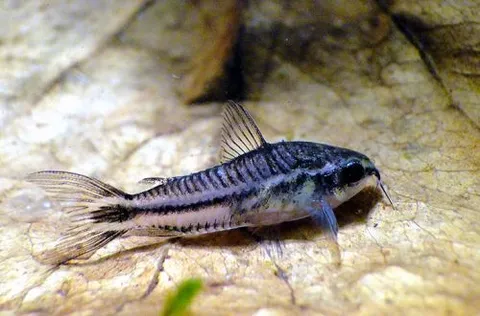
Corydoras pygmaeus
The Pygmy Corydoras, also known as the Pygmy Catfish, belongs to the family Callichthyidae, and its scientific name is Corydoras pygmaeus. In its natural habitat, this fish can be found in the Madeira River basin, which…
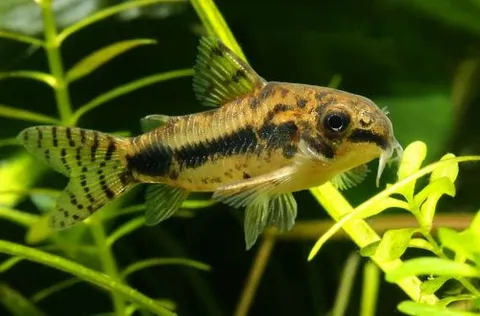
Corydoras habrosus
Corydoras habrosus is the name of this elegant Corydoras, also known as the Venezuelan Pygmy Cory. It belongs to the family Callichthyidae, which includes armored or callichthyid catfish. The common name of the fish…
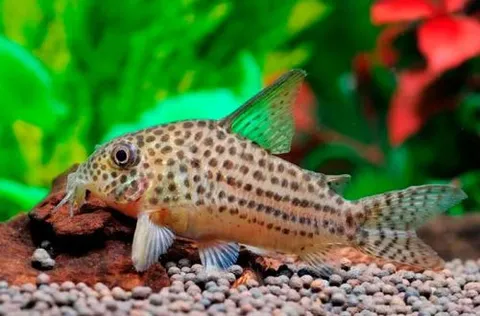
Corydoras araguaiaensis
Corydoras araguaiaensis, known as the Araguaia Catfish, belongs to the armored catfish family (Callichthyidae). It inhabits South America, specifically the basin of the Araguaia River, which is where its name comes from.
Corydoras hastatus
The Dwarf Corydoras, also known as the Sparrow Corydoras, bears the scientific name Corydoras hastatus and belongs to the family Callichthyidae (Armored or Callichthid Catfishes). Its Latin name, “hastatus,” translates…