Temperature22 – 26 °C
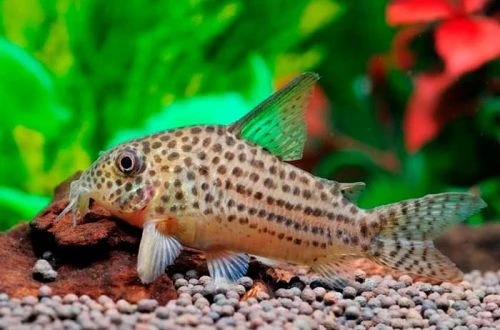
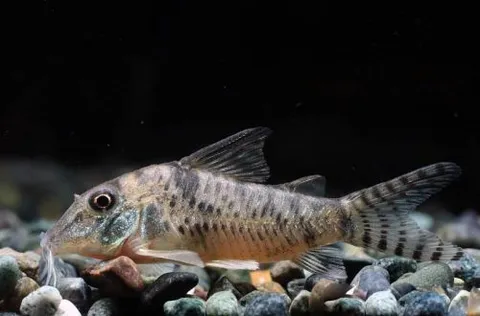
Corydoras araguaiaensis, known as the Araguaia Catfish, belongs to the armored catfish family (Callichthyidae). It inhabits South America, specifically the basin of the Araguaia River, which is where its name comes from.
Adults of this fish reach approximately 3.5 cm in length. This places it among the smallest representatives of the genus. The fish is distinguished by its light coloration, dotted with numerous black specks all over its body. For most aquarists, its miniature size is a key distinguishing feature from the Peppered Corydoras, which has a similar appearance and pattern but is significantly larger.
The species is endemic to Brazil, inhabiting the Araguaia River basin (Goiás and Mato Grosso states). In nature, it lives in bodies of water with sandy bottoms, including areas with flowing water, and demonstrates high adaptability to seasonal changes in conditions, enduring drought periods in shallow residual water bodies.
Given their modest size, Araguaia Catfish are unlikely to show aggression towards other aquarium inhabitants. However, they themselves can become targets of attack. For this reason, it is best to choose peaceful and similarly small fish as tankmates, such as small tetras, cyprinids (like danios or rasboras), or livebearers.
For a group of 6–8 Araguaia Catfish, an aquarium of 70 liters or more will be optimal. The placement of shelters in the aquascape is an important aspect. Natural elements such as driftwood, dense plant thickets, bark, and artificial decorations can be used for this purpose. The fish do not particularly like bright lighting, preferring to hide during the day. If light intensity is not very important for other types of fish, then floating plants that create shade will be an optimal solution. Catfish that have been bred in aquarium conditions for several generations usually adapt well to water parameters that differ from their natural environment. This particularly applies to hydrochemical composition. Thanks to such adaptability, the keeping and breeding of most Corydoras species are considered relatively simple.
In its natural environment, it is omnivorous and forages for food in the substrate. In the aquarium, the diet should be varied and include high-quality dry foods in the form of sinking granules or tablets, as well as frozen or live foods such as bloodworms or tubifex. It is recommended to supplement the diet with plant-based components, as catfish need a balanced diet.
Spawning is stimulated by imitating the rainy season: abundant feeding with live foods and frequent water changes with cooler water. The fish lay their eggs on hard substrates, such as aquarium glass or broad plant leaves. To increase the survival rate of the offspring, it is recommended to use a separate breeding tank, as parents may eat the eggs.
The species has a strong immune system when kept in proper conditions, but it is sensitive to water purity and substrate quality. Due to the absence of scales, the fish tolerate many medications very poorly, especially those containing salt and copper. Damage to their barbels due to sharp or dirty substrate often becomes an entry point for bacterial infections.
When choosing, attention should be paid to the activity and appearance of the individuals: healthy fish should have intact fins, undamaged barbels, and a clean body without spots or ulcers. Avoid purchasing fish with sunken bellies or signs of lethargy, as this may indicate emaciation or internal diseases. It is recommended to acquire a group of 6 or more individuals to ensure their social well-being.
The essentials: size, tank volume, water parameters and care
An adult reaches 3 cm in length. Plan the tank around the maximum size: the fish quickly outgrows a cramped setup.
The recommended volume is 70 L. A smaller tank speeds up nitrate build-up and raises stress levels.
Temperature 22–26 °C, pH 6–8, hardness 2–25 dGH. Stability matters more than exact values: sudden swings are harder on the fish than a small deviation from the ideal.
Around 5 years when kept properly. Lifespan depends directly on tank volume, water quality and a varied diet.
Temperament: peaceful (regular). Keep this in mind when choosing tank mates.
Recommended setup: medium group (6–8 individuals). Ignoring this is a common cause of stress and disease.
Diet type: sinking (any). Feed small portions that are finished within a couple of minutes — overfeeding does more harm than underfeeding.
The scientific name of the species is Corydoras araguaiaensis, family Armored Catfish (Callichthyidae).
The water suits 197 of 208 plants in the catalogue — the easiest ones are shown first.
Afzelius's AnubiasAnacharisAnubiasBrazilian PennywortDwarf CloverDwarf CloverDwarf HygrophilaDwarf SagittariaDwarf ValGuppy GrassHornwortJava FernJava MossMoneywortMud SwordNair's LagenandraNarrow Leaf AnacharisNarrow-leaf CloverStringy MossSüsswassertangTaiwan MossTape GrassTemple PlantUssuri Watermilfoil
Matched by family, categories and overlapping keeping conditions
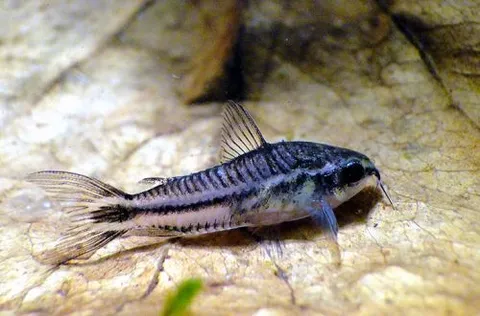
Corydoras pygmaeus
The Pygmy Corydoras, also known as the Pygmy Catfish, belongs to the family Callichthyidae, and its scientific name is Corydoras pygmaeus. In its natural habitat, this fish can be found in the Madeira River basin, which…
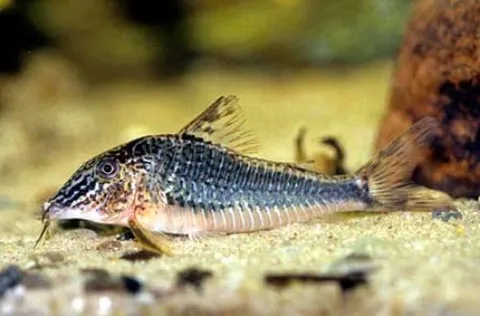
Corydoras semiaquilus
Corydoras semiaquilus, also known as the Black Peruvian Cory, bears the scientific name Corydoras semiaquilus and is a member of the Callichthyidae family, which unites armored catfish. These catfish originate from…
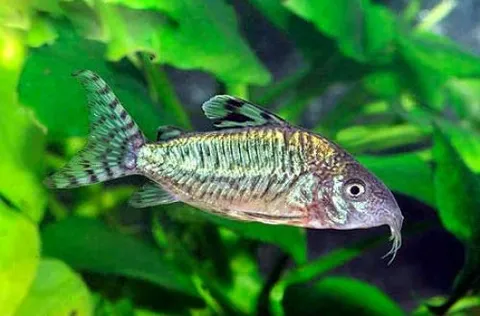
Corydoras geryi
The Bolivian Corydoras, scientifically known as Corydoras geryi, belongs to the family Callichthyidae (Armored Catfishes). This fish originates from South America, with its natural habitat concentrated in the Mamoré…
Corydoras aurofrenatus
Corydoras aurofrenatus, known as the Goldstripe Corydoras, belongs to the family Callichthyidae, or Armored Catfishes. Its name is due to the unique pigmentation on its head and body, which shimmers with gold. The…