Temperature22 – 26 °C
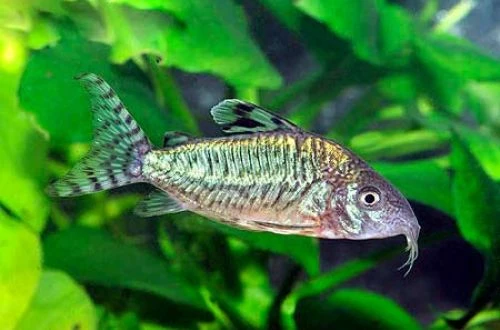
The Bolivian Corydoras, scientifically known as Corydoras geryi, belongs to the family Callichthyidae (Armored Catfishes). This fish originates from South America, with its natural habitat concentrated in the Mamoré River basin. This waterway serves as a natural border between the northern territories of Bolivia and the western Brazilian state of Rondônia.
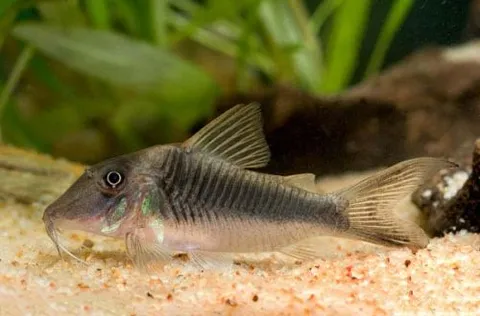
Adult specimens of this fish typically reach a length of about 6 cm. Their morphology is typical of Corydoras species: they have a short, stocky body protected by rows of bony plates. Their coloration is variable. As they grow and depending on environmental conditions, the body pattern can transform from a distinct reticulated pattern to a solid color, with barely discernible dark vertical stripes. Sometimes, in addition to the predominant silvery and gray tones, emerald hues may appear, giving the fish a greenish sheen.
The species is endemic to South America, inhabiting the Mamoré River basin in Bolivia. In nature, it lives in rivers with moderate currents and flooded areas of tropical forests. It prefers to stay in the bottom layers of the water, hiding among aquatic vegetation and snags.
This fish is distinguished by its peaceful and calm disposition, preferring to live in a group of its own kind. It coexists perfectly with other non-aggressive species of comparable size, such as cyprinids, characins, and other small catfishes.
For a group of six fish, the optimal aquarium volume starts from 80 liters. A soft substrate is recommended for decoration, and lighting should be subdued (or shaded by floating plants). It is important to provide hiding places that alternate with open areas on the bottom. Since these catfishes are bottom dwellers and regularly dig in the substrate, it is extremely important to prevent the accumulation of organic waste (dirty substrate) during long-term keeping and to avoid using a bottom filter if possible.
In its natural habitat, it is omnivorous, feeding on small invertebrates, insect larvae, and organic detritus. In aquarium conditions, the diet should be varied and include: — high-quality dry foods in the form of sinking tablets or granules for bottom fish; — frozen foods, such as bloodworms, Artemia, or tubifex; — live foods as a supplement to maintain activity.
Breeding is typical for the genus. Spawning is paired or group, stimulated by fresh water changes and a decrease in temperature, mimicking the rainy season. The female lays 40 to 100 eggs, which she places on the substrate, plant leaves, or aquarium glass. There is no parental care for the offspring, so the parents are recommended to be removed after spawning. Fry feeding begins after the yolk sac is absorbed, using Artemia nauplii or specialized micro-foods.
Fish have strong immunity when kept under proper conditions. The most common problems are related to poor aquarium hygiene and damage to sensitive barbels from rough or sharp substrate, which can lead to bacterial infections. Prevention includes using soft sand or fine rounded gravel, regular siphoning of the bottom, and maintaining water cleanliness. They are sensitive to sudden changes in hydrochemical parameters and high concentrations of nitrogenous compounds.
When selecting individuals in a store, attention should be paid to the activity of the fish and the integrity of their skin. Healthy corydoras should be active, without visible ulcers, spots, or fin damage. It is important to inspect the barbels: they should be long and show no signs of erosion. It is not recommended to purchase fish from aquariums where dead individuals are present or signs of mass diseases are observed, as transport stress can provoke the development of hidden infections.
The essentials: size, tank volume, water parameters and care
An adult reaches 6 cm in length. Plan the tank around the maximum size: the fish quickly outgrows a cramped setup.
The recommended volume is 80 L. A smaller tank speeds up nitrate build-up and raises stress levels.
Temperature 22–26 °C, pH 6–8, hardness 2–15 dGH. Stability matters more than exact values: sudden swings are harder on the fish than a small deviation from the ideal.
Around 8 years when kept properly. Lifespan depends directly on tank volume, water quality and a varied diet.
Temperament: peaceful (regular). Keep this in mind when choosing tank mates.
Recommended setup: small group (5–6 individuals). Ignoring this is a common cause of stress and disease.
Diet type: sinking (any). Feed small portions that are finished within a couple of minutes — overfeeding does more harm than underfeeding.
The scientific name of the species is Corydoras geryi, family Armored Catfish (Callichthyidae). It also appears in the literature as: Corydoras bolivianus.
The water suits 197 of 208 plants in the catalogue — the easiest ones are shown first.
Afzelius's AnubiasAnacharisAnubiasBrazilian PennywortDwarf CloverDwarf CloverDwarf HygrophilaDwarf SagittariaDwarf ValGuppy GrassHornwortJava FernJava MossMoneywortMud SwordNair's LagenandraNarrow Leaf AnacharisNarrow-leaf CloverStringy MossSüsswassertangTaiwan MossTape GrassTemple PlantUssuri Watermilfoil
Matched by family, categories and overlapping keeping conditions
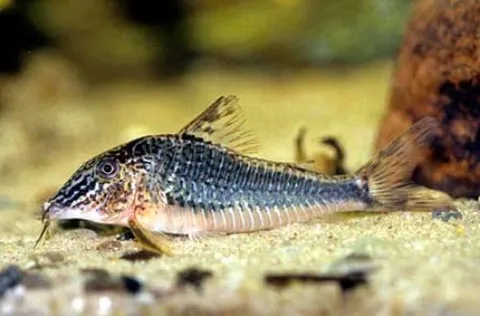
Corydoras semiaquilus
Corydoras semiaquilus, also known as the Black Peruvian Cory, bears the scientific name Corydoras semiaquilus and is a member of the Callichthyidae family, which unites armored catfish. These catfish originate from…
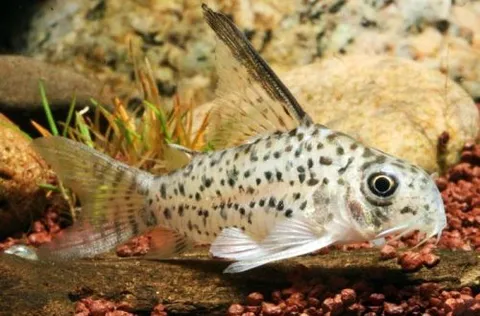
Corydoras armatus
Corydoras armatus, also known as the Armored Corydoras, belongs to the family Callichthyidae (armored catfish), and its scientific name is Corydoras armatus. The word “armatus” itself comes from Latin and translates as…
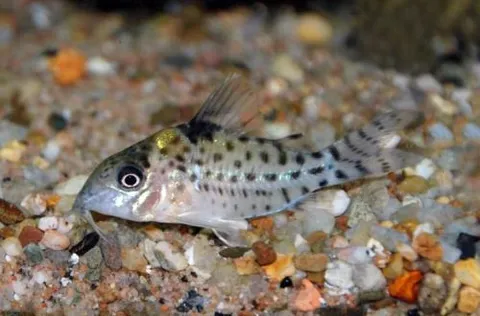
Corydoras ambiacus
The scientific name Corydoras ambiacus is applied to the Corydoras ambiacus catfish, or Cory Ambiacus catfish, which belongs to the family Callichthyidae (Armored or Callichthyid Catfish). Its homeland is South America,…
Corydoras treitlii
Corydoras treitlii, scientifically known as Corydoras treitlii, is a representative of the Callichthyidae family, also known as Armored Catfishes. This fish comes from the coastal drainages of north-eastern Brazil, in…