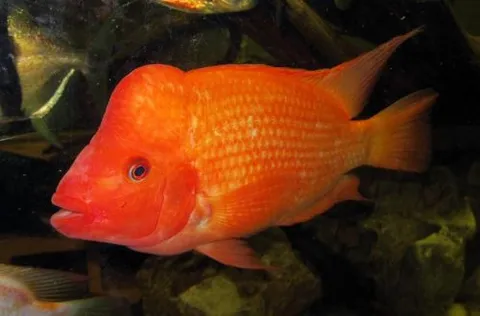
Red Devil
Amphilophus labiatus
The Red Devil Cichlid, or Amphilophus labiatus, belongs to the Cichlidae family. This species attracts attention with its exotic appearance and vibrant coloration, as well as its ease of care and undemanding diet,…
The Convict Cichlid, scientifically known as Amatitlania nigrofasciata, belongs to the family Cichlidae. This fish appeals to aquarists for several reasons: it is undemanding, easy to breed, hardy, and has striking, distinctive coloration. Though somewhat aggressive, this has not prevented it from becoming one of the most popular cichlids in the hobby.
Adults reach about 15 cm in length. Their distinctive pattern is made up of alternating black-blue and grey stripes, resembling a traditional prisoner's uniform—which is how the fish got its common name. Males are usually larger and have more pointed dorsal and anal fins. Females are brighter in colour, with yellow tones particularly visible on the lower body.
This species is widespread throughout Central America and has also established itself on other continents; wild populations even exist in Australia. The Convict Cichlid inhabits a variety of waters, from fast-flowing streams to calm lakes and ponds. It usually stays near the shore and rarely ventures into open water.
The Convict Cichlid is often sold as a peaceful, community-tank fish, but in reality it is quite aggressive and territorial, especially during spawning. It fiercely defends its territory from other inhabitants, which can lead to conflict. A species tank is recommended. In a small tank, one male-female pair is sufficient. In a large tank you can keep a group, provided each male has enough territory. It may be kept with cichlids from the same region and/or larger species.
A pair requires a tank of at least 100 litres. Decor should focus on creating numerous hiding places: rock piles, driftwood, intertwined branches and roots, and ceramic pots make good caves. Live plants are not necessary, as the fish will likely uproot them. Other water parameters such as composition, temperature and lighting are not critical and tolerate significant variation.
These fish are not fussy eaters. They readily accept all common aquarium foods: dry, freeze-dried, live and frozen. To ensure proper development and health, use quality foods from reputable manufacturers, specifically formulated for cichlids and containing all necessary nutrients.
This cichlid is among the easiest to breed at home. When spawning season arrives, the male and female form a temporary pair. In a spacious tank with several fish, several pairs usually form, each occupying its own territory. During this period males become extremely aggressive and attack anything that enters their area, so other fish may need to be temporarily removed. Caves—such as ceramic pots—are essential for spawning. Daily water changes of about 50% over several days stimulate spawning. The female selects a suitable cave, cleans it thoroughly, and lays eggs, typically around 300. The female tends the nest while the male patrols and drives away intruders. Fry appear in 3–4 days and begin actively swimming a week later. The young stay near the mother, who along with the male continues to protect them for some time. Fry feed on detritus and algae; they can also be offered finely crushed dry flakes or specialized fry food.
Most diseases in these fish result from poor conditions and low-quality food. If you notice early symptoms, first check your water parameters and levels of ammonia, nitrite and nitrate. If they are off, correct them before attempting treatment.
When choosing a Convict Cichlid, look for activity and skin condition. Healthy fish should be mobile, curious and free of visible damage, sores, coating or unusual spots. Fins should be erect, without tearing or sticking. Avoid fish that look emaciated, stay at the surface, or constantly hide in a corner showing signs of stress or lethargy. Remember that Convict Cichlids are territorial, so in a shop they often show aggression even toward tank mates. When buying a pair, make sure there are no signs of serious fighting between them. If you plan to buy a young group, remember that as they mature they will pair off and actively defend their territories, which requires plenty of hiding places in the tank.
There are no pair reviews for this species yet — check tankmates in the matcher.
All tankmatesThe water suits 196 of 208 plants in the catalogue — the easiest ones are shown first.
Afzelius's AnubiasAnacharisAnubiasBrazilian PennywortDwarf CloverDwarf CloverDwarf HygrophilaDwarf SagittariaDwarf ValGuppy GrassHornwortJava FernJava MossMoneywortMud SwordNair's LagenandraNarrow Leaf AnacharisNarrow-leaf CloverStringy MossSüsswassertangTaiwan MossTape GrassTemple PlantUssuri Watermilfoil
Matching water does not mean the plant will stay intact.
The essentials: size, tank volume, water parameters and care
An adult reaches 8–15 cm in length. Plan the tank around the maximum size: the fish quickly outgrows a cramped setup.
The recommended volume is 100 L. A smaller tank speeds up nitrate build-up and raises stress levels.
Temperature 24–28 °C, pH 6–8, hardness 5–26 dGH. Stability matters more than exact values: sudden swings are harder on the fish than a small deviation from the ideal.
Around 10 years when kept properly. Lifespan depends directly on tank volume, water quality and a varied diet.
Temperament: aggressive / incompatible / unfriendly. Keep this in mind when choosing tank mates.
Recommended setup: pair (male/female). Ignoring this is a common cause of stress and disease.
Diet type: any (universal). Feed small portions that are finished within a couple of minutes — overfeeding does more harm than underfeeding.
The scientific name of the species is Amatitlania nigrofasciata, family Cichlids (Cichlidae). It also appears in the literature as: Archocentrus nigrofasciatus, Cichlasoma nigrofasciatum, Cichlosoma nigrofasciatum.
Matched by family, categories and overlapping keeping conditions
Amphilophus labiatus
The Red Devil Cichlid, or Amphilophus labiatus, belongs to the Cichlidae family. This species attracts attention with its exotic appearance and vibrant coloration, as well as its ease of care and undemanding diet,…
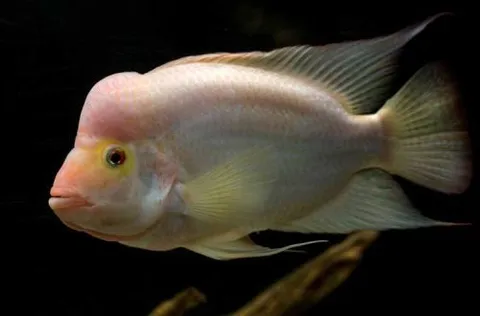
Amphilophus citrinellus
The Midas Cichlid, scientifically known as Amphilophus citrinellus, belongs to the family Cichlidae. The common name references the mythical King Midas and his endless greed. Watching this fish's behaviour, you will…
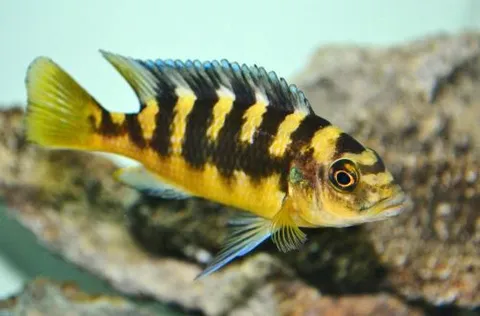
Pseudotropheus crabro
Pseudotropheus crabro, also known as the Chameleon Cichlid or Bumblebee Cichlid, has the scientific name Pseudotropheus crabro and belongs to the family Cichlidae. This fish is a representative of the Mbuna cichlid…
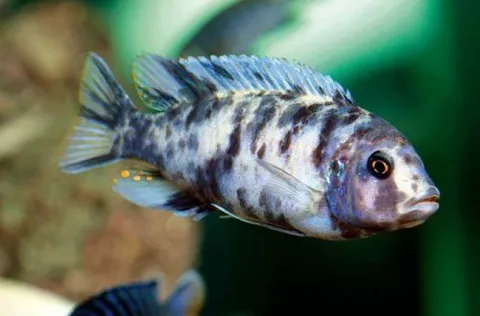
Pseudotropheus crabro
The OB Mbuna form (OB Mbuna) represents an example of natural polymorphism, characteristic of some species of Malawian cichlids. These fish inhabit the African Lake Nyasa and are distinguished by their peculiar…