Temperature21 – 26 °C
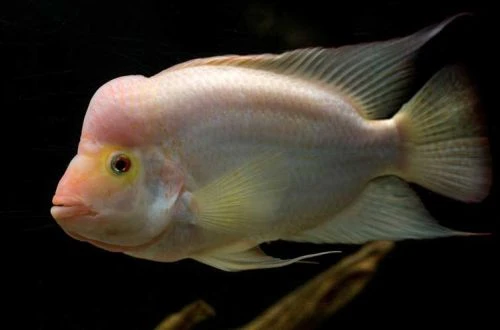
The Midas Cichlid, or Citron Cichlid, scientifically known as Amphilophus citrinellus, belongs to the Cichlidae family. Its name alludes to the myth of King Midas and his boundless greed. Observing the behavior of this fish, one can notice a certain similarity: it is extremely combative and displays aggression even towards members of its own species, and its voraciousness is truly astonishing.
Adults reach an impressive size, varying from 30 to 35 cm in length. Externally, this cichlid is very similar to its closest relative, the Red Devil Cichlid, which is endemic to Lake Nicaragua. These two species, once a single entity, diverged relatively recently, only about 10,000 years ago. Although they are practically indistinguishable externally, they cannot interbreed. The coloration of the fish depends on its specific region of origin, changing from delicate pink to rich red or orange. Dominant males, upon reaching sexual maturity, develop an impressive fatty growth on their heads, the so-called “nuchal hump,” which is absent in females. Otherwise, sexual dimorphism is quite weak.
The natural habitat of this fish is Central America, specifically the territories of Nicaragua and Costa Rica. The Midas Cichlid prefers to live in lakes, ponds, and river backwaters with calm currents. These areas are characterized by rocky and limestone soils, which form a corresponding bottom and shoreline relief with numerous gorges and grottoes.
This cichlid is considered one of the most combative representatives of its family. In a small volume, around 300 liters, only one individual can live. In larger tanks, from 1000 liters, 2–3 Midas Cichlids can coexist relatively safely with each other. Their cohabitation with other large fish species is also permissible.
The size of the aquarium for Midas cichlids directly depends on the number of fish planned for keeping. Given the adult size of these cichlids and their aggressive attitude towards conspecifics, a single specimen will require a tank of at least 400 liters, while two will need over 800 liters, and so on. It is important to understand that this is not a fish for an exquisitely decorated aquarium. Most decorative elements will be overturned, broken, or displaced. For decoration, only large, stable rock fragments, big stones, and massive snags, as well as a sand-gravel substrate, are permissible. Plants will not survive in an aquarium with them, as they will be quickly destroyed. If you keep two or more fish, regardless of their species, you should provide the maximum number of visual barriers and reliable shelters. Internal aquarium equipment (heaters, aerators, nozzles, thermometers, etc.) needs protection: it must be firmly secured in places inaccessible to the fish. Maintaining stable water parameters largely depends on an effective external filtration system. Weekly partial water changes with fresh water and constant cleaning of the aquarium from organic waste – food remnants and excrement – are also very important.
The diet of this species was predetermined by its harsh habitat, characterized by a scarcity of food resources among rocky formations. The Midas cichlid readily eats anything that can fit into its mouth, so choosing suitable food will not be a problem. It is recommended to use a variety of products, such as dry, live, and frozen foods, with the obligatory addition of plant components. These additives may already be present in ready-made foods, for example, in the form of dry pellets, or served separately – spirulina flakes, chopped lettuce leaves, spinach, or vegetables. Since the fish lacks a sense of satiety, it is important to limit both the number of feedings and the amount of food offered. Feeding should be done 2–3 times a day in an amount that will be eaten within 5 minutes.
Breeding this species will not cause great difficulties if you already have a formed male and female pair. In other cases, the probability of obtaining offspring is extremely low, as these cichlids have complex behavioral patterns. If a male is kept alone, an attempt to introduce a female for breeding will most likely lead to her death, as he will perceive her not as a partner but as a competitor. The process of pair formation takes time. Fish must find each other from a group of individuals that have grown up together from a young age over several years. For example, there is a small chance that one pair will form from a group of 5–6 fish over time, but there are no guarantees. It is important to note that pair formation does not occur between adult fish that are not familiar with each other. During the breeding season, males and females ready for spawning begin mutual courtship, which can sometimes be long and even resemble a duel with tail strikes and side nudges. Spawning occurs on any flat and even surface, most often on a stone. Fry hatch in 2–3 days, and the caring parents move them to a pre-dug pit at the bottom. Both parents actively protect their offspring from any potential danger. If aquarium cleaning begins during this period, the male may attack the aquarist's hand. After about a week, the fry begin to swim freely.
The main cause of diseases often lies in the keeping conditions: if they go beyond acceptable limits, immunity decreases, making the fish vulnerable to various infections inevitably present in the environment. At the first suspicion of illness, it is important first of all to check the water parameters and ensure there are no dangerous concentrations of nitrogen cycle products. Often, restoring normal, suitable conditions promotes recovery. However, in some cases, medication may be required.
When choosing a Midas Cichlid, it is important to assess the fish's activity and the condition of its skin. Healthy individuals should be active, show curiosity, and have no visible damage, ulcers, or white film on their body and fins. Avoid buying fish that appear apathetic, stay at the surface or bottom, breathe heavily, or show signs of emaciation. — pay attention to behavior: a healthy fish exhibits territoriality and should not appear timid or intimidated by tank mates — check for deformities of the jaws, gill covers, and spine, which may be a consequence of improper rearing — ask the seller about the keeping conditions and diet to assess the risk of stress during adaptation to new water parameters.
The essentials: size, tank volume, water parameters and care
An adult reaches 30–35 cm in length. Plan the tank around the maximum size: the fish quickly outgrows a cramped setup.
The recommended volume is 400 L. A smaller tank speeds up nitrate build-up and raises stress levels.
Temperature 21–26 °C, pH 6–8, hardness 5–26 dGH. Stability matters more than exact values: sudden swings are harder on the fish than a small deviation from the ideal.
Around 12 years when kept properly. Lifespan depends directly on tank volume, water quality and a varied diet.
Temperament: aggressive / incompatible / unfriendly. Keep this in mind when choosing tank mates.
Recommended setup: solitary. Ignoring this is a common cause of stress and disease.
Diet type: any (universal). Feed small portions that are finished within a couple of minutes — overfeeding does more harm than underfeeding.
The scientific name of the species is Amphilophus citrinellus, family Cichlids (Cichlidae). It also appears in the literature as: Amphilophus granadense, Archocentrus citrinellus, Cichlasoma citrinella.
The water suits 197 of 208 plants in the catalogue — the easiest ones are shown first.
Afzelius's AnubiasAnacharisAnubiasBrazilian PennywortDwarf CloverDwarf CloverDwarf HygrophilaDwarf SagittariaDwarf ValGuppy GrassHornwortJava FernJava MossMoneywortMud SwordNair's LagenandraNarrow Leaf AnacharisNarrow-leaf CloverStringy MossSüsswassertangTaiwan MossTape GrassTemple PlantUssuri Watermilfoil
Matched by family, categories and overlapping keeping conditions
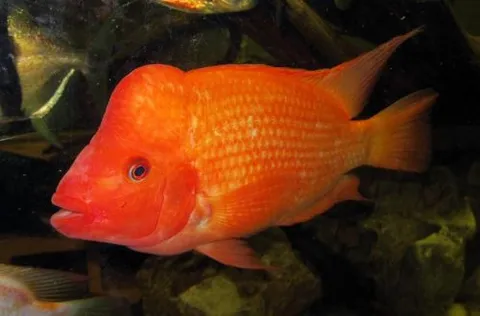
Amphilophus labiatus
The Red Devil Cichlid, or Amphilophus labiatus, belongs to the Cichlidae family. This species attracts attention with its exotic appearance and vibrant coloration, as well as its ease of care and undemanding diet,…
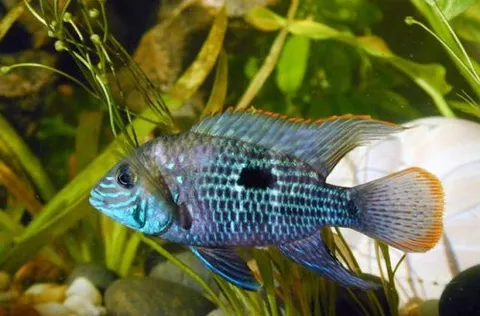
Andinoacara rivulatus
Andinoacara rivulatus, more commonly known as the Turquoise Acara, belongs to the Cichlidae family. This large and strikingly beautiful fish, however, is characterized by pronounced aggression and requires keeping in a…
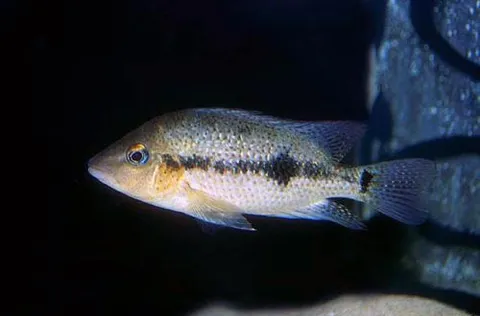
Darienheros calobrensis
The Red-spotted Cichlid, also known by its scientific name Darienheros calobrensis, belongs to the family Cichlidae. It's interesting to note that in the past, this species was classified under a different genus and was…
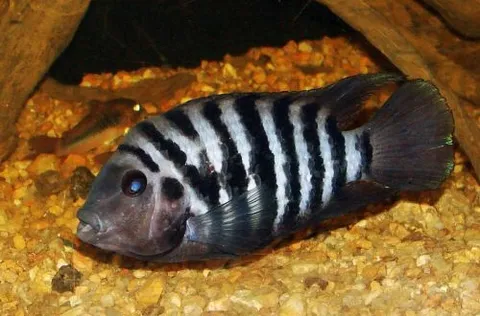
Amatitlania nigrofasciata
The Convict Cichlid, scientifically known as Amatitlania nigrofasciata, belongs to the family Cichlidae. This fish possesses many qualities attractive to aquarists: unpretentiousness in keeping, ease of breeding,…