Temperature20 – 26 °C
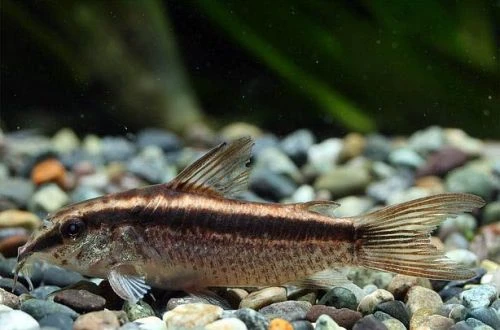
Corydoras gracilis, scientifically known as Corydoras gracilis, belongs to the family Callichthyidae, which includes armored or callichthyid catfish. It is sometimes referred to by its alternative name, the "Shy Cory." This fish originates from South America, specifically from the central areas of the Amazon River basin, located in northwestern Brazil. It prefers to inhabit small streams and rivers where lush riparian vegetation prevails, under the canopy of dense tropical forest. The bottom landscape of such bodies of water is often strewn with fallen branches, layers of leaves, and tree trunks.
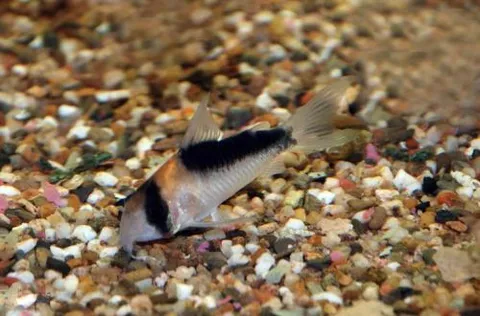
Adults typically range from 3–4 cm in length. A distinctive feature of their coloration is a prominent arched black stripe that extends from the head to the very tail, contrasting with the light underside of the belly. This dark stripe is accentuated by a yellowish line above. Dark pigmentation is often observed at the base of the dorsal fin.
The species inhabits the central part of the Amazon basin in Brazil. In nature, it prefers small tributaries with dense riparian vegetation and an abundance of fallen leaves and branches on the bottom. The water in its habitats is usually acidic, with a characteristic brown tint due to the high content of tannins.
A peaceful and schooling species. In an aquarium, it is recommended to keep a group of 4–6 individuals to reduce stress levels, as the fish can be timid. It coexists well with other non-aggressive aquarium inhabitants of similar size.
The care of Corydoras gracilis is largely similar to the requirements for keeping other species of Cory catfish. Key aspects include maintaining clean and warm water, preventing the accumulation of organic waste, and providing a complete diet. Although the choice of decorations is usually not critical, in this case, it is recommended to recreate an environment resembling their natural habitat. It is desirable to have shelters, which can be branches, snags, and roots, as well as a leaf substrate at the bottom. The use of leaves from certain trees has a beneficial effect on the chemical composition of the water, helping to lower pH and increase the concentration of tannins. As for nutrition, a varied diet is crucial for maintaining the health of the fish. Their daily menu can consist of dry foods, supplemented with frozen or live foods such as brine shrimp, bloodworms, or daphnia. In terms of behavior and compatibility, these catfish feel more comfortable in a group consisting of 4–6 individuals. They get along well with peaceful and calm fish of similar size. However, it is worth avoiding proximity to territorial, and even more so, aggressive species.
An omnivorous species. In the aquarium, it is necessary to provide a varied diet, including high-quality sinking dry foods, as well as frozen or live foods such as bloodworms or tubifex. Fish should not feed exclusively on food remnants that have fallen to the bottom, as this does not provide complete nutrition.
For breeding, it is recommended to use a group with a predominance of males. Frequent water changes (50–70%) with cooler water and increased aeration serve as a stimulus for spawning. Eggs are laid on plant leaves or the aquarium glass. After spawning is complete, the parents should be removed to prevent them from eating the eggs. Fry begin to feed after the yolk sac is absorbed, requiring high water quality for survival.
This species is sensitive to water quality and substrate cleanliness. If kept on an unsuitable substrate, damage to the barbels is possible, which opens the way for bacterial infections. Prevention includes maintaining cleanliness, regular water changes, and using soft sand as a substrate. Caution should be exercised when catching them, as their stiff fin rays can inflict painful stings.
When purchasing, choose active fish with clean fins and undamaged barbels. Avoid individuals showing signs of emaciation, sunken bellies, or skin lesions. Healthy corydoras should show interest in foraging for food in the substrate and not exhibit signs of apathy or constant hovering at the water's surface.
The essentials: size, tank volume, water parameters and care
An adult reaches 3–4 cm in length. Plan the tank around the maximum size: the fish quickly outgrows a cramped setup.
The recommended volume is 50 L. A smaller tank speeds up nitrate build-up and raises stress levels.
Temperature 20–26 °C, pH 5–7, hardness 1–10 dGH. Stability matters more than exact values: sudden swings are harder on the fish than a small deviation from the ideal.
Around 5 years when kept properly. Lifespan depends directly on tank volume, water quality and a varied diet.
Temperament: peaceful (regular). Keep this in mind when choosing tank mates.
Recommended setup: small group (5–6 individuals). Ignoring this is a common cause of stress and disease.
Diet type: sinking (any). Feed small portions that are finished within a couple of minutes — overfeeding does more harm than underfeeding.
The scientific name of the species is Corydoras gracilis, family Armored Catfish (Callichthyidae).
The water suits 198 of 208 plants in the catalogue — the easiest ones are shown first.
Afzelius's AnubiasAnacharisAnubiasBrazilian PennywortDwarf CloverDwarf CloverDwarf HygrophilaDwarf SagittariaDwarf ValGuppy GrassHornwortJava FernJava MossMoneywortMud SwordNair's LagenandraNarrow Leaf AnacharisNarrow-leaf CloverStringy MossSüsswassertangTaiwan MossTape GrassTemple PlantUssuri Watermilfoil
Matched by family, categories and overlapping keeping conditions
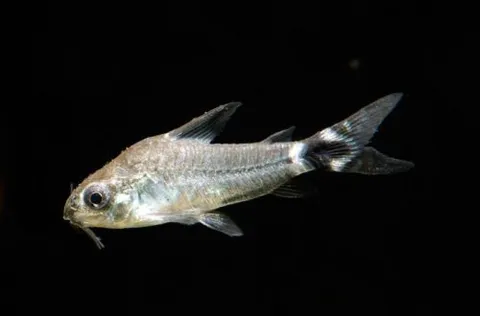
Corydoras hastatus
The Dwarf Corydoras, also known as the Sparrow Corydoras, bears the scientific name Corydoras hastatus and belongs to the family Callichthyidae (Armored or Callichthid Catfishes). Its Latin name, “hastatus,” translates…
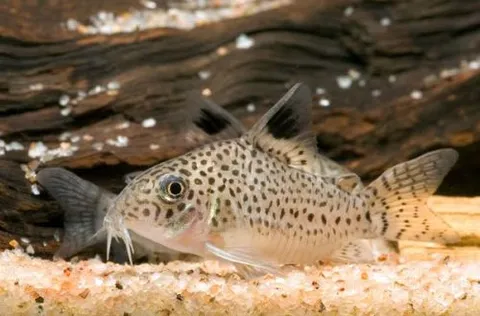
Corydoras copei
Cope's Corydoras, scientifically known as Corydoras copei, belongs to the extensive armored catfish family (Callichthyidae). This species was named in honor of the American ichthyologist Edward Drinker Cope, who lived…
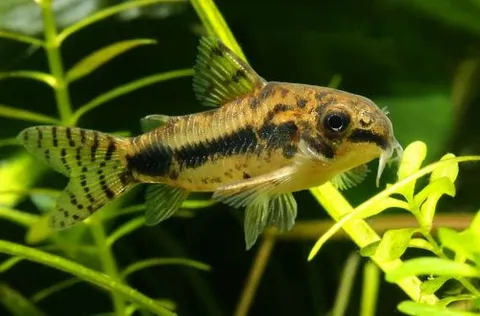
Corydoras habrosus
Corydoras habrosus is the name of this elegant Corydoras, also known as the Venezuelan Pygmy Cory. It belongs to the family Callichthyidae, which includes armored or callichthyid catfish. The common name of the fish…
Corydoras duplicareus
Corydoras duplicareus, known scientifically as Corydoras duplicareus, belongs to the family Callichthyidae, which unites armored or callichthyid catfishes. The name "duplicareus" has Latin roots, deriving from the word…