Temperature20 – 28 °C
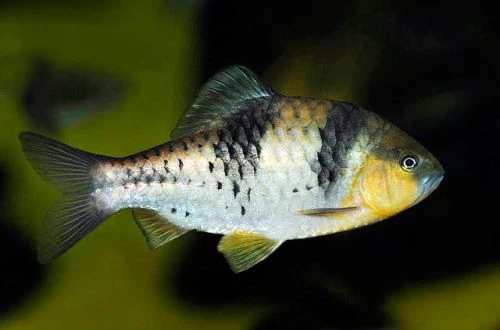
The Deceptive Barb, also known as the False Cross Barb (scientific name Barbodes kuchingensis), belongs to the family Cyprinidae. This fish is a typical representative of the Barb genus, distinguished by its unpretentious care and ability to coexist harmoniously with many other well-known aquarium species.
Adults of this species reach approximately 10–12 cm in length, visually resembling the Cross Barb. Their coloration is silvery, sometimes with slight yellow iridescence. The body is adorned with wide dark stripes that intersect each other. Sexual dimorphism is rather weakly expressed, making it almost impossible to distinguish males from females. There is an observation that females can be somewhat larger than males, especially noticeable during spawning when they are full of roe.
Its natural habitat is in Southeast Asia, specifically, it is endemic to western Borneo: Sarawak state in East Malaysia and the neighbouring Indonesian province of West Kalimantan. In the wild, the Deceptive Barb prefers small forest streams, rivers, and backwaters, as well as water bodies formed by waterfalls. These places are characterized by clear flowing water, with bottoms strewn with stones and snags. However, this species is also found in swamps, where conditions are completely different: the water is dark, rich in tannins from decaying vegetation. However, it is possible that these are as yet undescribed varieties of the Deceptive Barb.
This species is a peaceful and quite active fish, perfectly compatible with other non-aggressive species of similar size. When choosing tankmates, it is important to consider that the high activity of the False Cross Barb can be excessive for slow-moving fish, such as Gouramis or Goldfish, so their cohabitation is not recommended. The optimal school size should be at least 8–10 individuals.
For a small school of these fish, a tank with a volume of at least 250 liters is best suited. The aquarium decor should ideally mimic a riverine environment: sandy-stony substrate, large boulders, several snags, and undemanding plants, both artificial and live (for example, Anubias, aquatic mosses, and ferns). The key to successful keeping largely lies in maintaining consistently high water quality with optimal hydrochemical parameters. Aquarium care for False Cross Barbs is not difficult and includes weekly water changes of 30–50% of the volume with fresh water, regular cleaning of organic pollutants (food remnants, excrement), as well as preventive maintenance of equipment and monitoring of pH, dGH, and oxidizability levels.
The False Cross Barb is quite undemanding when it comes to its diet. In a home aquarium, it will readily consume most common foods, whether dry, live, or frozen. The fish can subsist entirely on dry foods, such as flakes or pellets, provided that high-quality foods enriched with vitamins, trace elements, and plant components are used.
To date, no reliable data on the breeding of this species in home aquariums have been recorded. This is likely due to its low prevalence among aquarists. It is assumed that the reproduction process of the False Cross Barb is similar to that of other Barb species.
In a balanced aquarium ecosystem, closely matching the requirements of this species, diseases are extremely rare. Illnesses often arise due to deteriorating habitat quality, contact with already sick fish, or physical injuries.
When selecting individuals, preference should be given to active fish that stay in a school and exhibit natural species-specific behavior. It is important to carefully inspect the skin, fins, and eyes for any damage, ulcers, film, or spots indicating the presence of parasites or bacterial infections. A healthy fish shows no signs of emaciation, and its abdomen should not be unnaturally sunken. Since the species is schooling, it is recommended to acquire a group of 8–10 individuals, which reduces stress levels in the fish and promotes their adaptation to the new aquarium. Avoid purchasing fish from overcrowded tanks with signs of distress among their tankmates. Given the rare availability of the species for sale, it is important to ensure correct species identification, as this barb is externally similar to other members of the genus.
The essentials: size, tank volume, water parameters and care
An adult reaches 10–12 cm in length. Plan the tank around the maximum size: the fish quickly outgrows a cramped setup.
The recommended volume is 250 L. A smaller tank speeds up nitrate build-up and raises stress levels.
Temperature 20–28 °C, pH 5–7.5, hardness 1–12 dGH. Stability matters more than exact values: sudden swings are harder on the fish than a small deviation from the ideal.
Around 5 years when kept properly. Lifespan depends directly on tank volume, water quality and a varied diet.
Temperament: peaceful, active/mobile. Keep this in mind when choosing tank mates.
Recommended setup: schooling (usually from 5–6 individuals and more). Ignoring this is a common cause of stress and disease.
Diet type: mixed diet (meat + plant-based). Feed small portions that are finished within a couple of minutes — overfeeding does more harm than underfeeding.
The scientific name of the species is Barbodes kuchingensis, family Cyprinids (Cyprinidae). It also appears in the literature as: Puntius kuchingensis.
The water suits 198 of 208 plants in the catalogue — the easiest ones are shown first.
Afzelius's AnubiasAnacharisAnubiasBrazilian PennywortDwarf CloverDwarf CloverDwarf HygrophilaDwarf SagittariaDwarf ValGuppy GrassHornwortJava FernJava MossMoneywortMud SwordNair's LagenandraNarrow Leaf AnacharisNarrow-leaf CloverStringy MossSüsswassertangTaiwan MossTape GrassTemple PlantUssuri Watermilfoil
Matched by family, categories and overlapping keeping conditions
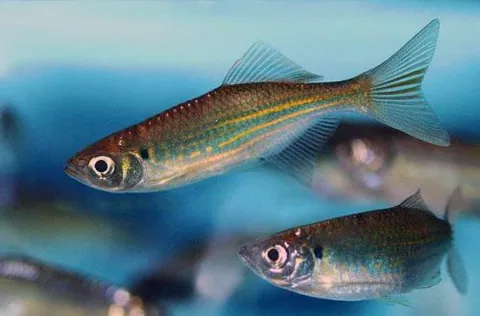
Devario regina
The Regal Danio, scientifically known as Devario regina, is a member of the Cyprinidae family. The presence of the word "regal" in its name does not indicate any unique characteristics of this aquatic inhabitant, as it…
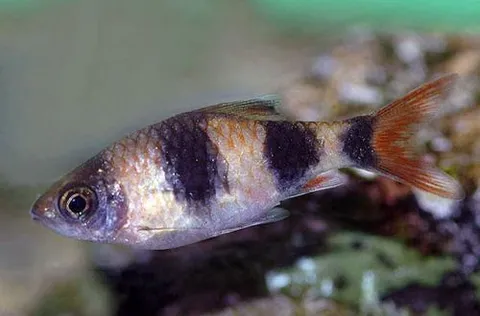
Dawkinsia arulius
The Arulius Barb, scientifically known as Dawkinsia arulius and belonging to the family Cyprinidae, does not impress with its bright coloration or unique body pattern. However, its lively activity and unpretentiousness…
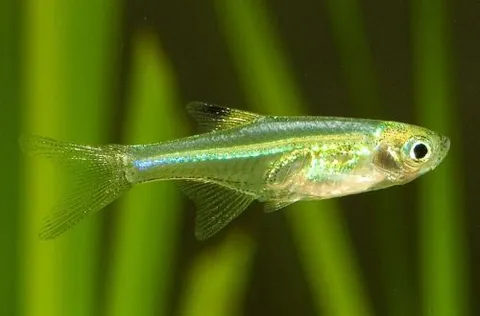
Microdevario nanus
Microdevario nanus, known as the Green Dwarf Danio, belongs to the family Cyprinidae. Until 2009, this fish was classified as a Rasbora, being called the Green Dwarf Rasbora. However, further research moved the species…
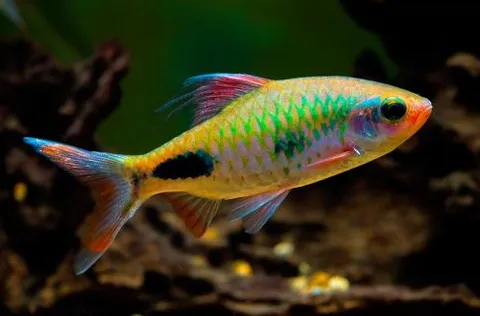
Dawkinsia exclamatio
The Exclamation Barb, scientifically known as Dawkinsia exclamatio, belongs to the family Cyprinidae. Its Latin name consists of two parts: "dawkinsia" pays homage to the English ethologist and evolutionary biologist…