Temperature22 – 28 °C
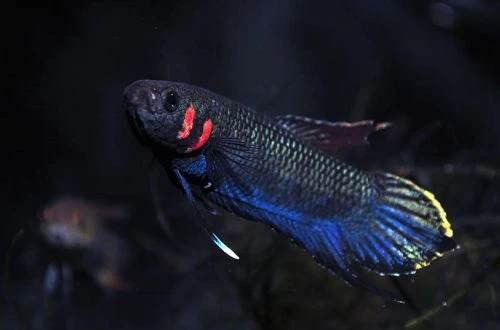
Betta foerschi, or Foersch's Betta, which received its scientific name Betta foerschi, belongs to the extensive Osphronemidae family. This fish was named after Dr. Walter Foersch, the person who first collected its specimens and provided a scientific description. This species belongs to the fighting fish group, whose males are known to engage in duels with each other. Due to the specifics of their behavior and certain keeping requirements, this species is not recommended for beginner aquarists.
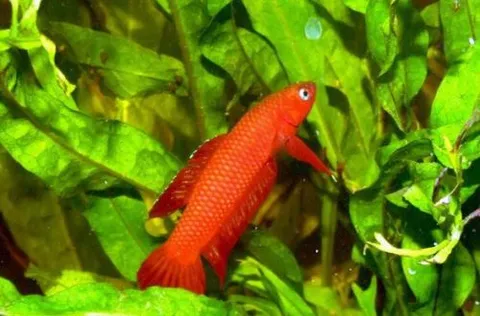
Adults of this fish reach a length of 4–5 cm, possessing a slender and flexible body. Males differ from females by having brighter coloration and developing noticeably expanded unpaired fins. Their coloration is a deep dark blue, which can display greenish hues depending on the lighting. On the gill covers, along the sides of the head, males have two distinct orange-red stripes. Females, on the other hand, look less expressive, having a lighter, monochromatic coloration.
Its homeland is Southeast Asia; in particular, it is endemic to the Indonesian island of Borneo (Kalimantan). Betta foerschi inhabits swampy bodies of water and associated small streams and rivers located among humid tropical forests. Here, the fish spend their lives in conditions of constant twilight. The dense tree crowns hardly allow sunlight to reach the water surface, which, moreover, has a dark tint due to the large amount of dissolved organic matter formed from the decomposition of fallen leaves, snags, grasses, and other plant material.
Betta foerschi males exhibit pronounced belligerence towards each other, and upon meeting, they inevitably engage in a fight. Although such duels rarely lead to serious injuries, the weaker individual is forced to retreat and will subsequently avoid contact, hiding in plant thickets or other shelters. In small aquariums, cohabitation of two or more males is unacceptable; they can only coexist in very spacious tanks. With females, problems usually do not arise. These fish are compatible with other non-aggressive species of comparable size that can tolerate similar living conditions.
For keeping one or two Betta foerschi, the optimal aquarium volume starts from 50 liters. The keeping conditions for these fish largely depend on how wild their origin is. If the fish was born and lived for several generations in an aquarium, it requires significantly less attention than one recently caught from the swamps of Borneo. Fortunately, specimens recently caught from the wild are rarely found for sale in the European part of the world; usually, already acclimatized individuals are offered. Nevertheless, even they need precisely defined conditions, requiring a rather narrow range of temperatures and hydrochemical water parameters. It is advisable to provide subdued lighting or create shaded areas with dense clusters of floating plants. Dark substrate and an abundance of snags are excellent as main decorative elements. Leaves of some trees, placed on the bottom, will be a natural addition to the decor. During their decomposition, the water will acquire the characteristic brown tint typical of natural bodies of water and will be filled with tannins, which helps establish the necessary water composition. The stability of the habitat in a closed aquarium ecosystem completely depends on the uninterrupted operation of the installed equipment, especially the filtration system, as well as on regular and thorough aquarium maintenance procedures.
This omnivorous species readily accepts most common foods. To maintain their health, it is recommended to provide a varied diet, including dry, as well as live or frozen products. Specialized foods developed for fighting fish will be an excellent choice.
Betta foerschi demonstrate an example of caring parental behavior among fish. During spawning, the male and female perform a special “embrace dance,” during which several dozen eggs are released and fertilized. After this, the male takes the eggs into his mouth cavity, where they will remain throughout the incubation period, which lasts 8–14 days. This breeding strategy provides reliable protection for the offspring. After the fry emerge, the parents lose interest in them but do not try to eat them, which distinguishes them from many other aquarium fish.
Most health problems in fish often arise from unsuitable keeping conditions. Maintaining a stable and comfortable habitat is a key factor for successful keeping. If symptoms of illness appear, the first step is to check the water quality. If deviations are found, it is important to take immediate measures to eliminate them. If the symptoms do not disappear or worsen, medicinal treatment may be required.
When purchasing, choose active fish with clean fins and no visible body damage. Avoid individuals with signs of emaciation, sunken bellies, or unnatural behavior, such as constantly trying to stay near the water surface or, conversely, lethargically lying on the bottom. Healthy fish should have rich coloration, characteristic of their sex and age. Since this species is sensitive to environmental parameters, it is recommended to ask the seller about the conditions in which the fish were kept: in soft and acidic water or in harder tap water. Individuals adapted to aquarium conditions are preferable to wild specimens, as they tolerate subsequent adaptation more easily. In the store, fish may show territorial aggression, so carefully observe their interactions in the general aquarium to assess the health of each individual.
The essentials: size, tank volume, water parameters and care
An adult reaches 4–5 cm in length. Plan the tank around the maximum size: the fish quickly outgrows a cramped setup.
The recommended volume is 50 L. A smaller tank speeds up nitrate build-up and raises stress levels.
Temperature 22–28 °C, pH 4–6, hardness 1–5 dGH. Stability matters more than exact values: sudden swings are harder on the fish than a small deviation from the ideal.
Around 4 years when kept properly. Lifespan depends directly on tank volume, water quality and a varied diet.
Temperament: semi-peaceful (including aggression during spawning / intraspecific conflicts). Keep this in mind when choosing tank mates.
Recommended setup: pair (male/female). Ignoring this is a common cause of stress and disease.
Diet type: small / appropriate size / pieces. Feed small portions that are finished within a couple of minutes — overfeeding does more harm than underfeeding.
The scientific name of the species is Betta foerschi, family Osphronemidae.
The water suits 171 of 208 plants in the catalogue — the easiest ones are shown first.
African Onion PlantAmazon FrogbitAmazon SwordAnacharisAnubiasArrowhead CryptDwarf CloverDwarf CloverDwarf HygrophilaDwarf SagittariaGuppy GrassHornwortJava FernJava MossMoneywortMud SwordNair's LagenandraNarrow Leaf AnacharisNarrow-leaf CloverStringy MossSüsswassertangTaiwan MossTemple PlantUssuri Watermilfoil
Matched by family, categories and overlapping keeping conditions
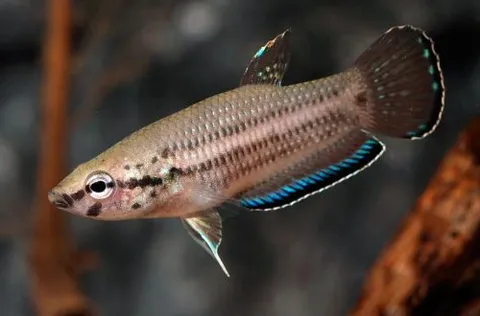
Betta simplex
Betta simplex, or the simple Betta, belongs to the family Osphronemidae. Interestingly, despite its name and classification, this species has more in common with gouramis than with the so-called fighting fish. Its…
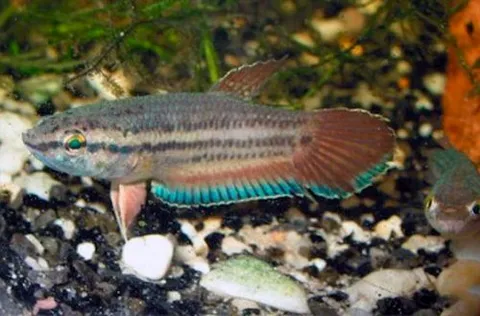
Betta picta
Betta picta, known as the Javanese Betta, belongs to the family Osphronemidae (Labyrinth fish or Gourami). Interestingly, despite its name and classification, this species shows more resemblance to Gouramis than to…
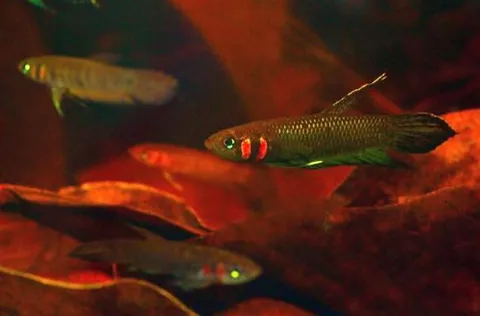
Betta mandor
The Betta mandor fish, officially named Betta mandor by scientists, belongs to the family Osphronemidae. Before this species was scientifically described in 2006, it was nicknamed "Ninja Betta." This name was given due…
Betta uberis
Betta uberis, or Betta Ubera, is classified in the family Osphronemidae. This species of Betta fish is not recommended for beginner aquarists, as it requires maintaining very strict hydrochemical water parameters.