Temperature20 – 28 °C
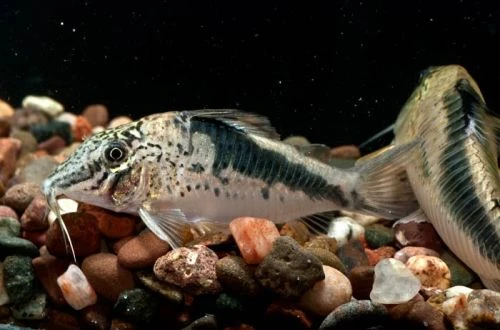
Fowler's Corydoras, also known as Corydoras fowleri, belongs to the family Callichthyidae, or Armored Catfishes. This fish is named after the American zoologist Henry Weed Fowler (1878–1965); the species itself was described in 1950 by James Böhlke.
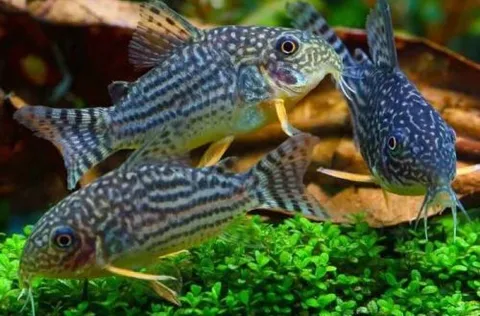
Within the habitat range of Corydoras fowleri, several closely related species with similar characteristics are found. It is not uncommon for various species of catfish to be offered under the same name in pet stores. This confusion in naming, however, does not affect their care, as all these fish require similar conditions. A generalized description is provided below. Adults reach a length of 6–7 cm. Their coloration is gray, with a lighter belly. A distinctive dark stripe runs along the body, starting at the dorsal fin and extending to the base of the caudal peduncle. The head is adorned with numerous dark gray or black speckles. Representatives of this Corydoras group are characterized by an elongated mouth shape, which they use to search for food by rooting in soft substrate.
The species inhabits South America, primarily in the Amazon River basins in Peru. In nature, it prefers bodies of water with soft, slightly acidic or neutral water and a high level of dissolved oxygen, often found in the bottom layers of river systems.
A peaceful and active schooling fish, suitable for a community aquarium. Intraspecific communication requires keeping them in groups of 6 or more individuals, which ensures natural behavior and reduces stress levels. They are highly compatible with other non-aggressive species of similar size that occupy the middle and upper water layers.
For a group of 4–6 Fowler's Corydoras, the optimal aquarium volume starts from 240 L. It is very important to maintain a stable hydrochemical composition of the water within acceptable pH and dGH values throughout the entire keeping period. It is crucial to prevent the accumulation of organic waste, such as uneaten food or excrement, as they can disrupt the biological balance. The presence of a soft substrate, such as sand or other fine-grained material, also plays a significant role. The aquarium decor should include plenty of hiding places, which can be snags, dense plant thickets, or other decorative elements, both natural and artificial. As for feeding, this omnivorous species readily accepts most popular foods – dry, frozen, and live. Since catfish spend most of their time at the bottom, sinking foods are recommended. Behavior and compatibility: Fowler's Corydoras gets along well with other non-aggressive species of comparable size. However, intraspecific relationships can be less peaceful. During the breeding season, males show intolerance towards potential rivals among their kin, so a spacious aquarium and sufficient hiding places are necessary when keeping a mixed-sex group.
An omnivorous species, feeding on small invertebrates and organic detritus in nature. In the aquarium, the diet should consist of high-quality sinking foods: catfish tablets, granules, or flakes. To maintain health, it is recommended to supplement their diet with frozen foods, such as bloodworms or Artemia, preferably in the evening.
Breeding occurs through spawning, where a pair lays eggs on smooth surfaces, such as broad plant leaves or aquarium glass. Stimulation is provided by imitating the rainy season through partial water changes with cooler water. After spawning is complete, it is recommended to remove the parent fish to prevent them from eating the eggs.
The species exhibits typical Corydoras sensitivity to water quality and substrate condition. If kept in unsanitary conditions or on sharp substrate, damage to the barbels and bacterial infections are possible. Prevention includes using a soft sandy substrate, regular siphoning of the bottom, and maintaining stable water parameters.
When purchasing, choose active fish with clean fins and no spots on their bodies. It is important to check the integrity of their barbels, as damage to them indicates poor care in the store. Healthy individuals should show interest in searching for food at the bottom, rather than appearing apathetic or emaciated.
The essentials: size, tank volume, water parameters and care
An adult reaches 7 cm in length. Plan the tank around the maximum size: the fish quickly outgrows a cramped setup.
The recommended volume is 240 L. A smaller tank speeds up nitrate build-up and raises stress levels.
Temperature 20–28 °C, pH 5–7.5, hardness 1–12 dGH. Stability matters more than exact values: sudden swings are harder on the fish than a small deviation from the ideal.
Around 5 years when kept properly. Lifespan depends directly on tank volume, water quality and a varied diet.
Temperament: semi-peaceful (including aggression during spawning / intraspecific conflicts). Keep this in mind when choosing tank mates.
Recommended setup: small group (5–6 individuals). Ignoring this is a common cause of stress and disease.
Diet type: sinking (any). Feed small portions that are finished within a couple of minutes — overfeeding does more harm than underfeeding.
The scientific name of the species is Corydoras fowleri, family Armored Catfish (Callichthyidae).
The water suits 198 of 208 plants in the catalogue — the easiest ones are shown first.
Afzelius's AnubiasAnacharisAnubiasBrazilian PennywortDwarf CloverDwarf CloverDwarf HygrophilaDwarf SagittariaDwarf ValGuppy GrassHornwortJava FernJava MossMoneywortMud SwordNair's LagenandraNarrow Leaf AnacharisNarrow-leaf CloverStringy MossSüsswassertangTaiwan MossTape GrassTemple PlantUssuri Watermilfoil
Matched by family, categories and overlapping keeping conditions
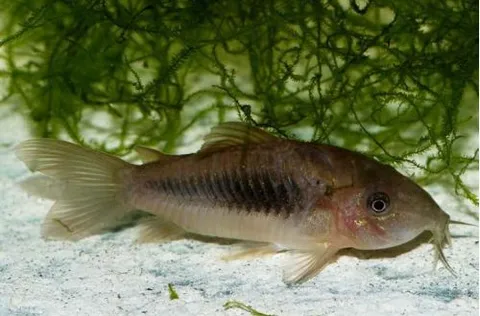
Corydoras aeneus
The Bronze Corydoras, also known by its scientific name Corydoras aeneus, is a member of the armored catfish family (Callichthyidae). This species is among the most popular and readily available aquarium fish. Its…
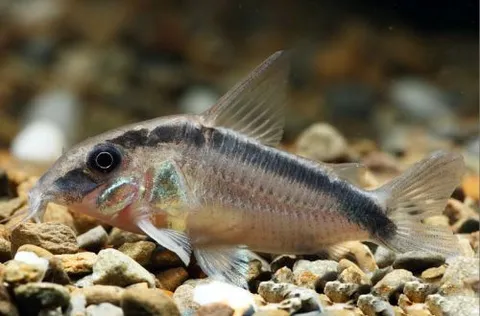
Corydoras arcuatus
Corydoras arcuatus, also known as the Arched Cory or Skunk Cory, is scientifically classified as Corydoras arcuatus and belongs to the Callichthyidae family. Its natural range extends across almost the entire upper…
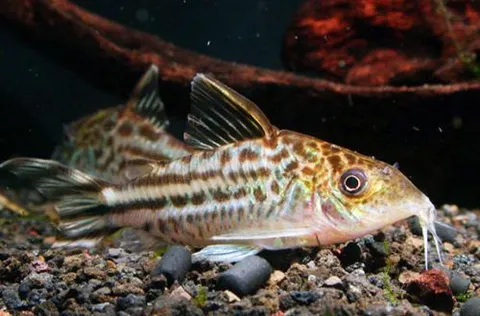
Corydoras robineae
The Flagtail Corydoras, also known as Robin's Corydoras (scientific name Corydoras robineae), belongs to the family Callichthyidae. These fish originate from the vast waters of the Rio Negro — a huge left tributary of…
Corydoras sterbai
Sterba's Corydoras, scientifically known as Corydoras sterbai, belongs to the family Callichthyidae, also called Armored or Callichthid Catfish. This fish originates from South America, specifically found in the Guaporé…