Temperature20 – 28 °C
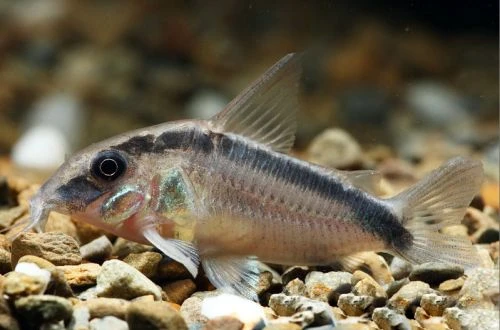
Corydoras arcuatus, also known as the Arched Cory or Skunk Cory, is scientifically classified as Corydoras arcuatus and belongs to the Callichthyidae family. Its natural range extends across almost the entire upper Amazon River basin, including numerous tributaries located in Brazil, Colombia, Peru, and Ecuador. Due to this wide distribution, many subspecies of the Arched Cory have emerged, each exhibiting slight morphological differences. Despite this, in aquaristics, all these catfish are traditionally grouped under one common name.
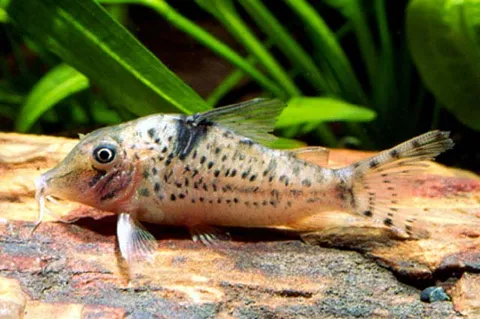
Adult fish of this species reach approximately 5 cm in length. A striking distinguishing feature is a broad dark stripe on a lighter background, which starts at the mouth, passes through the eyes along the upper part of the body, and gracefully curves towards the lower part of the tail base, forming a characteristic arch. The same coloration can be found in Corydoras metae, which often leads to confusion between these species. Sexual dimorphism in these fish is very weak, making it quite difficult to distinguish between males and females.
Corydoras arcuatus inhabits the upper reaches of the Amazon River basin in Brazil and Peru. In nature, it lives in areas of water bodies with slow currents, muddy bottoms, and an abundance of organic debris. It prefers places with soft water and dense vegetation that provides shelter.
A peaceful schooling species, primarily active at dusk and night. The fish are bottom-dwellers and should be kept in groups of at least 5–6 individuals; when alone, they become timid and stressed. They are well compatible with other peaceful aquarium inhabitants of a similar size.
A school of these fish requires an aquarium with a volume of at least 60–70 liters. Soft sand or fine rounded gravel should be used as substrate, as sharp substrate can damage the sensitive barbels of the catfish. Live plants, driftwood, and caves are essential to create shaded areas. Filtration and aeration should be effective but without creating a strong current. Weekly partial water changes with fresh water are required.
This is an omnivorous species, feeding on small benthic invertebrates and organic matter in nature. In the aquarium, specialized sinking tablets for catfish should be used, supplementing the diet with live or frozen foods such as bloodworms, brine shrimp, or tubifex. Food must reach the bottom, as the fish feed exclusively in the bottom layer.
Breeding is possible in a separate spawning tank with soft, slightly cooler water. Frequent water changes and abundant protein feeding serve as a stimulus. The female lays eggs on smooth surfaces, such as broad plant leaves or the aquarium glass. After spawning, it is recommended to remove the parents to prevent them from eating the eggs.
The species is sensitive to water quality; if keeping conditions are violated, bacterial infections often develop, affecting the barbels and skin. They are characterized by sharp spines in their fins, which can get caught in a net during transfer. Prevention involves maintaining clean substrate and stable water parameters.
When choosing, pay attention to the fish's activity and the integrity of its barbels, which should be long and without signs of erosion. A healthy specimen has clean coloration, a robust body without visible ulcers, spots, or fin damage. Avoid purchasing fish that appear emaciated or apathetic.
The essentials: size, tank volume, water parameters and care
An adult reaches 5 cm in length. Plan the tank around the maximum size: the fish quickly outgrows a cramped setup.
The recommended volume is 70 L. A smaller tank speeds up nitrate build-up and raises stress levels.
Temperature 20–28 °C, pH 5–7.5, hardness 1–5 dGH. Stability matters more than exact values: sudden swings are harder on the fish than a small deviation from the ideal.
Around 8 years when kept properly. Lifespan depends directly on tank volume, water quality and a varied diet.
Temperament: peaceful (regular). Keep this in mind when choosing tank mates.
Recommended setup: small group (5–6 individuals). Ignoring this is a common cause of stress and disease.
Diet type: sinking (any). Feed small portions that are finished within a couple of minutes — overfeeding does more harm than underfeeding.
The scientific name of the species is Corydoras arcuatus, family Armored Catfish (Callichthyidae).
The water suits 197 of 208 plants in the catalogue — the easiest ones are shown first.
Afzelius's AnubiasAnacharisAnubiasBrazilian PennywortDwarf CloverDwarf CloverDwarf HygrophilaDwarf SagittariaDwarf ValGuppy GrassHornwortJava FernJava MossMoneywortMud SwordNair's LagenandraNarrow Leaf AnacharisNarrow-leaf CloverStringy MossSüsswassertangTaiwan MossTape GrassTemple PlantUssuri Watermilfoil
Matched by family, categories and overlapping keeping conditions
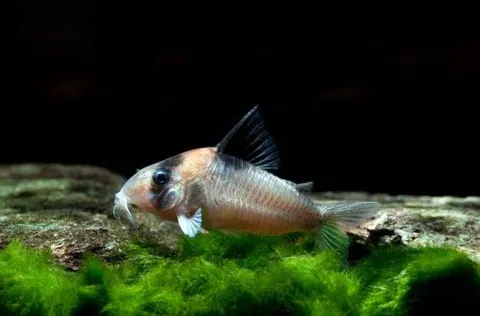
Corydoras burgessi
Burgess's Corydoras, also known as Burgess's Cory Catfish, bears the scientific name Corydoras burgessi and belongs to the family Callichthyidae, or Armored Catfishes. It is named in honor of biologist Warren Burgess,…
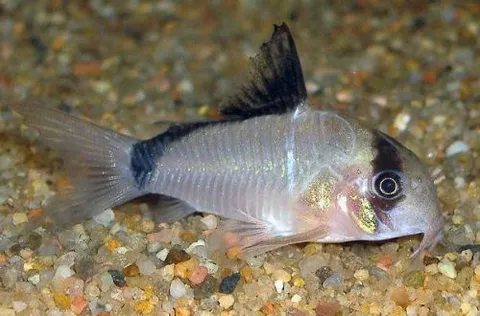
Corydoras metae
Corydoras metae, known among aquarists as Meta Corydoras, Bandit Cory, or “Black Mask” Catfish, is a member of the Callichthyidae family. This species is found exclusively in the Meta River basin, a left tributary of…
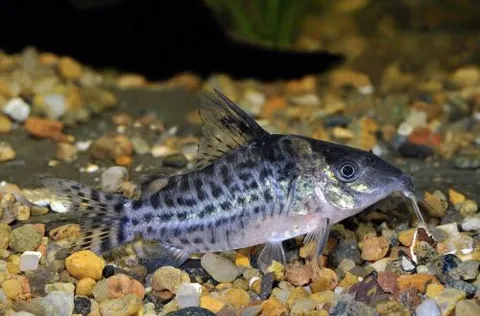
Corydoras lamberti
Lamberti's Corydoras, or Cory Catfish Lamberti, known to the scientific community as Corydoras lamberti, is a representative of the family Callichthyidae (Armored Catfish). The species was described in 1986 and named in…
Corydoras blochi
The fish, scientifically known as Corydoras blochi, belongs to the armored catfish family (Callichthyidae). Its natural range covers many river systems in South America, including the vast Amazon River basin. Bloch's…