Temperature20 – 28 °C
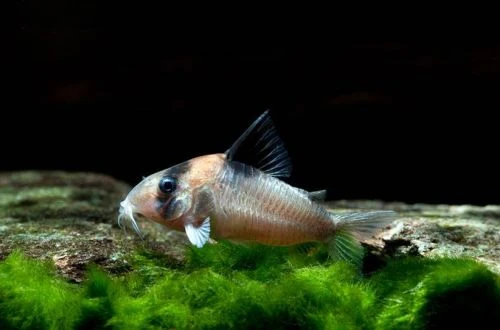
Burgess's Corydoras, also known as Burgess's Cory Catfish, bears the scientific name Corydoras burgessi and belongs to the family Callichthyidae, or Armored Catfishes. It is named in honor of biologist Warren Burgess, author of the widely known book "Atlas of Marine Aquarium Fishes," dedicated to popular aquarium fish.
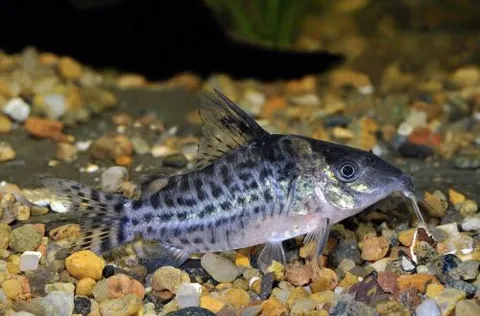
This species is a close relative of Adolfo's Corydoras, sharing similar color shades and body patterns. Adult specimens of this fish typically reach a length of about 5 cm. Their main color is light, often with a delicate pinkish hue. A distinctive feature is a black stripe located on the upper part of the body, extending from the head to the dorsal fin. A dark diagonal streak passes through the eye area. The top of the head is adorned with a prominent yellow or orange spot.
The species is endemic to the Rio Negro river basin in Brazil, specifically found in the Rio Unini tributary. It inhabits bodies of water with soft, acidic "blackwater," rich in organic compounds. In natural conditions, water parameters are characterized by a low pH of 4.0 to 6.0, minimal hardness, and temperatures varying seasonally from 20 to 28 °C.
A peaceful schooling fish, active predominantly in the bottom layer. For comfortable existence, a group of at least 6 individuals must be kept. In the aquarium, it coexists well with other calm, small-sized species such as characins, rasboras, and small cichlids. It avoids conflicts and spends most of its time foraging for food in the substrate.
Keeping Corydoras burgessi is not particularly difficult, provided the fish live in a suitable aquatic environment, receive adequate nutrition, and are not subjected to aggression from other aquarium inhabitants. Failure to meet even one of these conditions can negatively affect their health. Burgess's Corydoras feels best in a group of 4–6 individuals. For such a small school, an aquarium of at least 70 liters will be required. When setting up the aquarium, the main focus is on decorating the lower tier. It is recommended to use soft sandy substrate and several natural snags, which will serve as shelters. Plants in the aquarium are not mandatory but are welcome. As an additional decorative element, dried leaves from some trees can be used, pre-soaked and laid on the bottom. Such a leaf litter not only gives the aquarium a more natural look but also contributes to the formation of water chemistry similar to natural bodies of water. An effective filtration system and regular maintenance procedures, such as partial water changes and waste removal, will help avoid excessive accumulation of pollutants. Diet. Being an omnivorous species, these catfish readily accept a variety of commonly available aquarium foods, including live, frozen, and dry. It is desirable to offer them a varied menu, including sinking products, which is especially relevant given their bottom-dwelling lifestyle. Behavior and compatibility. This is a gregarious species and should be kept in a group of at least 4–6 individuals. Usually, different Corydoras species do not form mixed schools, but this rule can be broken when keeping closely related species, such as Adolfo's Corydoras. They are compatible with other non-aggressive fish of comparable size for which similar keeping conditions are suitable. For example, Apistogramma are often a good choice, as they are constant companions of these catfish in their natural habitat.
An omnivorous fish, feeding on small invertebrates and organic detritus in nature. In aquarium conditions, the diet should be varied and include high-quality sinking granules, catfish wafers, as well as frozen or live foods such as bloodworms, daphnia, and artemia. It is recommended to alternate food types to maintain health and activity.
Breeding requires simulating the rainy season, which is achieved by frequent water changes with cooler, softer water, and abundant feeding with protein-rich foods. Spawning occurs in pairs or groups, with the female laying eggs on plant leaves, decorations, or the aquarium glass. After fertilization, the eggs are recommended to be transferred to a separate incubator to prevent parental consumption.
The species is sensitive to water quality and substrate condition. When kept in aquariums with sharp or coarse gravel, their sensitive barbels are often damaged, opening the way for infections. Prevention includes using fine rounded sand as a substrate, regular siphoning of the substrate to prevent organic matter accumulation, and maintaining stable water parameters.
When purchasing, choose active fish with clean fins and no spots on the body. It is important to ensure that the fish's barbels are intact and show no signs of erosion, which indicates good care in the store. Avoid individuals with sunken bellies or signs of apathy, as this may indicate emaciation or hidden diseases.
The essentials: size, tank volume, water parameters and care
An adult reaches 5 cm in length. Plan the tank around the maximum size: the fish quickly outgrows a cramped setup.
The recommended volume is 70 L. A smaller tank speeds up nitrate build-up and raises stress levels.
Temperature 20–28 °C, pH 5–7, hardness 1–10 dGH. Stability matters more than exact values: sudden swings are harder on the fish than a small deviation from the ideal.
Around 5 years when kept properly. Lifespan depends directly on tank volume, water quality and a varied diet.
Temperament: peaceful (regular). Keep this in mind when choosing tank mates.
Recommended setup: small group (5–6 individuals). Ignoring this is a common cause of stress and disease.
Diet type: sinking (any). Feed small portions that are finished within a couple of minutes — overfeeding does more harm than underfeeding.
The scientific name of the species is Corydoras burgessi, family Armored Catfish (Callichthyidae).
The water suits 198 of 208 plants in the catalogue — the easiest ones are shown first.
Afzelius's AnubiasAnacharisAnubiasBrazilian PennywortDwarf CloverDwarf CloverDwarf HygrophilaDwarf SagittariaDwarf ValGuppy GrassHornwortJava FernJava MossMoneywortMud SwordNair's LagenandraNarrow Leaf AnacharisNarrow-leaf CloverStringy MossSüsswassertangTaiwan MossTape GrassTemple PlantUssuri Watermilfoil
Matched by family, categories and overlapping keeping conditions
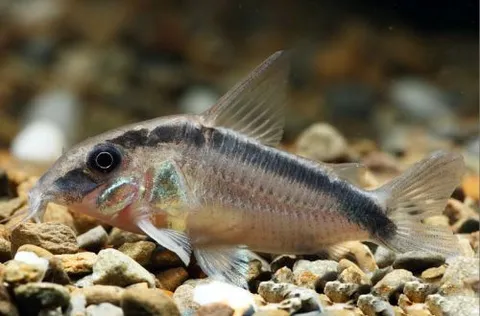
Corydoras arcuatus
Corydoras arcuatus, also known as the Arched Cory or Skunk Cory, is scientifically classified as Corydoras arcuatus and belongs to the Callichthyidae family. Its natural range extends across almost the entire upper…
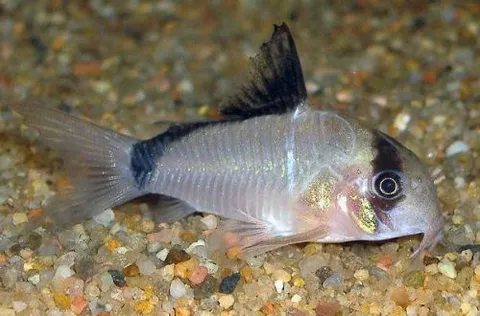
Corydoras metae
Corydoras metae, known among aquarists as Meta Corydoras, Bandit Cory, or “Black Mask” Catfish, is a member of the Callichthyidae family. This species is found exclusively in the Meta River basin, a left tributary of…
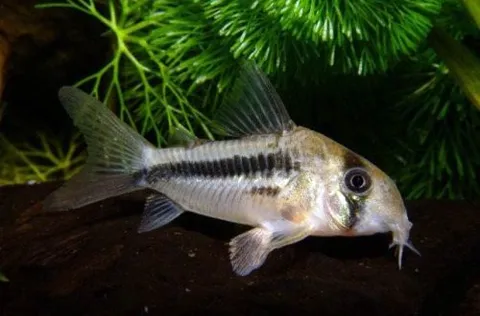
Corydoras axelrodi
Axelrod's Corydoras, also known as the Pink Corydoras (or simply Pink Cory), bears the scientific name Corydoras axelrodi and belongs to the armored catfish family, Callichthyidae. These catfish are native to South…
Corydoras lamberti
Lamberti's Corydoras, or Cory Catfish Lamberti, known to the scientific community as Corydoras lamberti, is a representative of the family Callichthyidae (Armored Catfish). The species was described in 1986 and named in…