Temperature20 – 28 °C
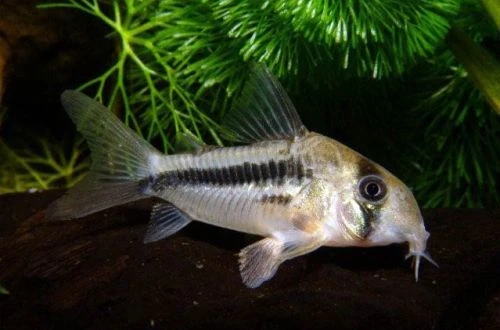
Axelrod's Corydoras, also known as the Pink Corydoras (or simply Pink Cory), bears the scientific name Corydoras axelrodi and belongs to the armored catfish family, Callichthyidae. These catfish are native to South America; specifically, they can be found in the Meta River basin, a tributary of the Orinoco, within Colombian territory. The fish was named in honor of Herbert Axelrod, an American entrepreneur, author, and publisher of many renowned works on tropical fish.
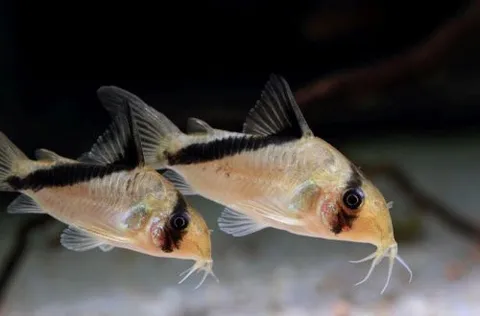
Adults of this species grow up to 4–5 cm in length. Their coloration is predominantly pink, which is the basis for their common name. The body pattern includes a diagonal stripe on the head and black stripes that run along the back and sides. A small number of dark speckles can be seen between these stripes.
The species inhabits South America, primarily the Meta River basin, a tributary of the Orinoco in Colombia. In nature, it prefers calm sections of rivers and soft-water bodies, where it stays in the bottom layers among vegetation and snags.
A peaceful and social schooling fish, most active at dusk and night. It is recommended to keep them in groups of 4–6 individuals. Compatible with most non-aggressive freshwater fish of comparable size, but not recommended for cohabitation with small shrimp species, which may be perceived as prey.
Axelrod's Corydoras does not have special requirements for keeping and will not cause significant trouble if suitable conditions are provided: balanced nutrition and peaceful cohabitation. For a group of six individuals, an aquarium of at least 70 liters is recommended. The setup is simple, with primary attention paid to the bottom layer. It is desirable to use soft substrates, such as large sand or fine rounded gravel, and to provide hiding places. It is crucial to maintain high water quality within acceptable temperature and hydrochemical parameters. For this, the aquarium must be equipped with the necessary equipment, particularly a filtration system, and require regular maintenance: weekly partial water changes and removal of accumulated organic waste, such as food remnants and excrement. Regarding feeding, the fish readily accept most common aquarium foods—dry, frozen, and live. Given the bottom-dwelling nature of the Pink Corydoras, preference should be given to sinking foods, as they will find it difficult to feed from the surface. In terms of behavior and compatibility, it is a peaceful and social fish that prefers to stay in groups of 4–6 conspecifics. They are compatible with other Corydoras species, but it should be noted that different groups do not mix and each species tends to keep to itself. Axelrod's Corydoras coexist well with most non-aggressive freshwater fish of comparable size.
An omnivorous species, in nature, it feeds on benthic crustaceans, insects, and organic detritus. In the aquarium, specialized sinking foods—tablets or granules—should be used, as the fish feed exclusively at the bottom. The diet can be supplemented with frozen or live foods.
Spawning is paired or communal, stimulated by water changes and temperature reduction. The female lays fertilized eggs on plant leaves or smooth surfaces. Parents do not care for their offspring and may eat the eggs, so it is recommended to remove the breeders after spawning. Incubation lasts 3–4 days.
The species has a strong immune system when kept under proper conditions. They are most sensitive to water quality and substrate cleanliness. Accumulation of organic waste can lead to bacterial infections of the fins and skin. It is important to avoid injuring the barbels with sharp substrate, which can lead to infections.
When purchasing, choose active individuals with clean skin without spots, ulcers, or fin damage. It is important to check the integrity of the barbels, as their absence is a sign of poor keeping conditions. The fish should show interest in foraging for food at the bottom, rather than appearing emaciated or apathetic.
The essentials: size, tank volume, water parameters and care
An adult reaches 4–5 cm in length. Plan the tank around the maximum size: the fish quickly outgrows a cramped setup.
The recommended volume is 70 L. A smaller tank speeds up nitrate build-up and raises stress levels.
Temperature 20–28 °C, pH 5–7, hardness 1–12 dGH. Stability matters more than exact values: sudden swings are harder on the fish than a small deviation from the ideal.
Around 6 years when kept properly. Lifespan depends directly on tank volume, water quality and a varied diet.
Temperament: peaceful (regular). Keep this in mind when choosing tank mates.
Recommended setup: small group (5–6 individuals). Ignoring this is a common cause of stress and disease.
Diet type: sinking (any). Feed small portions that are finished within a couple of minutes — overfeeding does more harm than underfeeding.
The scientific name of the species is Corydoras axelrodi, family Armored Catfish (Callichthyidae).
The water suits 198 of 208 plants in the catalogue — the easiest ones are shown first.
Afzelius's AnubiasAnacharisAnubiasBrazilian PennywortDwarf CloverDwarf CloverDwarf HygrophilaDwarf SagittariaDwarf ValGuppy GrassHornwortJava FernJava MossMoneywortMud SwordNair's LagenandraNarrow Leaf AnacharisNarrow-leaf CloverStringy MossSüsswassertangTaiwan MossTape GrassTemple PlantUssuri Watermilfoil
Matched by family, categories and overlapping keeping conditions
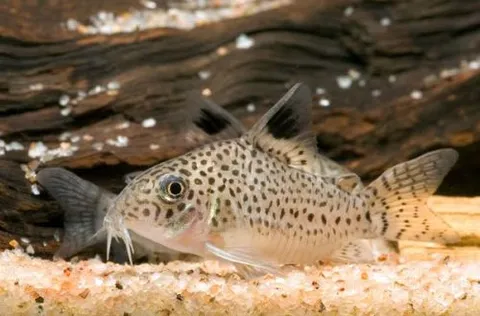
Corydoras copei
Cope's Corydoras, scientifically known as Corydoras copei, belongs to the extensive armored catfish family (Callichthyidae). This species was named in honor of the American ichthyologist Edward Drinker Cope, who lived…
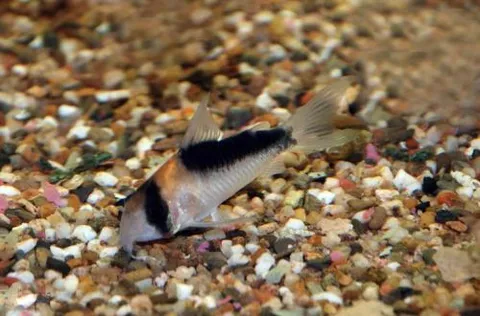
Corydoras duplicareus
Corydoras duplicareus, known scientifically as Corydoras duplicareus, belongs to the family Callichthyidae, which unites armored or callichthyid catfishes. The name "duplicareus" has Latin roots, deriving from the word…
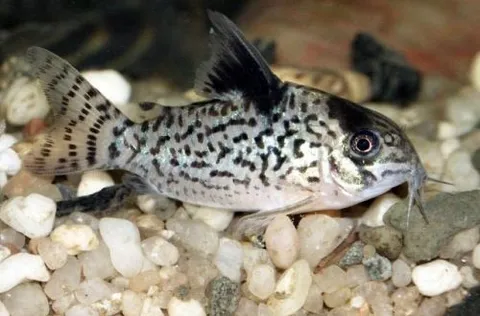
Corydoras leucomelas
The Black-and-white Corydoras, also known as the Black-and-white Cory cat, scientifically named Corydoras leucomelas, belongs to the family of armored catfish, or Callichthyidae. Its name, derived from the Latin words…
Corydoras melini
Melini's Corydoras, scientifically known as Corydoras melini, belongs to the family Callichthyidae, which includes armored or callichthyid catfishes. The name of this fish commemorates the Swedish biologist Douglas…