Temperature20 – 26 °C
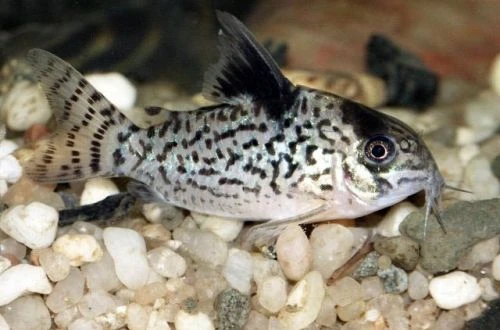
The Black-and-white Corydoras, also known as the Black-and-white Cory cat, scientifically named Corydoras leucomelas, belongs to the family of armored catfish, or Callichthyidae. Its name, derived from the Latin words "leukos" (white) and "melas" (black), refers to the characteristic coloration of this catfish. It is one of the most common Corydoras species, actively exported and successfully bred in captivity, ensuring its constant presence in the market. However, there is some confusion with other similarly colored related species. In most cases, this does not pose a serious problem, as their requirements for keeping conditions are similar.
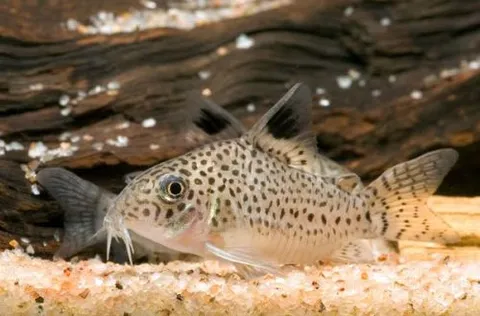
As noted earlier, this species is very similar to some other Corydoras catfish that have a similar pattern of dark speckles on a light, silvery background. Adults reach a length of 4 to 5 cm. A distinctive feature is a black stripe running through the head and eyes, as well as noticeable black pigmentation on the dorsal fin.
The species inhabits South America, primarily in the Ucayali and Marañón river basins in Peru and Colombia. In nature, it lives in shallow streams and small rivers flowing under the dense canopy of the tropical forest. The water in such biotopes is usually soft, acidic, and stained brown due to the high content of tannins released by decaying organic matter. The bottom of the water bodies is covered with a layer of fallen leaves, branches, and sand.
A peaceful, active, and schooling fish that feels comfortable only in a group. It is recommended to keep at least 4–6 individuals to reduce stress levels and observe natural behavior. The species is compatible with most non-aggressive fish of comparable size. The catfish spend most of their time near the bottom, actively exploring the substrate in search of food.
Most specimens of black-and-white Corydoras available for sale have been kept in artificial aquarium conditions for many generations. During this time, they have successfully adapted to an environment that often differs significantly from the natural habitats of their wild relatives. For their long-term and healthy keeping, it is crucial to maintain water purity, use a soft sandy substrate, and provide several shelters. Natural snags, live aquatic plants, or various decorative elements can serve as such shelters. For a small group of these fish, the optimal aquarium should have a volume of at least 80 L. Aquarium care is standard and very similar to that for many other species: weekly partial water changes, regular removal of organic debris (food, excrement), checking and maintaining equipment, and cleaning glass and decor from plaque. As for feeding, this species is omnivorous: it readily accepts most popular sinking foods of appropriate size used in aquaristics. It is desirable that their daily diet includes a variety of products, for example, a combination of dry, frozen, and live foods. In behavior, these fish are peaceful and sociable, preferring to be in the company of their kin. It is recommended to keep them in a group of at least 4–6 individuals. They get along well with other non-aggressive species of comparable size.
An omnivorous species, feeding on small invertebrates and organic detritus in nature. In the aquarium, they accept any quality sinking foods: specialized tablets for bottom fish, granules, or flakes. To maintain health, it is recommended to include live or frozen foods in their diet, such as bloodworms or Artemia. Feeding should be done in the evening or just before turning off the lights, as the catfish show increased activity at dusk.
Breeding is possible in aquarium conditions. Spawning is stimulated by frequent water changes with cooler water, mimicking the rainy season. The female lays eggs on plant leaves, glass, or decor elements. After spawning, it is recommended to remove the parents. Fry hatch after 3–4 days and, after becoming free-swimming, require fine starter food such as infusoria or micro-worms, with a subsequent transition to Artemia nauplii.
The fish are sensitive to water quality and substrate cleanliness. When kept on coarse or sharp substrate, damage to their delicate barbels is possible, leading to bacterial infections. The species is extremely sensitive to salt content in the water. Prevention includes weekly partial water changes, gravel vacuuming, and maintaining stable environmental parameters.
When purchasing, choose active individuals with clean skin and undamaged fins. It is important to pay attention to the condition of the barbels: they should be intact, without signs of erosion or inflammation. Avoid specimens with sunken bellies or signs of apathy, as this may indicate health problems or improper keeping conditions in the store.
The essentials: size, tank volume, water parameters and care
An adult reaches 4–5 cm in length. Plan the tank around the maximum size: the fish quickly outgrows a cramped setup.
The recommended volume is 80 L. A smaller tank speeds up nitrate build-up and raises stress levels.
Temperature 20–26 °C, pH 5–7.5, hardness 1–12 dGH. Stability matters more than exact values: sudden swings are harder on the fish than a small deviation from the ideal.
Around 5 years when kept properly. Lifespan depends directly on tank volume, water quality and a varied diet.
Temperament: peaceful (regular). Keep this in mind when choosing tank mates.
Recommended setup: small group (5–6 individuals). Ignoring this is a common cause of stress and disease.
Diet type: sinking (any). Feed small portions that are finished within a couple of minutes — overfeeding does more harm than underfeeding.
The scientific name of the species is Corydoras leucomelas, family Armored Catfish (Callichthyidae).
The water suits 198 of 208 plants in the catalogue — the easiest ones are shown first.
Afzelius's AnubiasAnacharisAnubiasBrazilian PennywortDwarf CloverDwarf CloverDwarf HygrophilaDwarf SagittariaDwarf ValGuppy GrassHornwortJava FernJava MossMoneywortMud SwordNair's LagenandraNarrow Leaf AnacharisNarrow-leaf CloverStringy MossSüsswassertangTaiwan MossTape GrassTemple PlantUssuri Watermilfoil
Matched by family, categories and overlapping keeping conditions
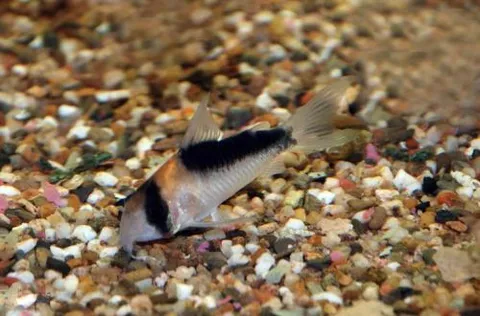
Corydoras duplicareus
Corydoras duplicareus, known scientifically as Corydoras duplicareus, belongs to the family Callichthyidae, which unites armored or callichthyid catfishes. The name "duplicareus" has Latin roots, deriving from the word…
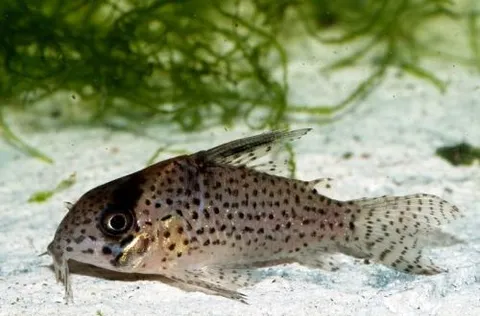
Corydoras kanei
Corydoras kanei is a member of the armored catfish family, Callichthyidae. The fish is named after Kane Grant, the son of the scientist who first discovered and described this species. The unique discovery of this…
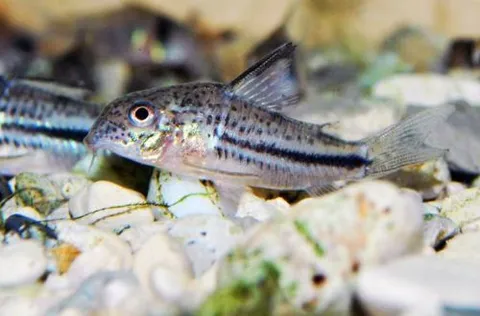
Corydoras bondi
The scientific name Corydoras bondi refers to Bond's Corydoras, a species belonging to the family Callichthyidae, commonly known as armored or callichthyid catfishes. This catfish was named in honor of Dr. Franklin…
Corydoras copei
Cope's Corydoras, scientifically known as Corydoras copei, belongs to the extensive armored catfish family (Callichthyidae). This species was named in honor of the American ichthyologist Edward Drinker Cope, who lived…