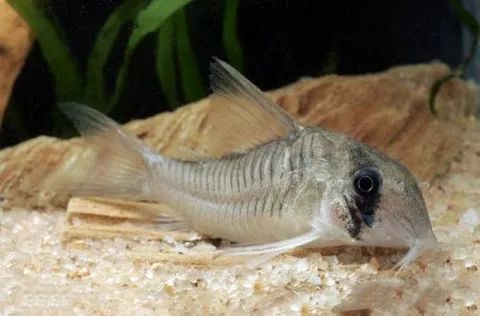
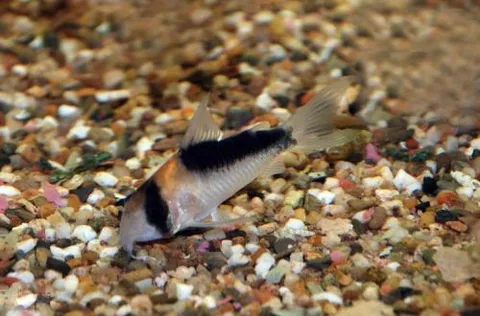
Corydoras kanei is a member of the armored catfish family, Callichthyidae. The fish is named after Kane Grant, the son of the scientist who first discovered and described this species. The unique discovery of this catfish took place in 1998, when it was found in the vast Rio Negro basin in South America. Intriguingly, two researchers independently found this species and assigned it the identifiers C026 and C046. It was only in 2011 that Grant established that these identifiers referred to the same species.

Tank
from 80 L (21 gal)
Temperature
20 – 26 °C (68 – 79 °F)
Size in aquarium
4 – 5 cm (1.6 – 2 in)
Acidity
pH 5.5–7.5
Natural rangeRange on the map
  • Brazil

Tank conditions

Plan the tank stocking
Temperature
20 – 26 °C (68 – 79 °F)
Water pH
Slightly acidic (5.5) – Neutral (7.5)
Water dH
Very soft (2) – Medium hardness (10)
Water salinity
no salt (freshwater)
Size in aquarium
4 – 5 cm (1.6 – 2 in)
Lifespan
5 years
Temperament
Peaceful (regular)
Toward small fish
not a predator
Required aquarium volume
from 80 L (21 gal)
Lighting
dimmed
Substrate
soft silted
Water flow
weak or moderate
Swimming level
near the bottom
Feeding
Sinking (any)
Keeping
Small group 5–6 individuals
  • Lifespan. A lifespan to expect under good care, not a measured value: it depends heavily on tank volume, water quality and diet — and for selectively bred forms, on their origin as well.
  • Toward small fish. Based on the Predators category in the catalog or the temperament in the species parameters. “A risk to small fish” means the species is not a predator by habit, yet will swallow any fish that fits in its mouth.
  • Required aquarium volume. This is a husbandry recommendation, not a measured value: the volume depends on the keeping mode (small group (5–6 individuals)), footprint, decor and tank mates.

Care and keeping

Description

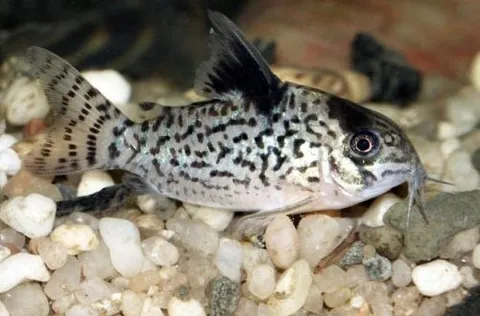
This species is often confused with Corydoras atropersonatus and supplied under that name, as they bear a noticeable resemblance. Both catfishes share similar characteristics in coloration and body pattern. However, the true Corydoras kanei is usually slightly larger: adult specimens can reach 4 to 5 cm in length. Its distinctive feature is the predominant black speckles, which are located on a light background with pinkish hues and extend even to the caudal and other fins.

Habitat

Corydoras kanei is endemic to Brazil, inhabiting the Rio Negro basin. In nature, these fish live in freshwater bodies, often preferring areas with soft water and shaded bottom sections, where they can hide among snags and fallen leaves.

Behavior and Compatibility

This is a peaceful schooling species that feels most confident and active in groups of six or more individuals. The fish prefer to stay in the bottom layer, so free space on the substrate is important for them. They are compatible with most non-aggressive fish inhabiting the middle and upper water layers, such as characins, danios, or rasboras.

Care and Maintenance

This catfish has been known to aquarists for many years, long before its scientific description was completed, when it was known under the identifiers C026 and C046. During this time, the species has successfully adapted to aquarium conditions, which sometimes differ significantly from its natural habitat. Keeping this species is quite simple, similar to other fish; the key is to maintain clean water within an acceptable range of temperature and pH/dGH values. This is achieved through regular aquarium maintenance. It is also important to provide a balanced diet, including a variety of foods; for example, dry and frozen sinking foods are well suited. Corydoras kanei should not be forced to search for food left by other aquarium inhabitants. Thanks to its calm and peaceful nature, this catfish coexists perfectly with most freshwater species.
Diet

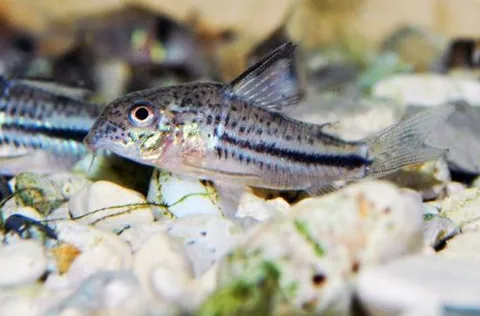
In nature, they feed on small invertebrates and organic detritus. In the aquarium, they accept high-quality dry foods in the form of sinking tablets or granules, and also readily eat frozen foods such as bloodworms, brine shrimp, or tubifex. A varied diet promotes health and activity.

Breeding and Reproduction

Breeding requires a separate spawning tank. Frequent water changes with cooler water and abundant feeding with live or frozen foods serve as a stimulus for spawning. The female lays about 60 eggs on the substrate. After spawning, the parents should be removed to prevent them from eating the eggs.

Diseases

The species has robust health when water parameters are maintained and the substrate is kept clean. They are sensitive to high organic matter and nitrate content, which can lead to damage to their barbels and skin. Prevention includes regular water changes and the use of soft substrate without sharp edges.

How to choose

When purchasing, choose active fish with clean skin and intact fins. It is important to check the condition of the barbels: they should be long and show no signs of erosion. Avoid individuals with sunken bellies or signs of apathy, as this may indicate emaciation or hidden diseases.

Compatibility

There are no pair reviews for this species yet — check tankmates in the matcher.

All tankmates

Plants and this fish

Matching water does not mean the plant will stay intact.

Frequently asked questions

The essentials: size, tank volume, water parameters and care

How big does Corydoras kanei get?

An adult reaches 4–5 cm in length. Plan the tank around the maximum size: the fish quickly outgrows a cramped setup.

What size aquarium does Corydoras kanei need?

The recommended volume is 80 L. A smaller tank speeds up nitrate build-up and raises stress levels.

What water parameters does Corydoras kanei need?

Temperature 20–26 °C, pH 5.5–7.5, hardness 2–10 dGH. Stability matters more than exact values: sudden swings are harder on the fish than a small deviation from the ideal.

How long does Corydoras kanei live?

Around 5 years when kept properly. Lifespan depends directly on tank volume, water quality and a varied diet.

Is Corydoras kanei aggressive?

Temperament: peaceful (regular). Keep this in mind when choosing tank mates.

How many Corydoras kanei should be kept together?

Recommended setup: small group (5–6 individuals). Ignoring this is a common cause of stress and disease.

What does Corydoras kanei eat?

Diet type: sinking (any). Feed small portions that are finished within a couple of minutes — overfeeding does more harm than underfeeding.

What is the scientific name of Corydoras kanei?

The scientific name of the species is Corydoras kanei, family Armored Catfish (Callichthyidae).

Similar fishes

Matched by family, categories and overlapping keeping conditions

Bond's Corydoras

Bond's Corydoras

Corydoras bondi

Armored Catfish (Callichthyidae)

The scientific name Corydoras bondi refers to Bond's Corydoras, a species belonging to the family Callichthyidae, commonly known as armored or callichthyid catfishes. This catfish was named in honor of Dr. Franklin…

Black-and-white Corydoras

Black-and-white Corydoras

Corydoras leucomelas

Armored Catfish (Callichthyidae)

The Black-and-white Corydoras, also known as the Black-and-white Cory cat, scientifically named Corydoras leucomelas, belongs to the family of armored catfish, or Callichthyidae. Its name, derived from the Latin words…

Grey Corydoras

Grey Corydoras

Corydoras griseus

Armored Catfish (Callichthyidae)

The Grey Corydoras, or Corydoras griseus in Latin, belongs to the armored catfish family (Callichthyidae). Its natural habitat is in the northern regions of South America, in the Essequibo River basin in Guyana.

Corydoras duplicareus

Corydoras duplicareus

Corydoras duplicareus

Armored Catfish (Callichthyidae)

Corydoras duplicareus, known scientifically as Corydoras duplicareus, belongs to the family Callichthyidae, which unites armored or callichthyid catfishes. The name "duplicareus" has Latin roots, deriving from the word…

Other scientific names and conservation status

Categories
Corydoras
Conservation status
Least concernLC