Temperature20 – 26 °C
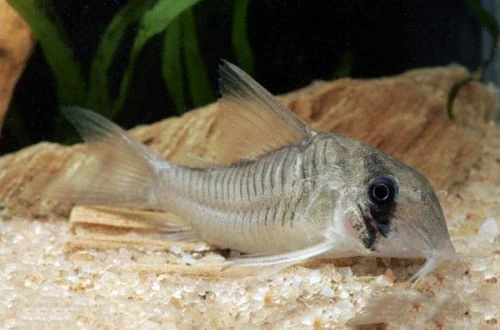
The Grey Corydoras, or Corydoras griseus in Latin, belongs to the armored catfish family (Callichthyidae). Its natural habitat is in the northern regions of South America, in the Essequibo River basin in Guyana.
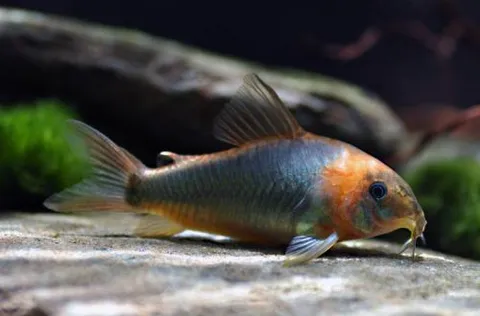
Adults of this species reach a size of 4–5 cm in length. The Latin name "griseus" translates to "grey," which accurately reflects the key feature of the catfish's appearance—a uniform whitish coloration. Its back is slightly darker than its belly, and its fins and tail are translucent. The only pattern on its body is a dark stripe running across its head through its eyes. Several other Corydoras species are known that are outwardly identical but were described much later. These species, which have not yet received scientific names, are designated by identification numbers; for example, catfish C040 and C073 inhabit the river systems of the Brazilian state of Rondônia, bordering Bolivia. Another such species was found in the Brazilian state of Amapá, located near Guyana. It is probable that future research will allow these species to be combined, which would significantly expand the presumed natural range of the Grey Corydoras.
The species inhabits South America, primarily in the Potaro River basin (Guyana), and is also found in tributaries of the Amazon basin. It prefers small flowing bodies of water with soft sandy or gravel bottoms. Water parameters in its natural habitat are characterized as moderately acidic or neutral.
A peaceful and shoaling fish, it is recommended to keep them in groups of 4–6 individuals. It is primarily bottom-dwelling, showing the most activity at dusk. It is compatible with most peaceful fish species, but due to its activity, it may disturb very timid tankmates. An hierarchy is established within the group, and there is no aggression towards other species.
This catfish is easy to care for and undemanding. For comfortable keeping of a group of 4–6 fish, an aquarium of 70–80 liters is required, with consistently clean water, whose temperature and hydrochemical parameters must correspond to acceptable ranges. The aquarium setup can be minimalistic. A soft sandy substrate combined with several snags and dense plant thickets will provide sufficient hiding places. Other decor elements are chosen at the aquarist's discretion or according to the needs of other aquarium inhabitants. Maintaining a healthy aquatic environment requires the uninterrupted operation of all equipment, especially the filtration system, as well as regular performance of necessary procedures. These procedures include weekly water changes of 15–20% of the volume with fresh water, timely removal of organic waste (uneaten food, excrement), and cleaning of aquarium glass and decor elements. Regarding feeding: since catfish spend most of their time at the bottom, food must be sinking. Food selection will not be a problem, as the Grey Corydoras readily eats most popular foods—live, frozen, and dry (flakes, granules, tablets, gels, and others). Behavior and compatibility: this is a calm, peaceful fish that prefers to stay in groups of 4 or more individuals. It gets along well with many non-aggressive freshwater fish species.
An omnivorous species, it feeds on small invertebrates and organic detritus in nature. In the aquarium, a variety of sinking foods should be used, including specialized catfish tablets, as well as frozen or live foods such as bloodworms or brine shrimp. Do not rely solely on leftover food from other fish, as this does not provide complete nutrition.
Breeding takes place in separate spawning tanks using a group of fish, where the number of males exceeds the number of females. Frequent water changes with cooler water and increased aeration serve as a stimulus for spawning. Eggs are laid on the substrate, glass, or fine-leaved plants. After spawning, the parents are removed to prevent them from eating the eggs.
Fish are sensitive to water quality and substrate cleanliness; accumulation of organic matter can lead to damage to their barbels. Skin diseases and fin damage often occur when using sharp substrate, which can injure delicate tissues. The species is extremely sensitive to salt content in the water, which can cause serious harm to the organism.
When purchasing, choose active fish with clean fins and intact barbels. It is important to avoid individuals with signs of emaciation, sunken bellies, or skin lesions. Since catfish have sharp spines in their fins, caution must be exercised during transport and transfer to prevent the fish from getting tangled in the net.
The essentials: size, tank volume, water parameters and care
An adult reaches 4–5 cm in length. Plan the tank around the maximum size: the fish quickly outgrows a cramped setup.
The recommended volume is 70 L. A smaller tank speeds up nitrate build-up and raises stress levels.
Temperature 20–26 °C, pH 6–7.5, hardness 2–12 dGH. Stability matters more than exact values: sudden swings are harder on the fish than a small deviation from the ideal.
Around 8 years when kept properly. Lifespan depends directly on tank volume, water quality and a varied diet.
Temperament: peaceful (regular). Keep this in mind when choosing tank mates.
Recommended setup: small group (5–6 individuals). Ignoring this is a common cause of stress and disease.
Diet type: sinking (any). Feed small portions that are finished within a couple of minutes — overfeeding does more harm than underfeeding.
The scientific name of the species is Corydoras griseus, family Armored Catfish (Callichthyidae).
The water suits 197 of 208 plants in the catalogue — the easiest ones are shown first.
Afzelius's AnubiasAnacharisAnubiasBrazilian PennywortDwarf CloverDwarf CloverDwarf HygrophilaDwarf SagittariaDwarf ValGuppy GrassHornwortJava FernJava MossMoneywortMud SwordNair's LagenandraNarrow Leaf AnacharisNarrow-leaf CloverStringy MossSüsswassertangTaiwan MossTape GrassTemple PlantUssuri Watermilfoil
Matched by family, categories and overlapping keeping conditions
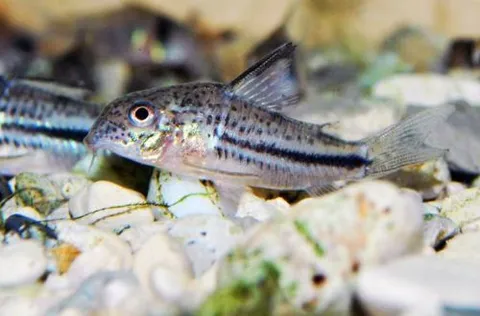
Corydoras bondi
The scientific name Corydoras bondi refers to Bond's Corydoras, a species belonging to the family Callichthyidae, commonly known as armored or callichthyid catfishes. This catfish was named in honor of Dr. Franklin…
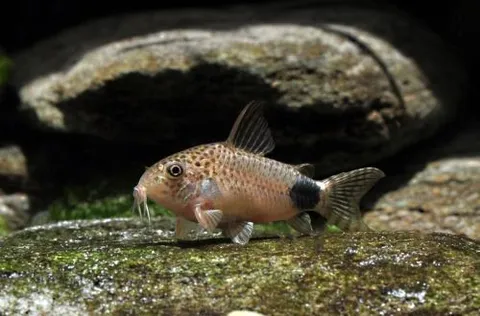
Corydoras caudimaculatus
The spotted-tail Corydoras, scientifically known as Corydoras caudimaculatus, belongs to the family Callichthyidae – the armored or callichthyid catfishes. The fish is named for a distinctive feature of its body…
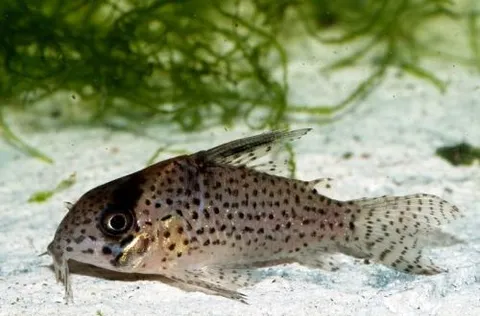
Corydoras kanei
Corydoras kanei is a member of the armored catfish family, Callichthyidae. The fish is named after Kane Grant, the son of the scientist who first discovered and described this species. The unique discovery of this…
Corydoras eques
The Knight Corydoras, scientifically named Corydoras eques, is a member of the Callichthyidae family, which includes armored or callichthyid catfishes. Its Latin name, eques, translates to "knight" or "horseman,"…