Temperature20 – 26 °C
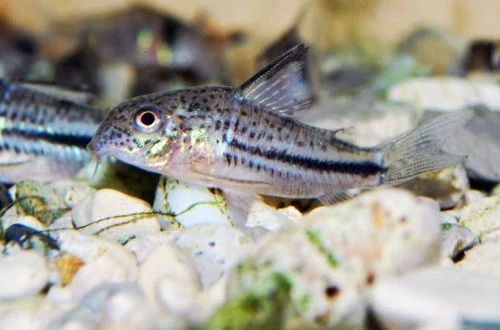
The scientific name Corydoras bondi refers to Bond's Corydoras, a species belonging to the family Callichthyidae, commonly known as armored or callichthyid catfishes. This catfish was named in honor of Dr. Franklin Bond; the species itself was described by William Gosline in 1940.
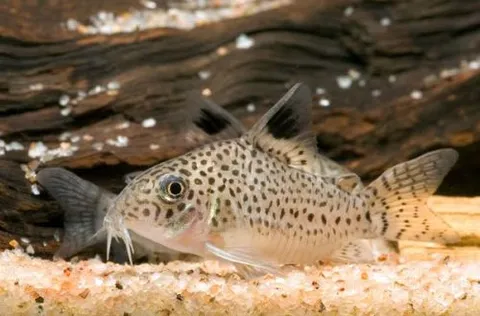
Adults of this species typically reach a length of 4 to 5 cm. Their bodies are yellowish and adorned with a distinctive pattern: the back features numerous black speckles, while a horizontal stripe runs along the sides, framed by silvery lines that extend from the head to the tail. A spotted pattern is also visible on the dorsal and caudal fins, while the other fins remain semi-transparent.
Bond's Corydoras inhabits tropical freshwater bodies in South America. Its range covers the Yuruan River basins in Venezuela, the Corentyne and Rupununi Rivers in Guyana and Suriname, and it is also found in the Machado River basin in Brazil. It prefers the bottom layers of water in areas with moderate current.
This is a peaceful schooling species that is primarily active at dusk and night, although it may also show activity during the day. In an aquarium, it is recommended to keep a group of 6 or more individuals, which allows the fish to feel secure and exhibit natural social behaviors. It coexists well with other non-aggressive fish species that occupy the middle and upper water layers.
This fish species does not demand stringent keeping conditions, making Bond's Corydoras one of the most undemanding aquarium inhabitants. It adapts well to various hydrochemical water parameters, thriving in both acidic and soft water, as well as slightly alkaline water of medium hardness. Aquarium decor also plays no critical role; it is only important to provide a soft substrate and several suitable hiding places. As with any aquarium inhabitant, a clean aquatic environment is vital for the catfish. While a modern, even highly technological, filtration system is an important element, it cannot fully replace regular maintenance aimed at sustaining a healthy ecosystem. Therefore, systematic cleaning of the substrate from organic pollutants (such as food remnants and excrement), removal of biofilm from decorative elements, and weekly partial water changes with fresh water are mandatory. In terms of diet, Bond's Corydoras is omnivorous. It readily accepts most available dry foods, including flakes and granules, as well as live or frozen foods of appropriate size, such as Artemia, Daphnia, and bloodworms. In terms of behavior and compatibility with other species, it is a peaceful and sociable fish that coexists perfectly with other peaceful aquarium inhabitants of comparable size. Bond's Corydoras is a gregarious species and should be kept in a group of at least 4–6 individuals. If possible, it is recommended to acquire a group of 4–6 or more fish.
In natural conditions, it feeds on small invertebrates, insect larvae, benthic crustaceans, and organic plant detritus. In the aquarium, a varied diet is essential, including high-quality sinking granules, tablets for bottom feeders, and frozen foods such as bloodworms, Artemia, or Daphnia. Feeding should be done in portions that the fish can completely consume within a few minutes.
Breeding occurs in small spawning tanks. Spawning is either in pairs or groups, with the male fertilizing the eggs held by the female between her pelvic fins. After this, the female attaches the sticky eggs to the substrate, such as plant leaves. Parents do not care for their offspring and may eat the eggs, so the breeding pair should be removed after spawning.
The species possesses robust immunity when kept in proper conditions, but it is sensitive to water quality and the accumulation of organic waste. The main risks are associated with damage to their sensitive barbels when kept on unsuitable substrate, which can lead to bacterial infections. Prevention includes regular water changes, using a soft substrate without sharp edges, and maintaining a clean bottom.
When purchasing, choose active fish with clean fins and no visible body damage. A key sign of health is the presence of intact, undamaged barbels, which are an important sensory organ. Avoid individuals with sunken bellies, signs of lethargy, or film on their bodies, as these may indicate stress, emaciation, or parasitic diseases.
The essentials: size, tank volume, water parameters and care
An adult reaches 4–5 cm in length. Plan the tank around the maximum size: the fish quickly outgrows a cramped setup.
The recommended volume is 70 L. A smaller tank speeds up nitrate build-up and raises stress levels.
Temperature 20–26 °C, pH 5.5–7.5, hardness 2–12 dGH. Stability matters more than exact values: sudden swings are harder on the fish than a small deviation from the ideal.
Around 5 years when kept properly. Lifespan depends directly on tank volume, water quality and a varied diet.
Temperament: peaceful (regular). Keep this in mind when choosing tank mates.
Recommended setup: small group (5–6 individuals). Ignoring this is a common cause of stress and disease.
Diet type: sinking (any). Feed small portions that are finished within a couple of minutes — overfeeding does more harm than underfeeding.
The scientific name of the species is Corydoras bondi, family Armored Catfish (Callichthyidae).
The water suits 198 of 208 plants in the catalogue — the easiest ones are shown first.
Afzelius's AnubiasAnacharisAnubiasBrazilian PennywortDwarf CloverDwarf CloverDwarf HygrophilaDwarf SagittariaDwarf ValGuppy GrassHornwortJava FernJava MossMoneywortMud SwordNair's LagenandraNarrow Leaf AnacharisNarrow-leaf CloverStringy MossSüsswassertangTaiwan MossTape GrassTemple PlantUssuri Watermilfoil
Matched by family, categories and overlapping keeping conditions
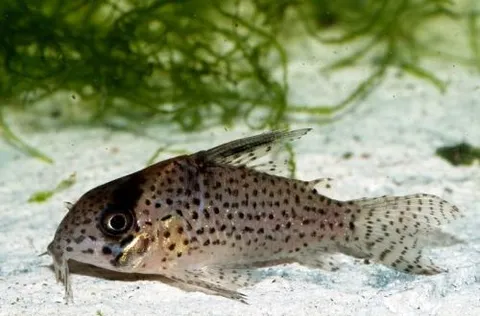
Corydoras kanei
Corydoras kanei is a member of the armored catfish family, Callichthyidae. The fish is named after Kane Grant, the son of the scientist who first discovered and described this species. The unique discovery of this…
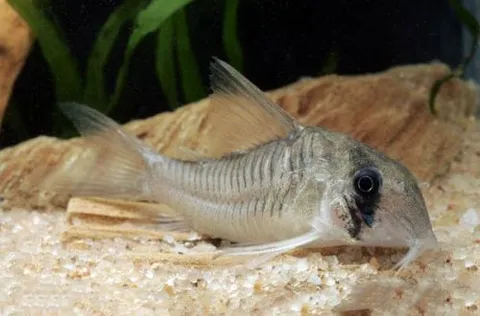
Corydoras griseus
The Grey Corydoras, or Corydoras griseus in Latin, belongs to the armored catfish family (Callichthyidae). Its natural habitat is in the northern regions of South America, in the Essequibo River basin in Guyana.
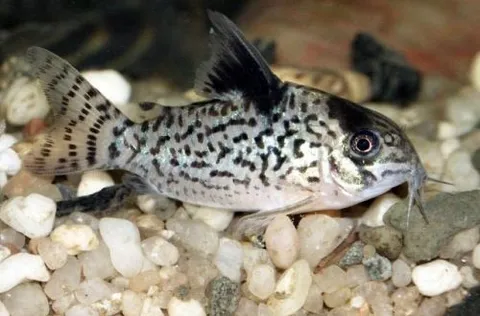
Corydoras leucomelas
The Black-and-white Corydoras, also known as the Black-and-white Cory cat, scientifically named Corydoras leucomelas, belongs to the family of armored catfish, or Callichthyidae. Its name, derived from the Latin words…
Corydoras copei
Cope's Corydoras, scientifically known as Corydoras copei, belongs to the extensive armored catfish family (Callichthyidae). This species was named in honor of the American ichthyologist Edward Drinker Cope, who lived…