Temperature20 – 25 °C
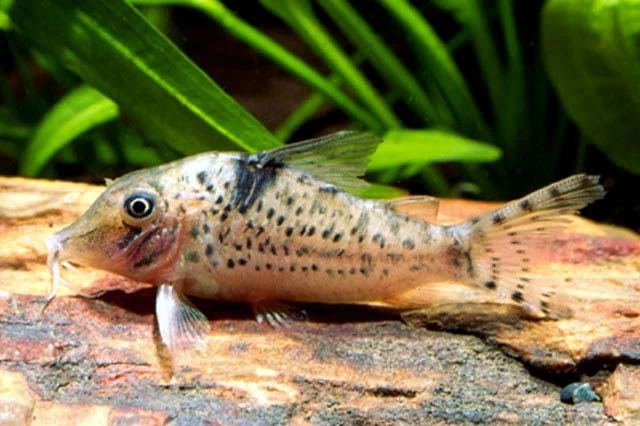
The fish, scientifically known as Corydoras blochi, belongs to the armored catfish family (Callichthyidae). Its natural range covers many river systems in South America, including the vast Amazon River basin. Bloch's Corydoras is easily found in the waters of Venezuela, Guyana, and the northern regions of Brazil, from where it originates.
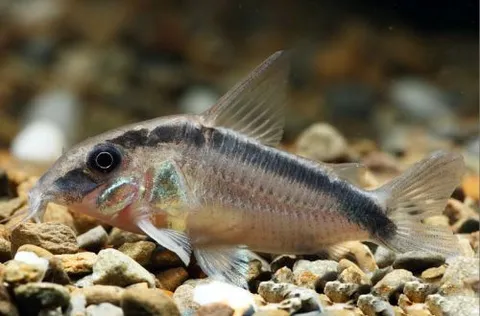
Adult specimens of this catfish typically reach a length of about 5 cm. In terms of its morphological characteristics, it is quite similar to most other Corydoras species. The fish's body appears robust and stocky, protected by rows of bony plates. Notably, the first rays of its fins have transformed into distinctive spines. Such powerful protection makes it virtually invulnerable to attacks from small predators. Bloch's Corydoras usually has a light coloration, with a characteristic pattern of black rounded spots. A distinctive feature is a dark pigmentation spot at the base of the dorsal fin.
The species' range includes river systems in South America, including the Amazon River basin, as well as the waters of Venezuela, Guyana, and the northern states of Brazil. The fish prefer the bottom layers of water in rivers with slow to moderate currents. In nature, they inhabit soft, slightly acidic water, but the species demonstrates high adaptability to various keeping conditions.
Like many members of its genus, this catfish exhibits a peaceful and calm disposition. It thrives in the company of its own kind and also shows excellent compatibility with other non-aggressive species that are comparable in size and temperament.
For a small group of six fish, an aquarium of 70 liters or more will suffice. When setting up the tank, it is important to create plenty of hiding places and to provide areas with soft sandy substrate, which the catfish enjoy digging in. Hiding places can include both artificial decor and natural elements: pre-treated driftwood, dense thickets of aquatic plants, or certain tree leaves. Wild specimens prefer soft, slightly acidic water, but acclimated fish adapt quite successfully to higher pH and dGH values. These catfish have a reputation for being undemanding and relatively easy to keep. Regular aquarium maintenance combined with a quality filtration system will help maintain water at an appropriate level.
In their natural environment, catfish feed on small invertebrates and organic detritus. In aquarium conditions, they accept any high-quality sinking foods, including specialized tablets, granules, and flakes for bottom-dwelling fish. To maintain health and prepare for breeding, it is recommended to supplement their diet with live or frozen foods: bloodworms, daphnia, tubifex, or enchytraeids.
Spawning is paired. The female holds the eggs between her ventral fins, where fertilization by the male's milt occurs, after which she transfers the eggs to a substrate, usually among dense plant thickets. This process is repeated multiple times until the clutch is complete, which can number up to 100 eggs. The incubation period is 3–4 days. There is no parental care for the offspring.
The species has a strong immune system when kept in proper conditions. The main danger comes from bacterial infections arising from poor water quality and substrate contamination. An important preventive measure is the use of fine, soft sand, as sharp gravel particles can injure their sensitive barbels, opening the way for fungal and bacterial infections.
When selecting individuals, pay attention to the fish's activity: healthy catfish constantly explore the bottom in search of food. Barbels should be intact, without signs of erosion or damage. The fish's body should be clean, without film, spots, or ulcers. Avoid purchasing individuals that appear emaciated, lethargic, or stay near the water surface, as this may indicate health problems or unsatisfactory conditions in the store's aquarium.
The essentials: size, tank volume, water parameters and care
An adult reaches 5 cm in length. Plan the tank around the maximum size: the fish quickly outgrows a cramped setup.
The recommended volume is 70 L. A smaller tank speeds up nitrate build-up and raises stress levels.
Temperature 20–25 °C, pH 6–8, hardness 2–25 dGH. Stability matters more than exact values: sudden swings are harder on the fish than a small deviation from the ideal.
Around 6 years when kept properly. Lifespan depends directly on tank volume, water quality and a varied diet.
Temperament: peaceful (regular). Keep this in mind when choosing tank mates.
Recommended setup: small group (3–4 individuals). Ignoring this is a common cause of stress and disease.
Diet type: sinking (any). Feed small portions that are finished within a couple of minutes — overfeeding does more harm than underfeeding.
The scientific name of the species is Corydoras blochi, family Armored Catfish (Callichthyidae).
The water suits 196 of 208 plants in the catalogue — the easiest ones are shown first.
Afzelius's AnubiasAnacharisAnubiasBrazilian PennywortDwarf CloverDwarf CloverDwarf HygrophilaDwarf SagittariaDwarf ValGuppy GrassHornwortJava FernJava MossMoneywortMud SwordNarrow Leaf AnacharisNarrow-leaf CloverStringy MossSüsswassertangTaiwan MossTape GrassTemple PlantUssuri WatermilfoilWater Wisteria
Matched by family, categories and overlapping keeping conditions
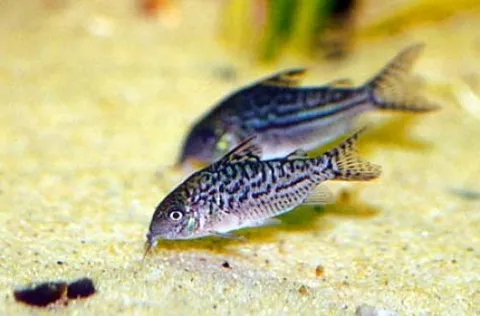
Corydoras sodalis
Corydoras sodalis, known as the reticulated corydoras, belongs to the family Callichthyidae, which includes armored catfishes. The historical habitat of this fish is South America. It can be found in the upper Amazon…
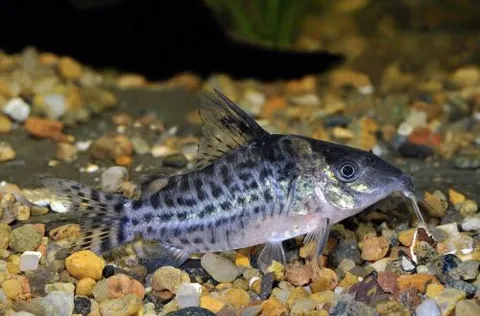
Corydoras lamberti
Lamberti's Corydoras, or Cory Catfish Lamberti, known to the scientific community as Corydoras lamberti, is a representative of the family Callichthyidae (Armored Catfish). The species was described in 1986 and named in…
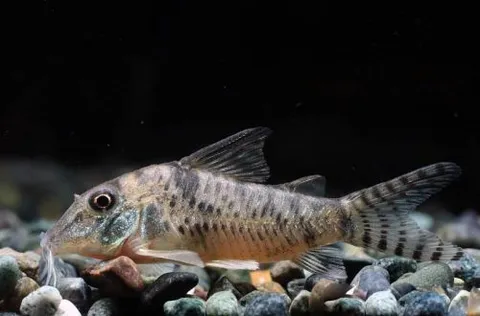
Corydoras aurofrenatus
Corydoras aurofrenatus, known as the Goldstripe Corydoras, belongs to the family Callichthyidae, or Armored Catfishes. Its name is due to the unique pigmentation on its head and body, which shimmers with gold. The…
Corydoras arcuatus
Corydoras arcuatus, also known as the Arched Cory or Skunk Cory, is scientifically classified as Corydoras arcuatus and belongs to the Callichthyidae family. Its natural range extends across almost the entire upper…