Temperature20 – 25 °C
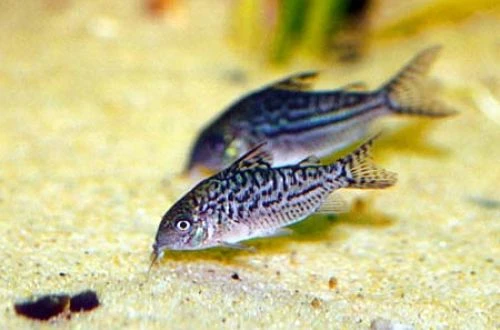
Corydoras sodalis, known as the reticulated corydoras, belongs to the family Callichthyidae, which includes armored catfishes. The historical habitat of this fish is South America. It can be found in the upper Amazon River basin, in the Peruvian region of Loreto, and in the adjacent Brazilian state of Amazonas. These corydoras primarily prefer small tributaries, streams, and areas of flooded forests.
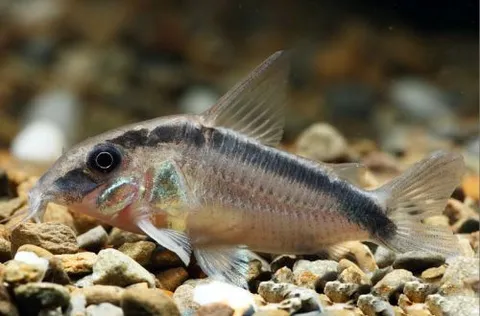
Adults grow up to 5 cm in length. A distinctive feature of this corydoras is its robust, stocky body, covered with dense rows of bony plates that provide reliable protection from small predators. Additional protection is provided by thickened and pointed first fin rays, which function as spines. The coloration consists of a dark reticulated pattern on a light background. Visually, this corydoras is almost identical to its close relative, Corydoras reticulatus. The main visual difference of Corydoras sodalis is the absence of a black spot on the dorsal fin.
The reticulated corydoras inhabits river systems in South America, primarily in the Amazon River basin. In nature, it prefers areas with slow currents, silty or sandy bottoms, and dense riparian vegetation. The water in its habitats is usually soft and slightly acidic, but the species shows high adaptability to various environmental conditions.
This species is distinguished by its peaceful and calm disposition. It coexists perfectly with many other aquarium fish of comparable size, including other Corydoras species. These fish prefer to be in groups, so it is recommended to acquire a school of at least six individuals. Large, aggressive, or territorial aquarium inhabitants should be avoided as tankmates.
For a school of six fish, an aquarium of at least 70 L will be optimal. It should include a soft substrate and several hiding places. These can be natural elements such as driftwood, fallen leaves, nut shells, or dense plant thickets, as well as artificial decorations. Dim lighting is preferable, which can be achieved by using floating plants. Typically, fish bred in aquarium conditions, unlike those caught in the wild, successfully adapt to various water parameters. The reticulated corydoras is no exception: if it has been bred in aquariums for several generations, it has likely adapted to fairly wide ranges of pH and dGH. This significantly simplifies its maintenance in terms of regular water changes and maintaining the necessary hydrochemical composition.
In its natural environment, it is an omnivorous bottom dweller, feeding on small invertebrates, insect larvae, and organic detritus. In the aquarium, it accepts all types of quality dry foods designed for bottom-dwelling fish, in the form of tablets or granules. The diet should be supplemented with frozen or live foods, such as bloodworms or brine shrimp, to maintain health and activity.
Breeding occurs in a spawning tank, where a group of fish with a predominance of males is placed. Abundant feeding and regular partial water changes with cooler fresh water stimulate spawning. Eggs are laid on plant leaves or aquarium glass. After the process is complete, the parents should be removed to prevent egg consumption. Fry begin to feed after the yolk sac is absorbed; initial foods include Artemia nauplii or specialized microfoods.
The species has strong immunity when basic keeping conditions are met. The main danger is substrate contamination, which leads to infectious lesions of the sensitive barbels and the development of bacterial diseases. Prevention includes using a soft sandy substrate without sharp particles, regular siphoning of the bottom, and maintaining water cleanliness. Fish are sensitive to abrupt changes in environmental parameters.
When purchasing, choose active individuals with clean skin without spots, ulcers, or visible fin damage. It is important to check the integrity of the barbels, as their absence or deformation often indicates poor water quality in the store. A healthy fish should show interest in foraging on the bottom and not exhibit signs of emaciation or lethargic behavior.
The essentials: size, tank volume, water parameters and care
An adult reaches 5 cm in length. Plan the tank around the maximum size: the fish quickly outgrows a cramped setup.
The recommended volume is 70 L. A smaller tank speeds up nitrate build-up and raises stress levels.
Temperature 20–25 °C, pH 6–8, hardness 2–25 dGH. Stability matters more than exact values: sudden swings are harder on the fish than a small deviation from the ideal.
Around 5 years when kept properly. Lifespan depends directly on tank volume, water quality and a varied diet.
Temperament: peaceful (regular). Keep this in mind when choosing tank mates.
Recommended setup: small group (5–6 individuals). Ignoring this is a common cause of stress and disease.
Diet type: sinking (any). Feed small portions that are finished within a couple of minutes — overfeeding does more harm than underfeeding.
The scientific name of the species is Corydoras sodalis, family Armored Catfish (Callichthyidae).
The water suits 196 of 208 plants in the catalogue — the easiest ones are shown first.
Afzelius's AnubiasAnacharisAnubiasBrazilian PennywortDwarf CloverDwarf CloverDwarf HygrophilaDwarf SagittariaDwarf ValGuppy GrassHornwortJava FernJava MossMoneywortMud SwordNarrow Leaf AnacharisNarrow-leaf CloverStringy MossSüsswassertangTaiwan MossTape GrassTemple PlantUssuri WatermilfoilWater Wisteria
Matched by family, categories and overlapping keeping conditions
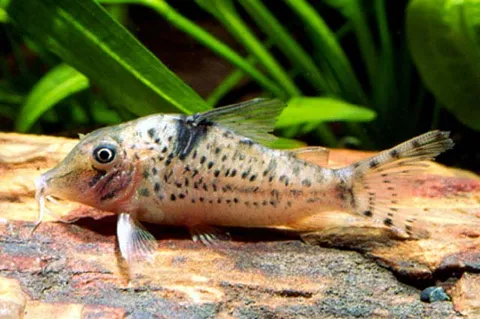
Corydoras blochi
The fish, scientifically known as Corydoras blochi, belongs to the armored catfish family (Callichthyidae). Its natural range covers many river systems in South America, including the vast Amazon River basin. Bloch's…
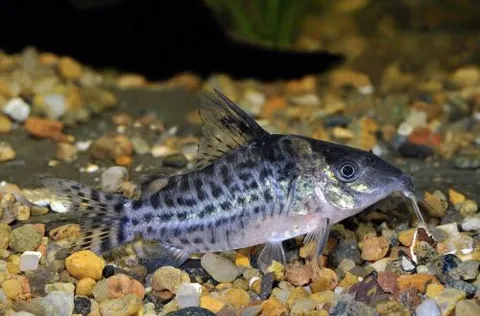
Corydoras lamberti
Lamberti's Corydoras, or Cory Catfish Lamberti, known to the scientific community as Corydoras lamberti, is a representative of the family Callichthyidae (Armored Catfish). The species was described in 1986 and named in…
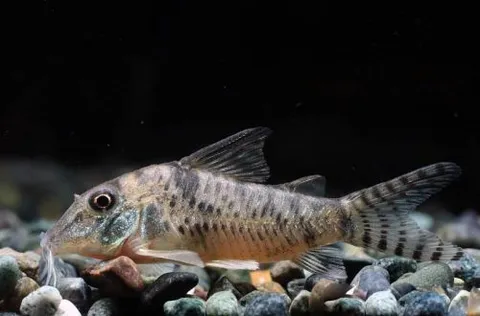
Corydoras aurofrenatus
Corydoras aurofrenatus, known as the Goldstripe Corydoras, belongs to the family Callichthyidae, or Armored Catfishes. Its name is due to the unique pigmentation on its head and body, which shimmers with gold. The…
Corydoras arcuatus
Corydoras arcuatus, also known as the Arched Cory or Skunk Cory, is scientifically classified as Corydoras arcuatus and belongs to the Callichthyidae family. Its natural range extends across almost the entire upper…