Temperature26 – 30 °C
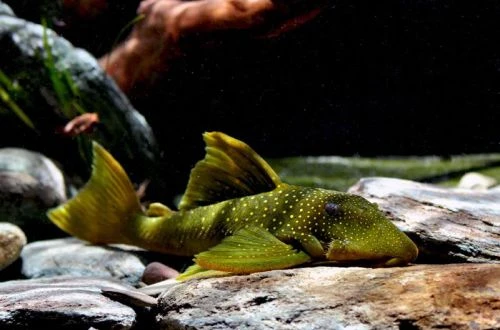
The Green Phantom Pleco (Plecostomus), scientifically known as Baryancistrus demantoides, belongs to the family Loricariidae, also known as Armored Catfish. This attractive and temperamental catfish requires a special approach: in small aquariums, it is recommended to keep it alone, as complex relationships can arise within the species. Some features of its behavior and diet make it not the most suitable choice for inexperienced aquarists.
Adults reach up to 15 cm in length. The catfish's body is slightly flattened and covered with rough plates equipped with numerous spines or thorns. The ventral area is partially protected by bony scutes. The snout is rounded, and the mouth is large, with elongated premaxillary openings. The gill openings remain small. The coloration is usually greenish, with characteristic light spots.
Its natural habitat is in South America, specifically at the confluence of the Orinoco and Ventuari rivers, located in Yapacana National Park, Amazonas State, Venezuela. A typical biotope is a section of the river with a slow current, where the bottom is strewn with stones, and the water has a murky dark brown hue due to the high content of dissolved tannins released during the decomposition of plant organic matter. Sexual dimorphism in these catfish is weakly expressed; distinguishing males and females by external signs is quite difficult.
Young catfish tend to be peaceful and often stay in groups. However, their character changes with age, especially in males. Plecos occupy a certain area at the bottom of the aquarium and become intolerant of potential rivals — both conspecifics and other fish species. In small aquariums, it is recommended to keep only one catfish; they can coexist with species that inhabit the water column or surface.
For a single fish, the minimum aquarium volume should be at least 200 liters. When decorating, it is desirable to recreate an environment resembling a riverbed: use a substrate of stones, sand, and fine gravel, supplementing it with several large snags. Choose plants with tough leaves. If the lighting is bright, this promotes the natural growth of algae, which will become an additional food source. Like many species inhabiting flowing waters, the Green Phantom Pleco is sensitive to the accumulation of organic waste; it requires high water quality within acceptable temperature and hydrochemical parameters. Effective filtration and aeration of the water, as well as regular aquarium maintenance, are crucial for successful keeping. This includes weekly water changes of 40–70% of the volume with fresh water and constant removal of organic residues.
In natural conditions, these catfish feed on algae growing on stones and snags, as well as small invertebrates living among this vegetation. In a home aquarium, its daily diet should be formed accordingly. Dry foods enriched with plant components can be used, and pieces of green vegetables and fruits can be added to the menu. Additionally, fresh or frozen artemia, daphnia, bloodworms, and other invertebrates can be introduced into the diet.
Breeding in a home aquarium is possible, although it requires spacious tanks. Sometimes an aquarium of at least 1000 liters may be needed, as determining sex is difficult, and it is often necessary to acquire several catfish to guarantee at least one pair (male/female). It is important to provide enough space for each so that the fish can establish their individual territories. Spawning occurs in shelters created from intertwined snags. Ordinary decorative items in the form of grottoes, caves, or other shelters are also suitable. After spawning, the female leaves the clutch, and the male remains to care for it and the future offspring.
Most health problems in fish often arise from unsuitable keeping conditions. Maintaining a stable and comfortable habitat is a key factor for successful keeping. If symptoms of illness appear, the first step is to check the water quality. If deviations are found, it is important to take immediate measures to eliminate them. If the symptoms do not disappear or worsen, medicinal treatment may be required.
When purchasing a Green Phantom Pleco, it is important to exercise particular caution, as Baryancistrus species tolerate transportation and adaptation extremely poorly. Avoid acquiring individuals with sunken bellies, emaciated appearance, or cloudy, sunken eyes — these are signs of critical malnutrition and irreversible digestive disorders, which often lead to the fish's death within the first few weeks. A healthy fish should look active, have a rounded belly, and bright coloration. Ask the seller how long the fish has been in the store: it is preferable to choose specimens that have undergone quarantine for at least 2–3 weeks, during which they have started to consistently accept food. In the store, it is also worth paying attention to the presence of feces in the aquarium — their dense structure indicates that the fish's digestive system is functioning normally.
The essentials: size, tank volume, water parameters and care
An adult reaches 15 cm in length. Plan the tank around the maximum size: the fish quickly outgrows a cramped setup.
The recommended volume is 200 L. A smaller tank speeds up nitrate build-up and raises stress levels.
Temperature 26–30 °C, pH 5.5–7.5, hardness 1–10 dGH. Stability matters more than exact values: sudden swings are harder on the fish than a small deviation from the ideal.
Around 12 years when kept properly. Lifespan depends directly on tank volume, water quality and a varied diet.
Temperament: aggressive / incompatible / unfriendly. Keep this in mind when choosing tank mates.
Recommended setup: both solitary and in group (flexible). Ignoring this is a common cause of stress and disease.
Diet type: plant-based (algae, vegetables). Feed small portions that are finished within a couple of minutes — overfeeding does more harm than underfeeding.
The scientific name of the species is Baryancistrus demantoides, family Armored Catfishes (Loricariidae).
The water suits 175 of 208 plants in the catalogue — the easiest ones are shown first.
Afzelius's AnubiasAnacharisAnubiasBrazilian PennywortDwarf CloverDwarf CloverDwarf HygrophilaDwarf SagittariaDwarf ValGuppy GrassHornwortJava FernJava MossMoneywortMud SwordNair's LagenandraNarrow Leaf AnacharisNarrow-leaf CloverSüsswassertangTaiwan MossTape GrassTemple PlantUssuri WatermilfoilWater Wisteria
Matched by family, categories and overlapping keeping conditions
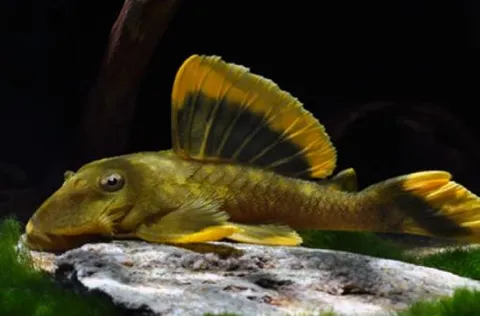
Baryancistrus chrysolomus
A large representative of the armored catfish family (Loricariidae), the Magnum Pleco, known by its scientific name Baryancistrus chrysolomus, has a rather complex temperament. This can significantly complicate the…
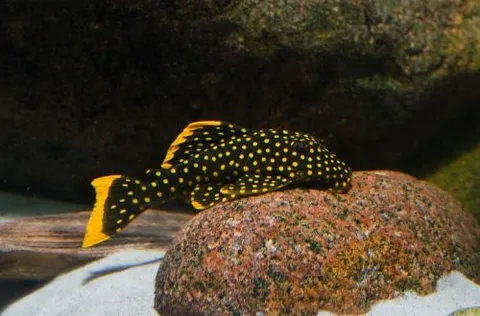
Baryancistrus xanthellus
The Gold Nugget Pleco, or Plecostomus "Golden Nugget," scientifically known as Baryancistrus xanthellus, belongs to the Loricariidae family, which includes armored catfish. These catfish are of great interest to…
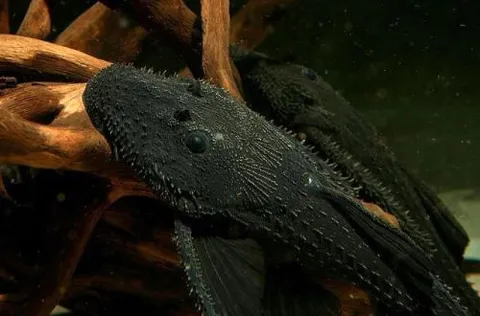
Acanthicus hystrix
Acanthicus hystrix, known scientifically as Acanthicus hystrix, belongs to the family Loricariidae, or Armored Catfishes. Due to its size and certain behavioral characteristics, this fish is not suitable for beginner…
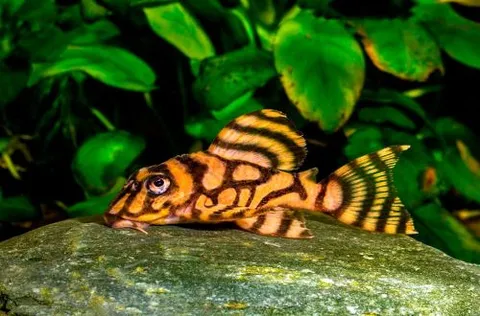
Hypancistrus sp. L333
Hypancistrus sp. L 333, known as Hypancistrus "Yellow Tiger", belongs to the armored catfish family (Loricariidae). This catfish is native to the South American continent. Its natural habitat is the Xingu River basin, a…