Temperature26 – 30 °C
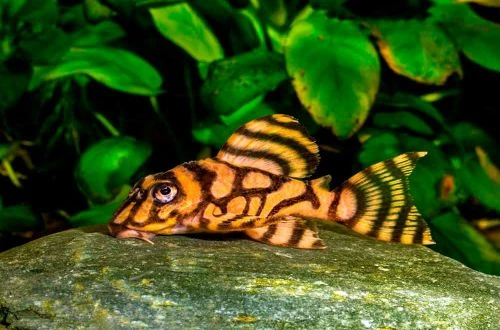
Hypancistrus sp. L 333, known as Hypancistrus "Yellow Tiger", belongs to the armored catfish family (Loricariidae). This catfish is native to the South American continent. Its natural habitat is the Xingu River basin, a large tributary of the Amazon, located in the Brazilian state of Pará.
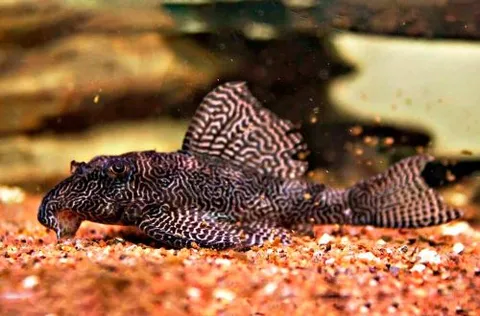
Adults grow up to 13–15 cm in length. Their coloration is a variable pattern of dark and light spots, as well as chaotically arranged stripes. The shades of the light areas can vary from pure white to yellow or orange. Juveniles resemble the Painted Pleco, which is a close relative, in their pattern. There are also hybrid forms with a predominant light coloration, but these are mistakenly designated with the code L236.
The species is endemic to South America and inhabits the Xingu River basin, a large tributary of the Amazon in the Brazilian state of Pará. The fish populate areas of rivers with rocky bottoms, where moderate or strong currents prevail. In their natural habitat, the water is characterized by high temperatures, good aeration, and low organic matter content.
This species is distinguished by its peaceful and calm disposition. It coexists well with most fish of similar size. Good tankmates include Tetras, Corydoras catfish, and some South American cichlids. Avoid keeping this catfish with aggressive or territorial species. Also, close relatives should not be housed together to prevent possible crossbreeding.
For a single catfish, an aquarium of at least 100 L is optimal. If planning to keep a group of 3–4 fish, a more spacious aquarium — at least 250 L — will be required. When decorating, it is desirable to recreate an environment resembling a river bottom with a moderate current flowing through mountainous terrain. Special attention should be paid to the bottom layer, where shelters are arranged. Sand or gravel substrate can be laid on the bottom, and accumulations of stones and boulders can be placed. Various snags and other decorative elements, whether natural or artificial, can also be secured to the substrate. Aquarium plants are best planted in pots submerged in the substrate, or use species that can attach to stones and snags, such as many mosses and ferns. Comfortable conditions for this catfish are warm, slightly acidic water with low to medium hardness. An important aspect is maintaining a high concentration of dissolved oxygen, as its level tends to drop in warm water. For this, it is recommended to install an additional aeration system in the aquarium. Hypancistrus "Yellow Tiger", being an inhabitant of flowing waters, is sensitive to the accumulation of organic waste. To maintain proper water quality, it is crucial to equip the aquarium with a productive filtration system and perform regular weekly maintenance. This includes partial water changes with fresh water, as well as the removal of uneaten food, excrement, and other waste. The daily diet in a home aquarium should include a variety of foods containing both protein and plant components. These include popular sinking dry foods, spirulina, pieces of fresh vegetables, as well as frozen and live foods such as brine shrimp, daphnia, bloodworms, and others.
The basis of the daily diet in aquarium conditions should consist of a variety of foods, including both proteins and plant components. These can be popular sinking dry foods, spirulina, finely chopped fresh green vegetables, as well as frozen and live foods, for example, brine shrimp, daphnia, or bloodworms.
Breeding takes place in aquarium conditions, where spawning occurs in pre-prepared shelters, most often in ceramic or stone caves. The male takes care of the offspring, guarding the clutch of large eggs until the larvae hatch. After the yolk sac is absorbed, the fry begin to feed actively, for which high-quality sinking foods are recommended, including spirulina and specialized formulations for juveniles.
The fish possess robust health when water parameters are maintained, but are sensitive to environmental quality and organic accumulation. Characteristic problems can include bacterial skin and fin infections, arising from improper keeping conditions. Prevention includes maintaining cleanliness, regular water changes, and ensuring effective filtration with strong aeration, as the species tolerates oxygen deficiency poorly.
When selecting individuals, attention should be paid to the following signs: — fish activity in the evening or under subdued light — absence of visible damage, ulcers, or white film on the body — normal fin condition without signs of erosion — a rounded, but not excessively bloated abdomen, indicating the absence of emaciation. Avoid purchasing fish that appear apathetic or constantly hide in the corners of the aquarium when shelters are available.
The essentials: size, tank volume, water parameters and care
An adult reaches 13–15 cm in length. Plan the tank around the maximum size: the fish quickly outgrows a cramped setup.
The recommended volume is 250 L. A smaller tank speeds up nitrate build-up and raises stress levels.
Temperature 26–30 °C, pH 5.5–7.5, hardness 1–15 dGH. Stability matters more than exact values: sudden swings are harder on the fish than a small deviation from the ideal.
Around 10 years when kept properly. Lifespan depends directly on tank volume, water quality and a varied diet.
Temperament: peaceful (regular). Keep this in mind when choosing tank mates.
Recommended setup: both solitary and in group (flexible). Ignoring this is a common cause of stress and disease.
Diet type: for carnivores (live fish, insects, etc.). Feed small portions that are finished within a couple of minutes — overfeeding does more harm than underfeeding.
The scientific name of the species is Hypancistrus sp. L333, family Armored Catfishes (Loricariidae).
The water suits 175 of 208 plants in the catalogue — the easiest ones are shown first.
Afzelius's AnubiasAnacharisAnubiasBrazilian PennywortDwarf CloverDwarf CloverDwarf HygrophilaDwarf SagittariaDwarf ValGuppy GrassHornwortJava FernJava MossMoneywortMud SwordNair's LagenandraNarrow Leaf AnacharisNarrow-leaf CloverSüsswassertangTaiwan MossTape GrassTemple PlantUssuri WatermilfoilWater Wisteria
Matched by family, categories and overlapping keeping conditions
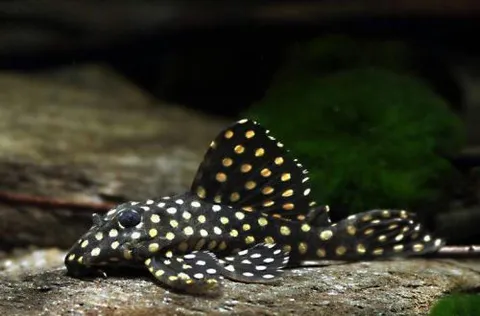
Hypancistrus inspector
Hypancistrus inspector, known scientifically as Hypancistrus inspector, belongs to the armored catfish family (Loricariidae). Its name comes from the Latin word "Inspectores," which translates to "observer," and this is…
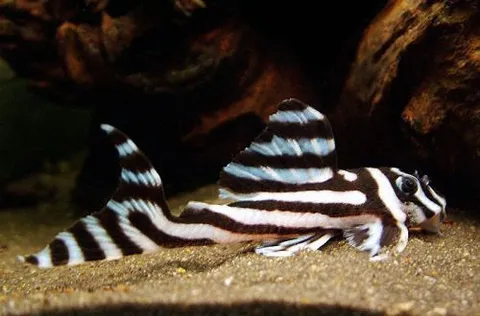
Hypancistrus zebra
The Zebra Hypancistrus, scientifically known as Hypancistrus zebra or simply Zebra Pleco, belongs to the Loricariidae family. This species appeared in the aquarium hobby relatively recently. From the 1990s, there was an…
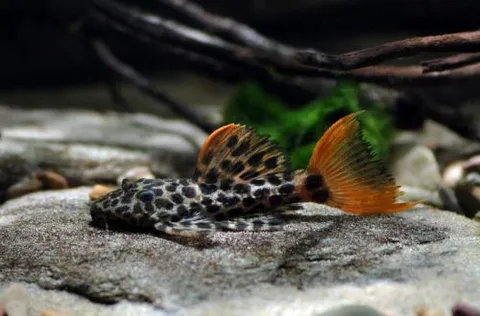
Pseudacanthicus cf. leopardus
The Leopard Pleco, known scientifically as Pseudacanthicus cf. Leopardus L114, LDA007, belongs to the armored catfish family (Loricariidae). Despite its exact classification not yet being determined, this has not…
Hypancistrus sp. L411
Hypancistrus Monte Dourado, known scientifically as Hypancistrus sp. L 411, belongs to the family Loricariidae. This catfish originates from South America. Its primary habitat is the Jari River basin, which is one of…