Temperature25 – 30 °C
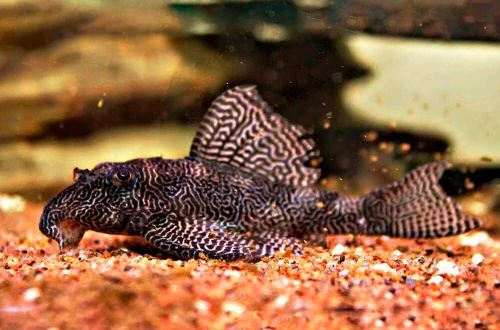
Hypancistrus Monte Dourado, known scientifically as Hypancistrus sp. L 411, belongs to the family Loricariidae. This catfish originates from South America. Its primary habitat is the Jari River basin, which is one of the numerous tributaries of the Amazon River. This river serves as a natural border between the Brazilian states of Pará and Amapá. The fish gets its name from the small town of Monte Dourado, located on the Jari River, as this is where active harvesting of this species for export takes place.
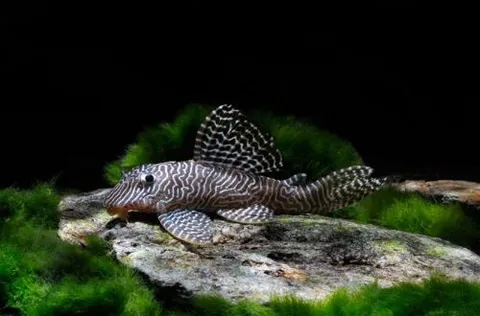
Adults of this species reach approximately 13 cm in length. Visually, they show significant resemblance to a related species, the Scribbled Pleco (Hypancistrus sp. L260). At a young age, both fish are almost identical, but as they mature, noticeable differences emerge. Hypancistrus Monte Dourado has a body pattern of even black and white lines, with the light stripes usually slightly wider than the dark ones. Over time, the coloration may become less contrasting, and the fish acquires an almost entirely gray hue.
The species inhabits South America, in the basin of the Jari River, which is a tributary of the Amazon and a natural border between the Brazilian states of Pará and Amapá. In nature, the fish prefer areas with soft, slightly acidic water and numerous hiding places among rocks and snags.
This fish is considered peaceful and undemanding, but it requires hiding places. It is important to avoid keeping them with large, aggressive, or territorial species. Excellent tank mates include small Tetras, Corydoras catfish, and other peaceful species.
Hypancistrus are rather modest in size and exhibit a relatively sedentary lifestyle, so a 70–80 L aquarium will be sufficient for a single specimen. If you plan to keep 3–4 fish, an aquarium of 200 L or more will be required. Essential elements in the aquarium decor are hiding places created from driftwood, rock piles, or other natural or artificial materials. These fish are not prone to damaging aquatic plants, allowing for their free use in decoration. Otherwise, the decor can be chosen at your discretion. The species prefers warm, soft, slightly acidic water and moderate, subdued lighting. The diet should be based on protein-rich foods, such as dry, frozen, or live foods (e.g., bloodworms, brine shrimp).
The diet of these fish should primarily consist of protein-rich foods. These can be dry, frozen, or live foods, such as bloodworms and brine shrimp.
Breeding occurs in enclosed hiding places where the female lays her eggs. The male takes on the role of guarding the clutch and caring for the offspring, fanning the eggs with his fins to ensure oxygen flow. To stimulate spawning, it is recommended to use high-quality protein foods, maintain water cleanliness, and provide appropriately sized ceramic or stone tube caves.
The species is sensitive to deteriorating water quality, accumulation of organic waste, and sharp fluctuations in environmental parameters. Under poor keeping conditions, bacterial infections may develop, manifesting as skin or fin damage. Prevention includes regular water changes, effective filtration, and maintaining stable hydrochemical conditions.
When choosing, pay attention to the fish's activity in the evening and the absence of external damage, such as ulcers, whitish spots, or fin rot. Healthy specimens should have a rounded belly, indicating no emaciation. Avoid purchasing fish with sunken sides or signs of apathy, as this may indicate adaptation problems or internal parasitic diseases.
The essentials: size, tank volume, water parameters and care
An adult reaches 13 cm in length. Plan the tank around the maximum size: the fish quickly outgrows a cramped setup.
The recommended volume is 200 L. A smaller tank speeds up nitrate build-up and raises stress levels.
Temperature 25–30 °C, pH 5–7, hardness 1–12 dGH. Stability matters more than exact values: sudden swings are harder on the fish than a small deviation from the ideal.
Around 10 years when kept properly. Lifespan depends directly on tank volume, water quality and a varied diet.
Temperament: peaceful (regular). Keep this in mind when choosing tank mates.
Recommended setup: both solitary and in group (flexible). Ignoring this is a common cause of stress and disease.
Diet type: sinking (any). Feed small portions that are finished within a couple of minutes — overfeeding does more harm than underfeeding.
The scientific name of the species is Hypancistrus sp. L411, family Armored Catfishes (Loricariidae).
The water suits 186 of 208 plants in the catalogue — the easiest ones are shown first.
Afzelius's AnubiasAnacharisAnubiasBrazilian PennywortDwarf CloverDwarf CloverDwarf HygrophilaDwarf SagittariaDwarf ValGuppy GrassHornwortJava FernJava MossMoneywortMud SwordNair's LagenandraNarrow Leaf AnacharisNarrow-leaf CloverSüsswassertangTaiwan MossTape GrassTemple PlantUssuri WatermilfoilWater Wisteria
Matched by family, categories and overlapping keeping conditions
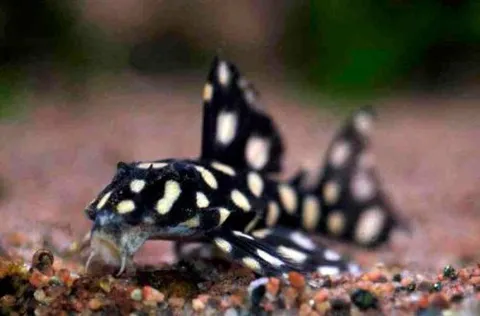
Hypancistrus contradens
The Orinoco Pleco, scientifically known as Hypancistrus contradens, is a member of the armored catfish family (Loricariidae). It is often called the "Polka Dot Pleco" due to the distinctive pattern on its body.
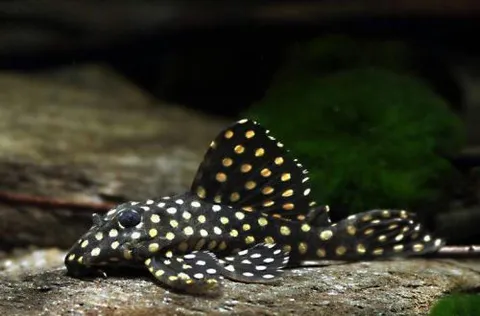
Hypancistrus inspector
Hypancistrus inspector, known scientifically as Hypancistrus inspector, belongs to the armored catfish family (Loricariidae). Its name comes from the Latin word "Inspectores," which translates to "observer," and this is…
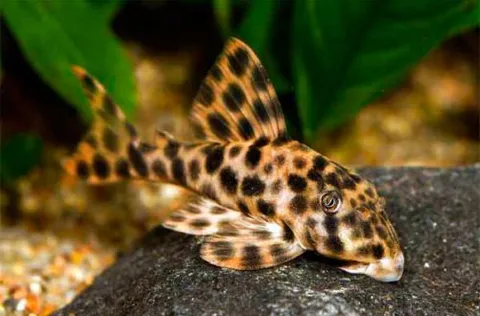
Peckoltia oligospila
This catfish, known scientifically as Peckoltia oligospila, belongs to the extensive family Loricariidae, also called Armored Catfish. The fish owes its name to the botanist and pharmacist Gustavo Peckolt, a German born…
Hypancistrus sp. L260
The Queen Arabesque Pleco, or Painted Pleco, scientifically known as Hypancistrus sp. L260, belongs to the Loricariidae family, which includes armored catfish. The lack of a universally recognized scientific…