Temperature21 – 26 °C
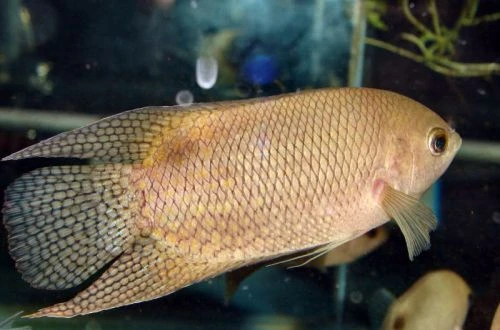
Hasselt's Belontia, or Comb-tailed Macropod (scientific name Belontia hasselti), is a member of the Osphronemidae family. Characterized by its large and robust build, this fish is known for its unfriendly disposition and noticeable aggression, especially towards smaller species that may be perceived as prey. Selecting suitable tank mates is not an easy task, and difficulties with its diet may also arise, making Belontia not the best choice for a beginner aquarist.
Adults of this fish can reach up to 20 cm in length. Their coloration is usually light, with a milky hue. A characteristic feature is a unique reticulated pattern, resembling a honeycomb, which is particularly clear on the caudal and other fins during spawning, while at other times it is less noticeable. At the base of the dorsal fin, closer to the caudal part, a large dark spot can be distinguished. Sexual dimorphism is weakly expressed; females are typically only smaller in size compared to males.
The natural habitat of these fish covers the Greater Sunda Islands, including Sumatra, Java, and Borneo, as well as peninsular Malaysia and the southern regions of Thailand. They prefer slow-flowing rivers and swampy lakes located under the dense canopy of tropical rainforests. The thick tree canopy creates low light levels, and the water acquires a rich amber-brown hue due to the high content of humic acids and decaying organic matter. Unfortunately, human economic activity has led to significant degradation of these biotopes, forcing the fish to adapt to new conditions, such as rice fields, canals, and drainage ditches near populated areas.
Males exhibit significant aggression towards each other, especially during the breeding season, and display similar behavior towards smaller fish, which they may even eat if given the opportunity. In spacious aquariums of 200 liters or more, cohabitation with large species of cyprinids and characins is permissible. However, in smaller volumes, solitary or pair keeping (male/female) is preferable.
For a single pair of fish, an aquarium of at least 150 liters is recommended. A soft sandy substrate is preferred for the setup. It is advisable to use groups of rooted and floating plants that are tolerant of low light conditions. Hiding places can include snags, various decorative elements such as sunken ships or castles, and ceramic pots laid on their side. An additional decorative element that helps create a natural environment is dried fallen tree leaves. Before placing them in the aquarium, they should be soaked until fully submerged. Leaves not only enhance aesthetics but also enrich the water with humic acids during decomposition, staining it a light brown hue, which mimics natural aquatic conditions. Optimal keeping conditions include slightly acidic pH values, low carbonate hardness, moderate lighting, and the absence of strong internal currents. Aquarium equipment is selected based on these parameters. Regular aquarium maintenance involves weekly water changes of 10–15% of the volume with fresh water, cleaning the substrate of organic debris, and replacing leaves, if present, every one to two weeks.
These fish are carnivorous, and in natural conditions, their diet consists of invertebrates, mollusks, and small fish. In a home aquarium, live or frozen foods such as earthworms, as well as pieces of shell-less mollusks, can be offered. Many breeders successfully adapt Belontia to dry granulated foods, which significantly simplifies their care. Therefore, before purchasing the fish, it is recommended to clarify its usual diet with the seller.
The onset of the breeding period is often signaled by a change in the male's coloration—his honeycomb pattern becomes more pronounced—as well as a noticeable enlargement of the female's abdomen, which rounds out from developing eggs. When the pair is ready to spawn, the fish perform a characteristic “embrace dance,” during which the simultaneous release and fertilization of eggs and milt occur. Unlike most labyrinth fish, the male of this species does not build a nest. Instead, he collects the eggs in his mouth, where they remain for the entire incubation period, which lasts about three days. Several days after hatching, the fry are already capable of independent swimming. To ensure maximum survival of the offspring, it is recommended to carefully separate the fry and transfer them to a separate aquarium with similar water parameters.
The main cause of most diseases in these fish is unsuitable keeping conditions and poor-quality nutrition. If initial symptoms are observed, it is first necessary to check water parameters and the concentration of dangerous substances such as ammonia, nitrites, and nitrates. If the indicators deviate from the norm, they should be brought back into order, and only then should treatment begin.
When selecting individuals, preference should be given to young fish, as adult specimens adapt less well to new conditions and may exhibit pronounced aggression. Inspect the fish for fin damage, ulcers, or white film, which may indicate bacterial infections, to which this species is susceptible. Avoid purchasing fish that appear emaciated or constantly hide in the corner of the aquarium, as this is often a sign of stress or illness. Healthy Belontia should have clear eyes and active, confident behavior in the water column.
The essentials: size, tank volume, water parameters and care
An adult reaches 20 cm in length. Plan the tank around the maximum size: the fish quickly outgrows a cramped setup.
The recommended volume is 150 L. A smaller tank speeds up nitrate build-up and raises stress levels.
Temperature 21–26 °C, pH 4.5–7.5, hardness 1–10 dGH. Stability matters more than exact values: sudden swings are harder on the fish than a small deviation from the ideal.
Around 12 years when kept properly. Lifespan depends directly on tank volume, water quality and a varied diet.
Temperament: aggressive / incompatible / unfriendly. Keep this in mind when choosing tank mates.
Recommended setup: pair (male/female). Ignoring this is a common cause of stress and disease.
Diet type: meat / protein (live, frozen, fresh). Feed small portions that are finished within a couple of minutes — overfeeding does more harm than underfeeding.
The scientific name of the species is Belontia hasselti, family Osphronemidae. It also appears in the literature as: Polyacanthus hasselti, Polyacanthus olivaceus.
The water suits 198 of 208 plants in the catalogue — the easiest ones are shown first.
Afzelius's AnubiasAnacharisAnubiasBrazilian PennywortDwarf CloverDwarf CloverDwarf HygrophilaDwarf SagittariaDwarf ValGuppy GrassHornwortJava FernJava MossMoneywortMud SwordNair's LagenandraNarrow Leaf AnacharisNarrow-leaf CloverStringy MossSüsswassertangTaiwan MossTape GrassTemple PlantUssuri Watermilfoil
Matched by family, categories and overlapping keeping conditions
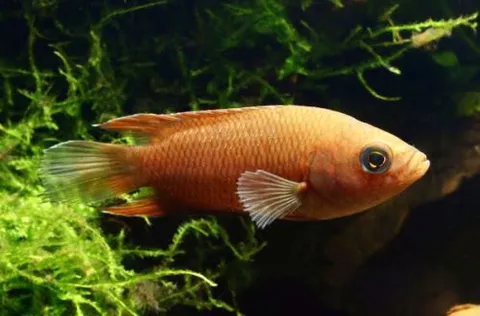
Belontia signata
Belontia signata, also known as the Combtail Gourami, belongs to the family Osphronemidae. It is sometimes called the "Sri Lankan Fighting Fish" due to its aggressive nature. It is not suitable for a community tank; it…
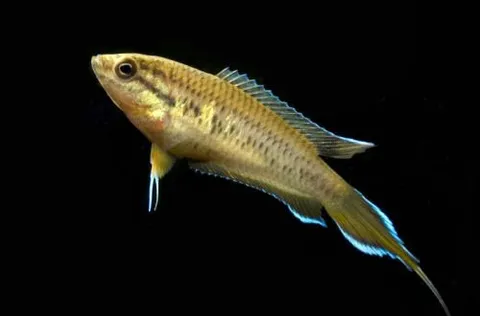
Pseudosphromenus dayi
Day's paradise fish, or Pseudosphromenus dayi by its scientific name, belongs to the family Osphronemidae. It is characterized by a peaceful disposition, which is quite rare among its relatives. This fish is…
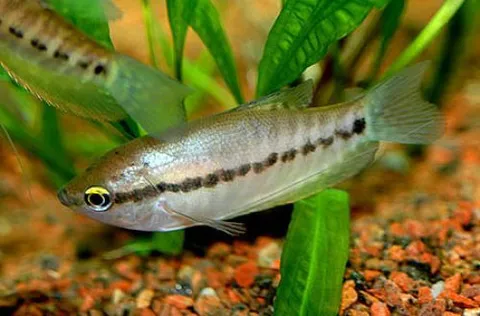
Trichopodus pectoralis
The Snakeskin Gourami, scientifically known as Trichopodus pectoralis, belongs to the family Osphronemidae. This rather large fish has remarkable coloration. The spotted pattern and the predominance of yellow-brown hues…
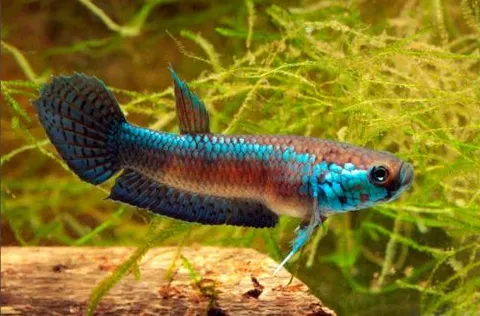
Betta unimaculata
Betta unimaculata, a member of the family Osphronemidae, is a fighting fish that fully lives up to its name. Males of this species display a temperamental character, often engaging in skirmishes over territory and…