Temperature21 – 26 °C
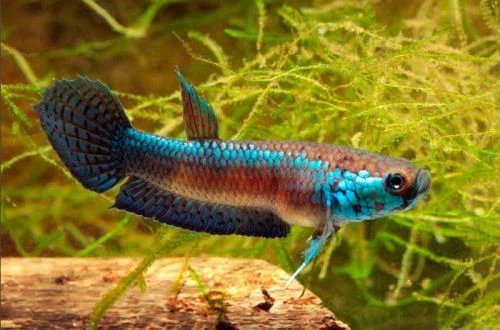
Betta unimaculata, a member of the family Osphronemidae, is a fighting fish that fully lives up to its name. Males of this species display a temperamental character, often engaging in skirmishes over territory and female attention. Females can also exhibit aggression, especially in confined aquarium spaces. Despite these behavioral traits, keeping these fish is considered relatively straightforward, and they coexist well with other species, provided their tendency for squabbles is taken into account.
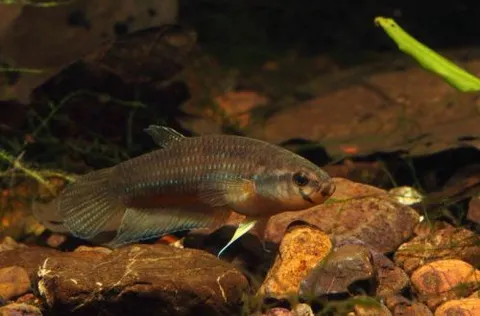
Adult fish usually grow to about 10–11 cm. Their bodies are elongated and slender. The dominant coloration is a dark brownish-yellow. Males differ from females by having larger fins and a turquoise sheen on their scales. Otherwise, sexual dimorphism is not strongly pronounced. It has been observed that populations from different localities may vary in coloration and patterns, so it is not recommended to keep them together to avoid interbreeding. Collectors and hobbyists often label such specimens with additional markers, such as Mahakam, Sandakan, Tawau, to denote a pure lineage.
The natural habitat of this species is in Southeast Asia, on the Indonesian side of Borneo Island. The fish inhabits the Mahakam River basin, which primarily flows through the East Kalimantan province. It can be found throughout the river's course, from clear streams flowing down hills to swampy areas of the humid tropical rainforest. Despite the variety of natural biotopes, Betta unimaculata prefers areas with slow currents or backwaters, where it can find shelter among snags, aquatic vegetation, and overhanging riparian plants.
Males compete with each other for dominant positions in the species' hierarchy. Their skirmishes can sometimes be quite fierce, so in a small aquarium, it is preferable to keep only one male, or a male with a female, provided they grew up together or were acquired from the same group. If a male and female were purchased from different suppliers and are brought together for the first time, their coexistence is unlikely. In large volume aquariums, such restrictions are usually absent. These fish are compatible with other non-aggressive species of comparable size.
For a single pair of Betta unimaculata, an aquarium of at least 70 liters is recommended. The aquarium setup can be arranged according to personal preferences. Some aquarists choose to omit substrate for easier maintenance, and in pet stores, fish can often be seen in almost empty tanks. This does not mean that such conditions are ideal, but it demonstrates the hardiness of Betta unimaculata. The fish will look most natural in an aquarium with driftwood, shade-loving plants, and subdued lighting. The presence of several shelters will be very useful, especially during spawning. Adding some tree leaves to the bottom will give the setup a natural look and positively affect the water chemistry, bringing it closer to natural conditions. Maintaining biological balance in the aquarium depends on regular necessary procedures, such as water changes and waste removal, as well as the proper functioning of equipment.
In natural conditions, this fish feeds on small insects, zooplankton, and other invertebrates. In aquarium conditions, it easily adapts to various foods. A daily diet can consist of a mixture of dry flakes or pellets with live or frozen foods, such as Artemia, Daphnia, bloodworms, and so on.
Betta unimaculata, like other related species, exhibits an evolutionarily developed breeding strategy that differs from most fish, particularly in the way it protects its offspring. During spawning, the fish perform an "embrace dance," during which the eggs are fertilized. The eggs immediately go into the male's mouth, who incubates them throughout the incubation period, which lasts 10–14 days. As for breeding, this aspect is quite simple, while finding a compatible pair can be a more challenging task. As mentioned, you cannot simply house a male and female together expecting them to breed. The fish must grow up together and be accustomed to each other. If it is not possible to keep a group (due to the small volume of the aquarium), when purchasing, it is worth prioritizing a pair that has already produced offspring. However, here arises the problem of identifying them among a large number of fish.
Most health problems in fish often arise from unsuitable keeping conditions. Maintaining a stable and comfortable habitat is a key factor for successful keeping. If symptoms of illness appear, the first step is to check the water quality. If deviations are found, it is important to take immediate measures to eliminate them. If the symptoms do not disappear or worsen, medicinal treatment may be required.
When selecting specimens, attention should be paid to their activity and the cleanliness of their skin. A healthy fish should show curiosity, have no visible injuries, ulcers, plaque, or signs of emaciation. Avoid purchasing fish that constantly stay at the water's surface or, conversely, lie apathetically at the bottom, unless this is due to short-term stress during transport. Given the territorial nature of the species, it is important to assess the condition of the fins, as their tattered appearance may indicate frequent conflicts in a crowded store aquarium. It is advisable to purchase fish from the same batch to minimize the risk of introducing infections from different suppliers.
The essentials: size, tank volume, water parameters and care
An adult reaches 10–11 cm in length. Plan the tank around the maximum size: the fish quickly outgrows a cramped setup.
The recommended volume is 70 L. A smaller tank speeds up nitrate build-up and raises stress levels.
Temperature 21–26 °C, pH 5–7.5, hardness 1–10 dGH. Stability matters more than exact values: sudden swings are harder on the fish than a small deviation from the ideal.
Around 4 years when kept properly. Lifespan depends directly on tank volume, water quality and a varied diet.
Temperament: semi-peaceful (including aggression during spawning / intraspecific conflicts). Keep this in mind when choosing tank mates.
Recommended setup: pair (male/female). Ignoring this is a common cause of stress and disease.
Diet type: any (universal). Feed small portions that are finished within a couple of minutes — overfeeding does more harm than underfeeding.
The scientific name of the species is Betta unimaculata, family Osphronemidae. It also appears in the literature as: Parophiocephalus unimaculatus.
The water suits 198 of 208 plants in the catalogue — the easiest ones are shown first.
Afzelius's AnubiasAnacharisAnubiasBrazilian PennywortDwarf CloverDwarf CloverDwarf HygrophilaDwarf SagittariaDwarf ValGuppy GrassHornwortJava FernJava MossMoneywortMud SwordNair's LagenandraNarrow Leaf AnacharisNarrow-leaf CloverStringy MossSüsswassertangTaiwan MossTape GrassTemple PlantUssuri Watermilfoil
Matched by family, categories and overlapping keeping conditions
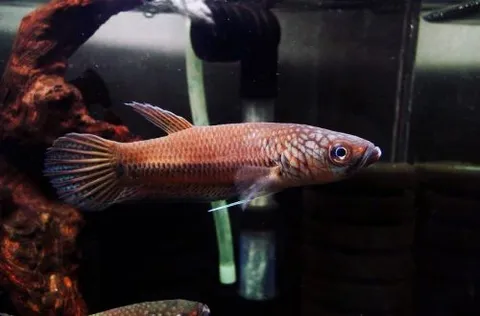
Betta sp. «Antuta/Bulungan»
The Bulungan Betta, also known as Betta bulungan, belongs to the family Osphronemidae. This is an undescribed species that was obtained from a collection labeled by suppliers as “Bulungan Jungle”—a name indicating the…
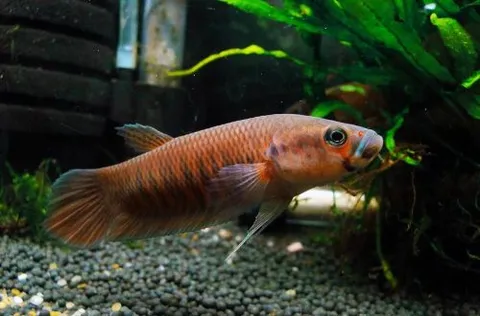
Betta patoti
The scientific name Betta patoti is given to the Betta patoti fish, or Patoti Betta, which belongs to the family Osphronemidae. This fish is part of the fighting fish group, which explains its challenging temperament…
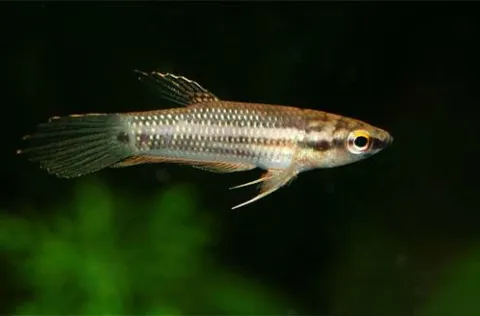
Betta pugnax
A member of the Osphronemidae family, the Malayan Betta, scientifically known as Betta pugnax, may not appear as brightly colored as many other Betta species. Nevertheless, this species possesses its own advantages and…
Betta antoni
The scientific name Betta antoni belongs to the family Osphronemidae, and this fish is often called Betta antoni or Anthony's Betta. It was named after Irwan Antoni, a well-known exporter of tropical fish from Asia. A…