Temperature21 – 27 °C
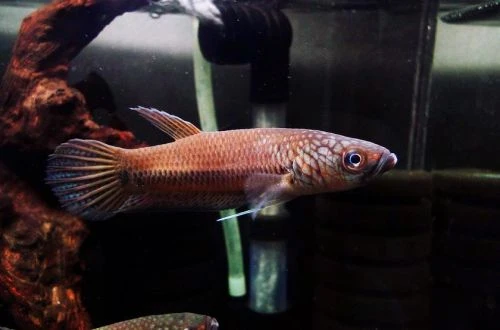
The Bulungan Betta, also known as Betta bulungan, belongs to the family Osphronemidae. This is an undescribed species that was obtained from a collection labeled by suppliers as “Bulungan Jungle”—a name indicating the locality on Borneo Island from which these fish specimens were exported. This species is not easy to keep, so it is not recommended for beginner aquarists.
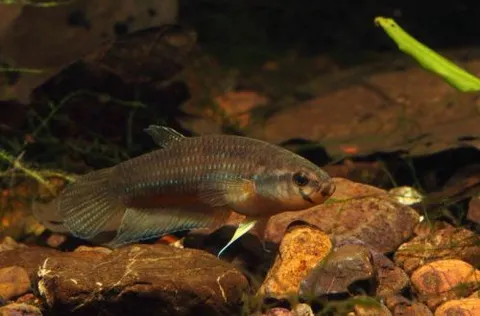
Adults of these fish can reach a length of 9 to 10 cm. This species is considered a close relative of Betta unimaculata, sharing many common features with it. The fish have a robust body and short fins. Their coloration varies from gray to red. Males, unlike females, often show turquoise iridescence on their heads and the front part of their bodies.
This species originates from Southeast Asia. Its homeland is small rivers that flow through hilly terrain in the jungles of the Indonesian part of Borneo Island, in the East Kalimantan province. A typical biotope is dimly lit, shallow streams with clear water, where the substrate consists of stones, sand, and abundant plant debris such as leaves, branches, and snags. The banks of these streams are usually densely overgrown with shade-loving plants, mosses, and ferns.
Belonging to the group of fighting fish, this species exhibits certain behavioral characteristics. This is primarily manifested in rivalry between males for hierarchical position and female attention, often leading to skirmishes. Nevertheless, serious injuries usually do not occur. In a small aquarium, it is recommended to keep a group consisting of either one male and several females, or just a single pair. Towards other fish species, Bulungan Bettas are peaceful. They are well compatible with non-aggressive fish of comparable size.
For a single pair of fish, an aquarium with a volume starting from 70–80 liters is necessary. Although the Bulungan Betta is not particularly demanding regarding aquarium decor, some aspects should still be considered. It is important to provide subdued or diffused lighting, which can be achieved, for example, with floating plants. It is also necessary to have shelters, which can be snags or various decorative elements. Like any fish living in wild flowing waters, Betta bulungan needs clean water. The accumulation of organic waste—food remnants and excrement—should be avoided, regular cleaning should be performed, and the required hydrochemical composition of the water should be maintained within the permissible temperature range. In addition to mandatory aquarium care procedures, an efficient filtration system is of key importance.
In their natural habitat, the diet of Betta bulungan primarily consists of insects and other invertebrates. When kept in a home aquarium, their diet should be adequate and include live or frozen foods such as daphnia, artemia, bloodworms, mosquito larvae, and Drosophila flies. Popular dry foods in the form of flakes and pellets can serve as a supplement.
A special feature of Bulungan Bettas is their parental care. Unlike many species, they do not lay eggs on the substrate or in plants, where they could be lost, but use a unique incubation method: the eggs are incubated in the mouth, with males exclusively taking on this role. During spawning, the male carefully collects several dozen fertilized eggs into his oral cavity. He then retreats to a secluded spot, away from other aquarium inhabitants. During this delicate time, it is very important to ensure his peace, as stress can lead to premature release or even swallowing of the eggs. Egg development takes approximately 2 weeks, after which fully formed fry emerge. From this moment, the male's care for the offspring gradually wanes.
Most often, diseases are caused by unsuitable keeping conditions. Maintaining a stable environment in the aquarium is a key factor for successful keeping. If any symptoms of illness appear, the first step is to check the water quality. If deviations are found, measures should be taken immediately to correct them. If symptoms persist or even worsen, medicinal treatment will be required.
When selecting specimens, preference should be given to captive-bred fish, as a significant portion of the specimens offered for sale are wild-caught, which can negatively affect their adaptation. Healthy fish should be active, have clean fins without signs of damage or film, and a firm body without visible depressions or wounds. Avoid purchasing specimens with signs of emaciation, lethargic behavior, or rapid breathing, as these may indicate transport stress or hidden diseases. Given the rarity of the species, it is recommended to clarify the store's keeping conditions and the diet the fish are accustomed to with the seller in advance.
The essentials: size, tank volume, water parameters and care
An adult reaches 9–10 cm in length. Plan the tank around the maximum size: the fish quickly outgrows a cramped setup.
The recommended volume is 70 L. A smaller tank speeds up nitrate build-up and raises stress levels.
Temperature 21–27 °C, pH 5.5–7.5, hardness 0–11 dGH. Stability matters more than exact values: sudden swings are harder on the fish than a small deviation from the ideal.
Around 3 years when kept properly. Lifespan depends directly on tank volume, water quality and a varied diet.
Temperament: semi-peaceful (including aggression during spawning / intraspecific conflicts). Keep this in mind when choosing tank mates.
Recommended setup: mixed (solitary / pair / group). Ignoring this is a common cause of stress and disease.
Diet type: any (universal). Feed small portions that are finished within a couple of minutes — overfeeding does more harm than underfeeding.
The scientific name of the species is Betta sp. «Antuta/Bulungan», family Osphronemidae.
The water suits 198 of 208 plants in the catalogue — the easiest ones are shown first.
Afzelius's AnubiasAnacharisAnubiasBrazilian PennywortDwarf CloverDwarf CloverDwarf HygrophilaDwarf SagittariaDwarf ValGuppy GrassHornwortJava FernJava MossMoneywortMud SwordNair's LagenandraNarrow Leaf AnacharisNarrow-leaf CloverStringy MossSüsswassertangTaiwan MossTape GrassTemple PlantUssuri Watermilfoil
Matched by family, categories and overlapping keeping conditions
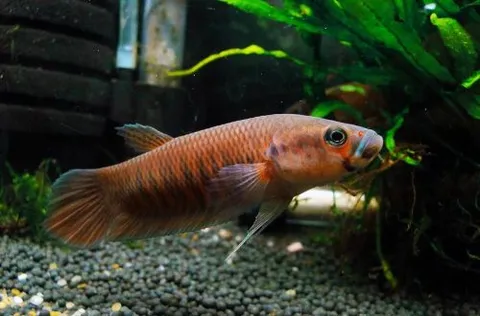
Betta patoti
The scientific name Betta patoti is given to the Betta patoti fish, or Patoti Betta, which belongs to the family Osphronemidae. This fish is part of the fighting fish group, which explains its challenging temperament…
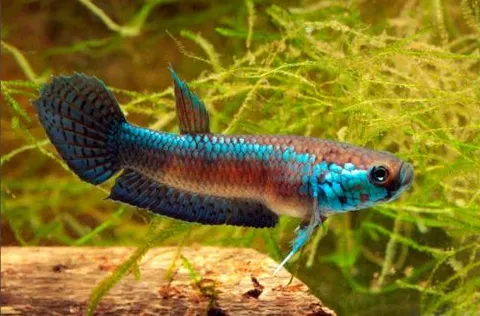
Betta unimaculata
Betta unimaculata, a member of the family Osphronemidae, is a fighting fish that fully lives up to its name. Males of this species display a temperamental character, often engaging in skirmishes over territory and…
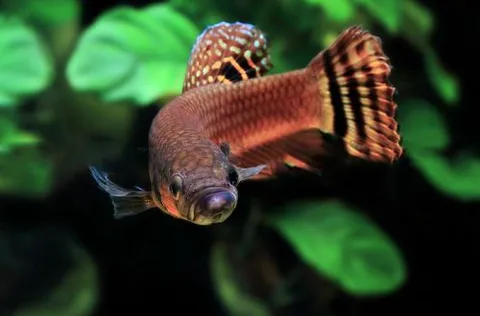
Betta macrostoma
The "Brunei Beauty" Betta, scientifically known as Betta macrostoma, is a member of the Osphronemidae family. Distinguished by its vibrant coloration and characteristic behavior, this fish attracts the attention of many…
Betta antoni
The scientific name Betta antoni belongs to the family Osphronemidae, and this fish is often called Betta antoni or Anthony's Betta. It was named after Irwan Antoni, a well-known exporter of tropical fish from Asia. A…