Temperature22 – 28 °C
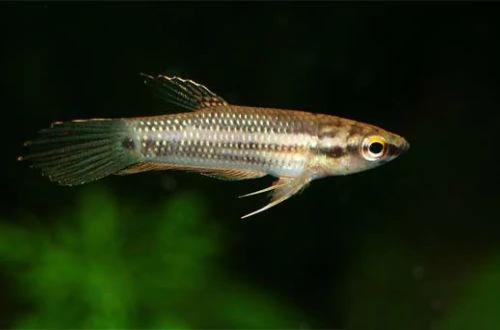
A member of the Osphronemidae family, the Malayan Betta, scientifically known as Betta pugnax, may not appear as brightly colored as many other Betta species. Nevertheless, this species possesses its own advantages and interesting features. It demonstrates remarkable hardiness, capable of inhabiting even aquariums with minimal decor, and exhibits a unique strategy for offspring protection, unusual for labyrinth fish.
Adults reach a length of approximately 7 cm. Slight variations in coloration may be observed depending on the region of origin, but the primary color is reddish-brown with green or bluish speckles. Sexual dimorphism is rather weakly expressed; males are usually slightly larger than females and have more developed fins. This makes it difficult to determine the sex of the fish, especially if they are of different ages and, consequently, sizes. More details on how to determine the age of Bettas (Siamese fighting fish) can be found by studying specific characteristics.
The natural range of this species is the territory of modern Malaysia, located in Southeast Asia. These fish have been found in various bodies of water throughout the country, from shallow foothill streams and stagnant backwaters to water bodies under dense tropical forest cover or swampy areas with abundant vegetation. A common feature of these habitats is extremely poor lighting: dense tree canopies, both in the mountains and on the plains, allow very little sunlight to pass through. Unfortunately, a significant portion of their former habitats has been converted for agricultural purposes, forcing Malayan Bettas to adapt to new conditions, such as artificial canals and drainage ditches along plantations.
This species belongs to the group of fighting fish. Intraspecific relationships are based on the pronounced dominance of the male in a specific territory. When males are in the confined space of an aquarium, they can engage in rather fierce skirmishes, which, unfortunately, can lead to the death of one of the rivals. It is recommended to keep them either individually or in a group with one or more females. To keep the male in good "shape," a safe mirror can occasionally be attached to the aquarium wall. Despite its combative nature, the Malayan Betta exhibits timidity in interactions with representatives of other species. Coexistence with active fish can cause it severe stress, so it is best to keep it in a species-specific tank if possible.
For keeping a single adult pair of these fish, a tank with a volume of 80 L or more is suitable. The aquarium decor can be arbitrary, but it is important to observe two main conditions: maintain a low light level and provide a sufficient number of shelters. Some aquarists prefer to do without substrate to simplify maintenance, but this can negatively affect the appearance of the aquarium; therefore, substrate will be quite appropriate. A large, branched piece of driftwood will serve well as a central decorative element. If it does not provide enough hiding places, other decorative elements can be added — these can be sunken ships, castles, grottoes, caves, or even a simple ceramic pot laid on its side. To imitate natural conditions, the bottom of the aquarium can be covered with dried fallen leaves. Oak leaves are ideal; they must be thoroughly rinsed and soaked until they sink before use, otherwise they will float on the surface. Leaves not only enrich the decor but also favorably affect the hydrochemical composition of the water. As they decompose, the water acquires a slight brownish tint and is saturated with tannins. Replacing the leaves is recommended every one to two weeks. Water parameters pH and dGH should be maintained within acceptable limits. The filtration system is set up to minimize internal current. The aquarium must be covered with a lid to create a warm air layer above the water surface, which is extremely important for the health of labyrinth fish. Aquarium care involves weekly water changes (10–15% of the total volume) and regular cleaning of the substrate from organic residues.
In their natural habitat, Malayan Bettas feed on small insects and aquatic invertebrates. In home keeping conditions, they adapt well to dry foods. However, to maintain health, it is essential to include meaty components in their diet, such as bloodworms, daphnia, or brine shrimp, both live and frozen. Specialized foods for fighting fish, which include the Malayan Betta, containing necessary trace elements, will serve as an excellent alternative. When choosing food, it is advisable to prefer products from well-known manufacturers to avoid acquiring low-quality products.
Spawning can occur in a community tank, provided no other species are present. Otherwise, a separate breeding tank with the same water parameters will be required. Unlike other labyrinth fish, the Malayan Betta does not build a bubble nest. Instead, it uses a different strategy for offspring protection: the male incubates the eggs in his mouth throughout the incubation period, which lasts from 9 to 16 days. Young and inexperienced males may sometimes accidentally swallow some eggs or release them prematurely. Adults do not show cannibalistic tendencies, so the fry can grow up in the community tank. Fry should be fed specialized foods. The fish reach sexual maturity by six months, and to prevent inbreeding and conflicts between growing individuals, they should be separated in a timely manner.
One of the main causes of most fish diseases is inadequate living conditions and a low-quality diet. If the first signs of illness are noticed, it is first necessary to check the water parameters to rule out elevated levels of dangerous compounds (ammonia, nitrites, nitrates, and others). If deviations are found, the indicators should be stabilized to normal, and only then should targeted treatment begin.
When choosing a Malayan Betta, it is important to ensure there are no external injuries, such as ulcers, whitish spots, or signs of fin rot, which may indicate bacterial infections. A healthy fish should be active, curious about its surroundings, and have clear, transparent eyes. Avoid individuals that appear emaciated, stay at the water surface with labored breathing, or constantly hide in the corners of the aquarium, as this may be a sign of stress or poor health. Given that the species is sensitive to keeping conditions, it is preferable to acquire individuals from sellers who can confirm the fish's origin, as different geographical populations may vary in appearance and habitat requirements.
The essentials: size, tank volume, water parameters and care
An adult reaches 7 cm in length. Plan the tank around the maximum size: the fish quickly outgrows a cramped setup.
The recommended volume is 80 L. A smaller tank speeds up nitrate build-up and raises stress levels.
Temperature 22–28 °C, pH 4–7.5, hardness 1–10 dGH. Stability matters more than exact values: sudden swings are harder on the fish than a small deviation from the ideal.
Around 3 years when kept properly. Lifespan depends directly on tank volume, water quality and a varied diet.
Temperament: semi-peaceful (including aggression during spawning / intraspecific conflicts). Keep this in mind when choosing tank mates.
Recommended setup: pair (male/female). Ignoring this is a common cause of stress and disease.
Diet type: any (universal). Feed small portions that are finished within a couple of minutes — overfeeding does more harm than underfeeding.
The scientific name of the species is Betta pugnax, family Osphronemidae. It also appears in the literature as: Betta bleekeri, Betta brederi, Betta macrophthalma.
The water suits 198 of 208 plants in the catalogue — the easiest ones are shown first.
Afzelius's AnubiasAnacharisAnubiasBrazilian PennywortDwarf CloverDwarf CloverDwarf HygrophilaDwarf SagittariaDwarf ValGuppy GrassHornwortJava FernJava MossMoneywortMud SwordNair's LagenandraNarrow Leaf AnacharisNarrow-leaf CloverStringy MossSüsswassertangTaiwan MossTape GrassTemple PlantUssuri Watermilfoil
Matched by family, categories and overlapping keeping conditions
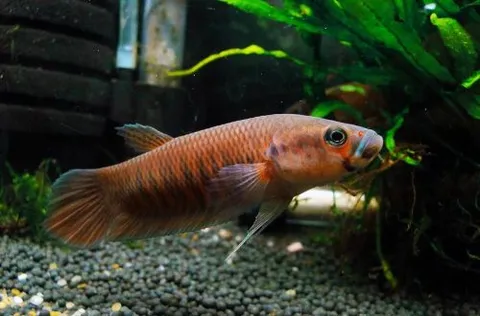
Betta patoti
The scientific name Betta patoti is given to the Betta patoti fish, or Patoti Betta, which belongs to the family Osphronemidae. This fish is part of the fighting fish group, which explains its challenging temperament…
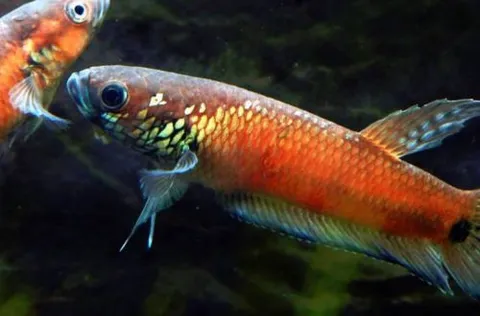
Betta gladiator
The Betta gladiator fish, also known as the Gladiator Betta, bears the scientific name Betta gladiator and belongs to the family Osphronemidae. Its "fighting" name fully justifies the established perception of it, as…
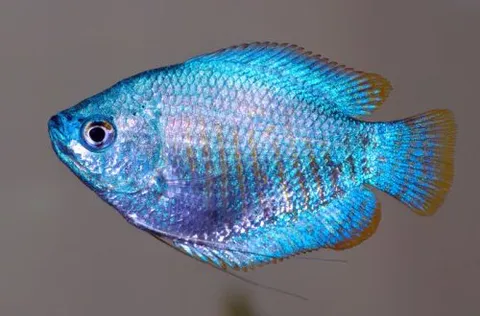
Trichogaster lalius
The Blue Dwarf Gourami, scientifically known as Trichogaster lalius, belongs to the family Osphronemidae. This beautiful miniature fish is an artificially bred variety of the common Dwarf Gourami. It stands out for its…
Trichogaster lalius
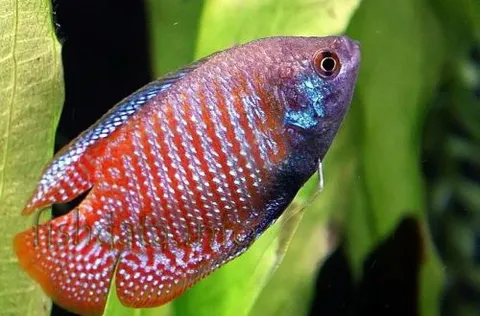
The Dwarf Gourami (Trichogaster lalius), a member of the Osphronemidae family, has maintained its status as one of the most sought-after aquarium species for many years. Its appeal stems not only from its vibrant…