Temperature28 – 32 °C
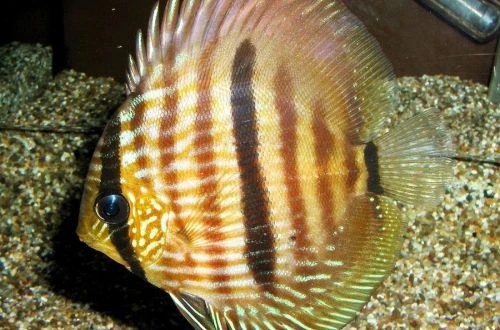
The Heckel Discus, known scientifically as Symphysodon discus, belongs to the Cichlidae family. This species stands out among its relatives in the Discus genus due to its refined and original coloration: three distinct dark vertical bars adorn its body. Because of its characteristic appearance, the fish is often referred to as the Pompadour Fish or Pineapple Fish.
The fish can reach 20 cm in length, and its laterally compressed body shape, resembling a rounded disc, gives it a rather imposing appearance. As for the unique features of this species, the main one is its individual color pattern. Three distinct dark vertical bars are evenly distributed across the body: one passes through the head, the second through the center of the body, and the third is located at the base of the tail. Notably, such vibrant coloration is only present in adult specimens; juveniles have a more modest brown hue. Currently, there are hybrid forms that boast a variety of colors, including red, blue, and cyan shades.
In 1840, the explorer Johann Jacob Heckel discovered this fish species, which was subsequently named after him. Its natural habitat is South America, specifically the river systems of Brazil. Heckel Discus prefer to stay in slow-moving or still waters, typical of riverbanks and flooded forest areas, where they find refuge among dense vegetation, as well as tangled roots and tree branches. Their diet includes insects and their larvae, as well as various invertebrates.
This peaceful and rather shy species prefers to be in the company of its own kind, so it is best to keep them in groups of at least 6 individuals. However, this will require a significant aquarium volume — from 500 liters. In solitary confinement, the fish become lethargic and timid, which, in turn, increases the risk of diseases. Other calm and unhurried species, such as Cardinal Tetras, Neon Tetras, Congo Tetras, as well as Corydoras catfish and similar fish, make good tank mates.
The Heckel Discus is sensitive to water composition; any sudden changes in parameters can negatively affect its health. Therefore, it is very important to carefully monitor the quality of the added water during its weekly 25% renewal; it must exactly match the parameters of the aquarium environment. When siphoning gravel, avoid sudden movements, acting smoothly so as not to stress the fish, which also negatively affects their well-being. It is recommended to avoid quick movements near the aquarium, excessive vibrations, and other similar irritants, as stress is often the cause of diseases in this species. For keeping, a tank of at least 300 liters is recommended, equipped with a powerful filtration system and several heaters, one of which should be a backup in case the main one fails. Good aeration is achieved with several diffusers generating fine bubbles, as oxygen content can become critically low in warm water. Lighting should be moderate, but during the adaptation period, for example, after purchase and transfer to a new aquarium, it should be dimmed. If there are sufficient light sources in the room where the aquarium is located, they will be quite enough. In the aquarium design, the optimal solution will be to create a combination of open spaces with shelters, such as driftwood, roots, and tree branches, and dense thickets of plants. When choosing vegetation, give preference to thermophilic species. The substrate can be anything, for example, sand or gravel, preferably of a dark shade.
The diet of these fish should consist exclusively of high-protein foods, available in both live and frozen forms. It is important to ensure variety in the feed composition, including bloodworms, brine shrimp, mosquito larvae, and other types, and also to add vitamin complexes developed specifically for Discus. As an additional component, vegetable foods such as spirulina, lettuce leaves, spinach, or lightly blanched cucumber can be offered. Start with a small amount of these additives, and if the fish readily accept them, then confidently include vegetable elements in the regular menu. It is worth remembering that not all individuals will eat plant-based food; this depends on individual preferences. It is sometimes suggested that one may use animal meat products, such as beef or poultry heart. However, such a diet is likely to lead to digestive problems, as animal fats and some proteins are poorly assimilated by the fish's body and are atypical food for it. Such recommendations are erroneous, although, unfortunately, they are often repeated by authors.
Successful breeding of this species in home aquariums is extremely rare, which explains why most of these fish are still supplied from natural waters. However, it is quite common to observe cases where a male Heckel Discus forms a pair with another Discus species, and as a result, their offspring are viable. Such pairs produce hybrid varieties, distinguished by very diverse coloration.
There are significant risks of various diseases, often caused by non-compliance with care rules, improper or insufficient nutrition, and stressful situations. In a well-balanced aquarium where all parameters are normal, health problems usually do not arise, since, like any wild fish, their immune system is able to cope with threats, provided that the environment fully meets the necessary requirements.
When choosing a Heckel Discus, it is important to consider that most specimens for sale are wild-caught, so they require careful inspection. A healthy fish should be active, have a rounded body shape without signs of emaciation (sunken belly), and clear eyes without cloudiness. Avoid specimens with damaged fins, film on scales, or unusual behavior, such as a constant desire to hide or an unnatural body tilt. — Assess the fish's reaction to external stimuli: a healthy discus should show cautious curiosity, not be completely apathetic. — Ask the seller about the keeping conditions and diet, as adapting wild specimens to artificial foods can be difficult. — Observe breathing: frequent or uneven gill cover movement may indicate the presence of parasites or stress from poor water quality.
The essentials: size, tank volume, water parameters and care
An adult reaches 20 cm in length. Plan the tank around the maximum size: the fish quickly outgrows a cramped setup.
The recommended volume is 500 L. A smaller tank speeds up nitrate build-up and raises stress levels.
Temperature 28–32 °C, pH 4.2–6.2, hardness 1–5 dGH. Stability matters more than exact values: sudden swings are harder on the fish than a small deviation from the ideal.
Around 10 years when kept properly. Lifespan depends directly on tank volume, water quality and a varied diet.
Temperament: peaceful (regular). Keep this in mind when choosing tank mates.
Recommended setup: medium group (6–8 individuals). Ignoring this is a common cause of stress and disease.
Diet type: meat / protein (live, frozen, fresh). Feed small portions that are finished within a couple of minutes — overfeeding does more harm than underfeeding.
The scientific name of the species is Symphysodon discus, family Cichlids (Cichlidae).
The water suits 115 of 208 plants in the catalogue — the easiest ones are shown first.
African Onion PlantAmazon FrogbitAmazon SwordAnacharisAnubiasAsian WatermossBarth's SwordBeckett's Water TrumpetBoivin's AponogetonDwarf CloverDwarf CloverDwarf HygrophilaDwarf SagittariaGuppy GrassHornwortJava FernJava MossMoneywortMud SwordNarrow Leaf AnacharisSüsswassertangTaiwan MossTemple PlantUssuri Watermilfoil
Matched by family, categories and overlapping keeping conditions
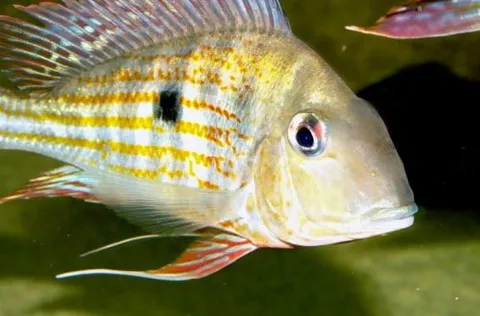
Geophagus abalios
Geophagus abalios, also known as the Spotted Geophagus, belongs to the Cichlidae family. It is rarely found under its true name in retail outlets; more often, it is mistakenly offered as the Surinam Geophagus. This…
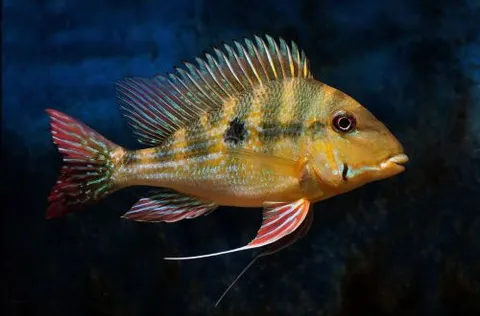
Geophagus dicrozoster
Geophagus dicrozoster, a member of the Cichlidae family, is the scientific name for this aquarium fish. In the trade, it can often be found under other names, such as Geophagus Surinam, Geophagus Colombia, or Geophagus…
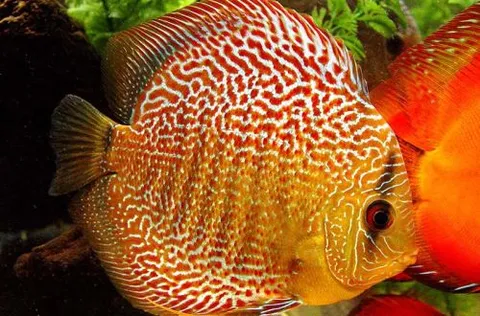
Symphysodon aequifasciatus
The Discus, or Symphysodon aequifasciatus, belongs to the Cichlidae family. This majestic and elegant fish is often called the “King of Aquarium Fish.” Discus are highly regarded worldwide, earning the devotion of…
Geophagus altifrons
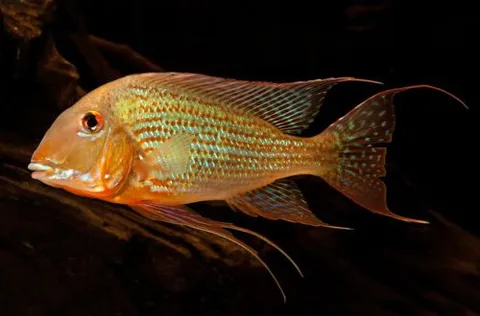
Belonging to the Cichlidae family, Geophagus altifrons is an aquarium fish with the scientific name Geophagus altifrons. This species is quite large and places significant demands on aquarium volume and keeping…