Temperature20 – 24 °C
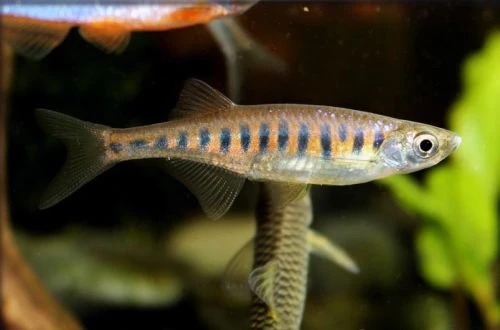
The Inle Danio, scientifically known as Devario auropurpureus, is classified within the Cyprinidae family. This fish gets its name from Lake Inle, where the majority of its population resides. It is easy to keep, requires no special care, and coexists well with many other freshwater species. Thanks to these qualities, it can be considered an ideal choice for beginner aquarists.
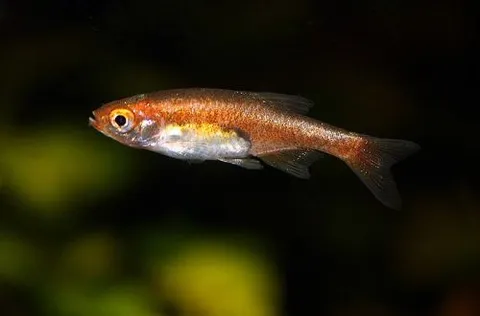
Adults of this fish can reach 6–8 cm in length. Their coloration is silvery, with attractive orange hues. The body pattern includes short vertical strokes that extend from the head to the tail. Sexual dimorphism in this species is not pronounced, making it quite difficult to distinguish males from females.
Its origin is linked to Southeast Asia, specifically the secluded Lake Inle, located in Shan State in eastern Myanmar (Burma). This lake is famous for its numerous endemic species and is a significant regional attraction. Situated in a karst valley at an altitude of 900 meters above sea level, Lake Inle is characterized by clear water and a relatively shallow depth, averaging 2–3 meters in most places. Its bottom is covered with loamy substrates. The water surface is adorned with floating "vegetable islands," which are clusters of various plants serving as refuges for many aquatic inhabitants.
This active and peaceful fish coexists perfectly with other non-aggressive species of comparable size. Inle Danios prefer to live in groups of 8–10 individuals. If their number is smaller, other aquarium inhabitants may start to intimidate them.
For a school of 8–10 Inle Danios, an aquarium of at least 110 liters is considered optimal. When decorating, it is recommended to use a soft substrate, as well as an abundance of rooted and floating plants. Lighting should be moderate. It is important to minimize water movement. A key factor for successful keeping is maintaining high water quality within acceptable temperature ranges, as well as pH and dGH parameters. In addition to regular aquarium maintenance procedures, such as water changes and removal of organic waste, it is advisable to install an effective filtration system, preferably an external filter. Such models help avoid excessive current while providing the best possible purification.
This species is undemanding in terms of diet. In a home aquarium, the fish readily consume most popular foods designed for aquarium inhabitants. Thus, their daily diet can be based on dry products such as flakes and granules. If possible and desired, live or frozen foods, such as Daphnia, Artemia, bloodworms, and others, can be included in their diet.
Under favorable conditions, spawning in these fish can occur quite regularly. Females lay eggs, scattering them among aquatic vegetation, while males immediately fertilize them. The incubation period lasts approximately 24 hours, and after another two days, the fry begin to swim freely. Parental instincts are not developed in this species; the fish not only do not guard their clutch but also show no care for their offspring. Moreover, given the opportunity, they will readily eat both their own eggs and fry. Only a few individuals survive to adulthood. To increase fry survival, it is recommended to promptly transfer them to a separate tank with similar water conditions. Usually, such a tank is equipped with a simple air-lift filter and a heater; an additional light source is not required.
In a balanced aquarium ecosystem that meets the needs of this species, diseases are rare. Most often, ailments are provoked by deteriorating environmental conditions, contact with already sick fish, or mechanical damage. If the fish shows clear signs of illness, medicinal treatment should be applied.
When purchasing, choose active, lively individuals that stay in a school and show interest in their surroundings. Avoid fish with damaged fins, signs of emaciation, spots on the body, or atypical behavior, such as apathy or constantly staying at the water surface. Given the rarity of the species, it is important to ensure there are no obvious signs of stress caused by transportation or poor keeping conditions in the store. If possible, purchase a group of 8–10 individuals at once, as social adaptation in a school significantly reduces stress levels in these fish. Before purchasing, check that the fish do not have sunken bellies, which may indicate feeding problems or the presence of parasites.
The essentials: size, tank volume, water parameters and care
An adult reaches 6–8 cm in length. Plan the tank around the maximum size: the fish quickly outgrows a cramped setup.
The recommended volume is 110 L. A smaller tank speeds up nitrate build-up and raises stress levels.
Temperature 20–24 °C, pH 7–8, hardness 12–21 dGH. Stability matters more than exact values: sudden swings are harder on the fish than a small deviation from the ideal.
Around 5 years when kept properly. Lifespan depends directly on tank volume, water quality and a varied diet.
Temperament: peaceful (regular). Keep this in mind when choosing tank mates.
Recommended setup: group (8–10 individuals). Ignoring this is a common cause of stress and disease.
Diet type: any (universal). Feed small portions that are finished within a couple of minutes — overfeeding does more harm than underfeeding.
The scientific name of the species is Devario auropurpureus, family Cyprinids (Cyprinidae). It also appears in the literature as: Barilius auropurpureus, Inlecypris auropurpureus.
The water suits 113 of 208 plants in the catalogue — the easiest ones are shown first.
African Onion PlantAfzelius's AnubiasAmazon FrogbitAmazon SwordAnacharisAnubiasArrowhead CryptAsian WatermossDwarf CloverDwarf CloverDwarf HygrophilaDwarf SagittariaDwarf ValGuppy GrassHornwortJava MossMoneywortMud SwordNarrow Leaf AnacharisNarrow-leaf CloverStringy MossTaiwan MossTape GrassUssuri Watermilfoil
Matched by family, categories and overlapping keeping conditions
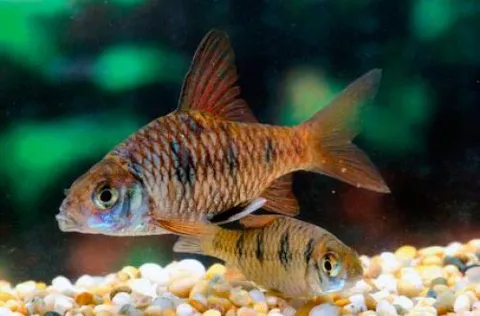
Puntius sahyadriensis
Puntius sahyadriensis, or Maharashtra Barb, is a member of the Cyprinidae family. Among various barb species, it stands out with its distinctive angular body shape, making it easily recognizable. This species is easy to…
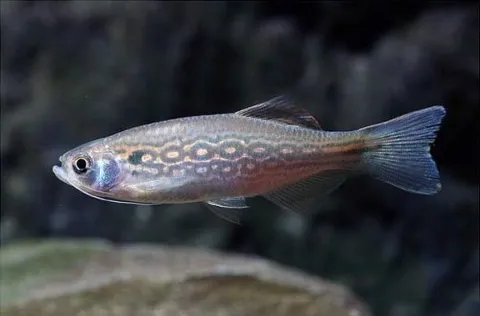
Danio dangila
Danio dangila, or Whiskered Danio (scientific name Danio dangila), belongs to the family Cyprinidae, known as carps. This fish stands out from other Danios due to its noticeably longer barbels. Its ease of care,…
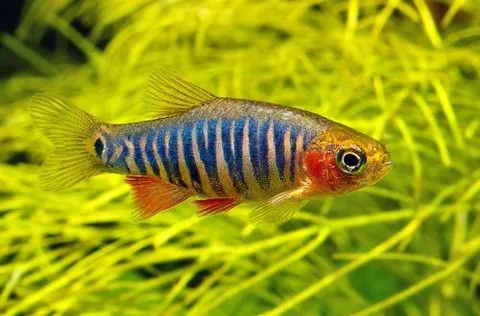
Danio erythromicron
The Emerald Danio, known to the scientific community as Danio erythromicron, belongs to the family Cyprinidae. Previously, it was mistakenly called the Emerald Microrasbora or Microrasbora erythromicron. However,…
Microrasbora rubescens
Microrasbora rubescens, also known as the Red Dwarf Rasbora, with the scientific name Microrasbora rubescens, belongs to the family Cyprinidae. Despite its common name, this fish is not actually a Rasbora. The…