Temperature20 – 24 °C
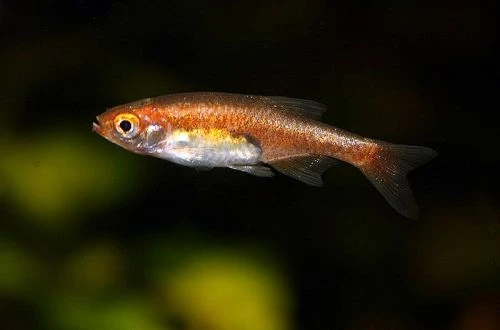
Microrasbora rubescens, also known as the Red Dwarf Rasbora, with the scientific name Microrasbora rubescens, belongs to the family Cyprinidae. Despite its common name, this fish is not actually a Rasbora. The classification was changed in 2009 after research established its close relationship with Danios, but the old trade names are still in use.
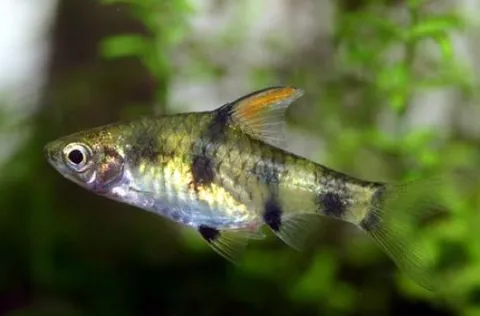
Adults of this species reach approximately 3 cm in length. Their main coloration is orange, with a silvery tint in the abdominal area. The fins and tail are translucent. Sexual dimorphism is extremely weak: males and females are practically indistinguishable, although the latter may be slightly larger.
This species originates from Southeast Asia, specifically Myanmar. Its natural habitat is the small mountain lake Inle and the rivers flowing into it. Currently, Microrasbora rubescens is endangered in the wild. This is due to active human economic activity in the region, intensive fishing, and the appearance of invasive species that compete with native fish. Lake Inle is shallow, about 2–3 meters deep, and its bottom is covered with loamy substrates. The water in the lake is clear and clean. Vegetation consists mainly of floating “green islands”—dense clusters of plants that serve as shelter for many fish species.
These peaceful schooling fish prefer the company of other miniature and non-aggressive species. It is recommended to acquire a group of at least 8–10 individuals, as Microrasbora rubescens may become overly shy or timid in smaller numbers.
For a school of 8–10 fish, an aquarium of at least 50 L is recommended. The decor can be arbitrary, but a few simple conditions should be observed: the use of dark substrate and the presence of dense plant thickets, including floating plants. The artificial habitat for Microrasbora rubescens should replicate the conditions of Lake Inle—clean, clear water with elevated carbonate hardness. To maintain such conditions, it is necessary to regularly clean the aquarium of waste, weekly change a portion of the water for fresh, and use an effective filtration system, preferably an external filter, to avoid excessive water movement. It will also be beneficial to add substances that increase dGH values to the filter material, such as marble chips.
If the fish is not wild-caught but has been bred in aquarium conditions, there will be no problems with its feeding. Most common foods of suitable size will be readily accepted. An ideal diet includes alternating dry foods, such as flakes and granules, with live or frozen foods, such as Artemia and Daphnia.
Breeding this species is quite simple and does not require special preparations. Fish are capable of breeding in a community tank under favorable conditions. During the breeding season, females scatter eggs among dense plant thickets, after which the offspring are left to fend for themselves. The incubation period is 72–96 hours, its duration depending on water temperature. 1–2 days after hatching, the fry begin to swim freely. Despite the ease of spontaneous breeding, preserving the fry will require effort. This species, like all Danios, lacks parental instincts, and the fish are prone to eating their eggs and fry. Because of this, fry survival will be extremely low if they are not promptly transferred to a separate tank. A spawning tank usually has a small volume—10–15 L will be more than enough. It is filled with water from the main aquarium. Equipment needed includes an air-driven filter and a heater. Separate lighting is not necessary. Fry should be fed specialized powdered foods. As they grow, larger foods, such as Artemia nauplii, are gradually introduced into their diet.
In a balanced aquarium ecosystem that meets the needs of this species, diseases are rare. Most often, ailments are provoked by deteriorating environmental conditions, contact with already sick fish, or mechanical damage. If the fish shows clear signs of illness, medicinal treatment should be applied.
When purchasing, choose active individuals with clean fins and no visible injuries or film on their bodies. It is important to ensure that the fish in the store are kept in suitable conditions, as the species is sensitive to water quality and stress during transport. Avoid specimens that look emaciated, stay near the surface, or show signs of apathy, as the adaptation of such individuals to new aquarium conditions can be extremely difficult.
The essentials: size, tank volume, water parameters and care
An adult reaches 3 cm in length. Plan the tank around the maximum size: the fish quickly outgrows a cramped setup.
The recommended volume is 50 L. A smaller tank speeds up nitrate build-up and raises stress levels.
Temperature 20–24 °C, pH 7–8, hardness 3–15 dGH. Stability matters more than exact values: sudden swings are harder on the fish than a small deviation from the ideal.
Around 3 years when kept properly. Lifespan depends directly on tank volume, water quality and a varied diet.
Temperament: peaceful (regular). Keep this in mind when choosing tank mates.
Recommended setup: group (8–10 individuals). Ignoring this is a common cause of stress and disease.
Diet type: small / appropriate size / pieces. Feed small portions that are finished within a couple of minutes — overfeeding does more harm than underfeeding.
The scientific name of the species is Microrasbora rubescens, family Cyprinids (Cyprinidae).
The water suits 113 of 208 plants in the catalogue — the easiest ones are shown first.
African Onion PlantAfzelius's AnubiasAmazon FrogbitAmazon SwordAnacharisAnubiasArrowhead CryptAsian WatermossDwarf CloverDwarf CloverDwarf HygrophilaDwarf SagittariaDwarf ValGuppy GrassHornwortJava MossMoneywortMud SwordNarrow Leaf AnacharisNarrow-leaf CloverStringy MossTaiwan MossTape GrassUssuri Watermilfoil
Matched by family, categories and overlapping keeping conditions
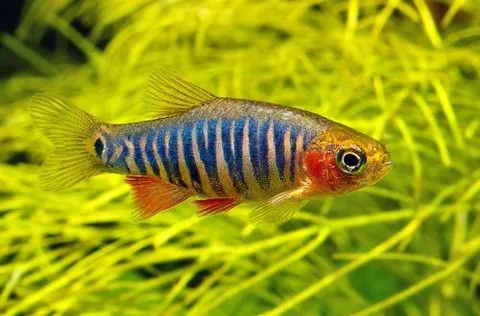
Danio erythromicron
The Emerald Danio, known to the scientific community as Danio erythromicron, belongs to the family Cyprinidae. Previously, it was mistakenly called the Emerald Microrasbora or Microrasbora erythromicron. However,…
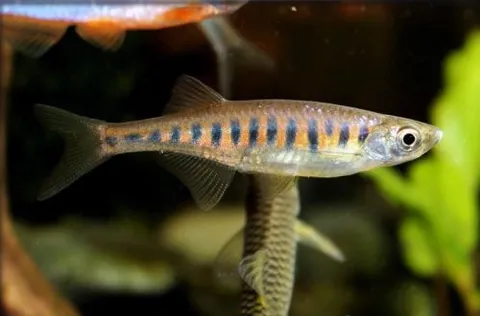
Devario auropurpureus
The Inle Danio, scientifically known as Devario auropurpureus, is classified within the Cyprinidae family. This fish gets its name from Lake Inle, where the majority of its population resides. It is easy to keep,…
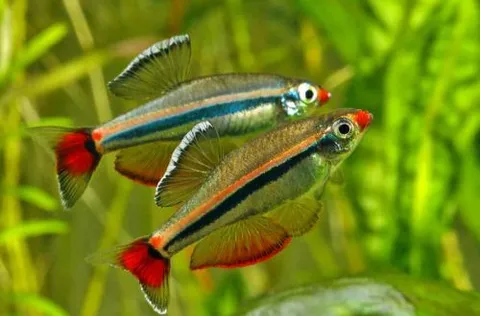
Tanichthys micagemmae
The Vietnamese Cardinal, or Tanichthys micagemmae by its scientific name, belongs to the family Cyprinidae (Carps). This fish was first discovered in 2001 and quickly found its place in home aquariums. It became a…
Pethia canius
Pethia canius, scientifically known as Pethia canius, belongs to the family Cyprinidae. The genus name Pethia is the Sinhalese collective name for small cyprinids, while the specific name “canius” appears to follow a…