Temperature18 – 23 °C
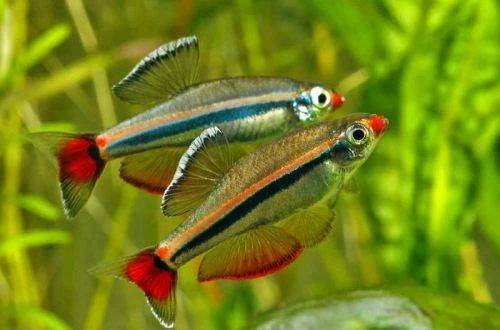
The Vietnamese Cardinal, or Tanichthys micagemmae by its scientific name, belongs to the family Cyprinidae (Carps). This fish was first discovered in 2001 and quickly found its place in home aquariums. It became a unique addition to its more famous relative — the common White Cloud Mountain Minnow (Tanichthys albonubes).
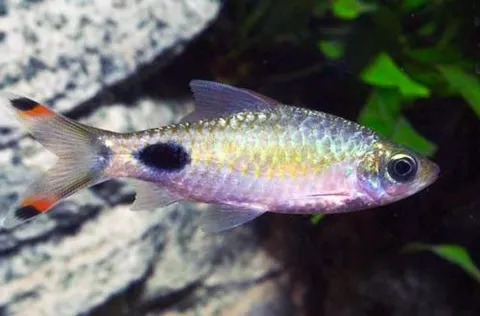
Adult Vietnamese Cardinals reach a modest 2–3 cm in length. Outwardly, they resemble their close relative, but are somewhat smaller in size and differ in the details of their coloration and body pattern. This species is characterized by weak red pigmentation on the dorsal fin, which strikingly contrasts with a pronounced white edge. A distinct black stripe runs along the lateral line. Sexual dimorphism in these fish is well-expressed: males are easily recognized by their more graceful and slender build, brighter coloration, and noticeably enlarged fins compared to females.
The native habitat of this fish is Southeast Asia, specifically, its natural range is limited to the Ben Hai River basin. Here, typical biotopes are represented by wide and shallow river sections where the water moves at a moderate or fast speed. The bottom consists of sandy substrates, and dense vegetation is visible along the banks. Unfortunately, the species is currently endangered and is found only in a few areas. The main reason for this situation is the degradation of coastal zones caused by active agricultural activity, particularly rice cultivation.
These peaceful and friendly fish coexist perfectly with most species that are similar in size and temperament. However, to avoid problems, it is advisable to refrain from keeping Vietnamese Cardinals with territorial, aggressive, or overly active species, such as some barbs.
For a school of 8–10 Vietnamese Cardinals, an aquarium of at least 40 liters will be required. The decor is not critically important, but observations show that the fish display the most vibrant and saturated colors in an environment with abundant greenery, dark substrate, and soft lighting. These fish do not have special requirements for the hydrochemical composition of the water, which greatly simplifies the water preparation process during aquarium maintenance. The key to long-term and successful keeping is maintaining high water quality and preventing the accumulation of organic waste. A productive filtration system handles this task well. The aquarist will need to regularly perform equipment maintenance, weekly replace a portion of the water with fresh, and promptly clean the substrate. It is important to remember that despite their tropical origin, a comfortable temperature for them is considered to be in the range of 18–23°C!
Feeding these fish is not difficult. They readily accept most popular foods, whether dry, frozen, or live options.
Breeding is not difficult. The fish lay their eggs among fine-leaved plants. In a densely planted aquarium, adult fish usually do not eat the eggs and fry, allowing the population to sustain itself without separating the parents. High water quality and the presence of a suitable spawning substrate stimulate spawning.
The species has a strong immune system when kept under proper conditions. Diseases most often arise due to the accumulation of organic waste or an unsuitable temperature regime. For prevention, effective filtration and regular water changes are necessary. They are most sensitive to water overheating above 25°C, which can weaken the fish and provoke the development of bacterial infections.
When choosing, one should pay attention to the overall activity and fin integrity. Healthy individuals should have bright coloration, clear stripes on their bodies, and show interest in food. Avoid purchasing fish with signs of emaciation, scale damage, or sluggish behavior, as this may indicate stress or hidden diseases. It is recommended to acquire a group of 8–10 individuals to reduce stress during adaptation.
The essentials: size, tank volume, water parameters and care
An adult reaches 3 cm in length. Plan the tank around the maximum size: the fish quickly outgrows a cramped setup.
The recommended volume is 40 L. A smaller tank speeds up nitrate build-up and raises stress levels.
Temperature 18–23 °C, pH 6.5–7.5, hardness 2–10 dGH. Stability matters more than exact values: sudden swings are harder on the fish than a small deviation from the ideal.
Around 4 years when kept properly. Lifespan depends directly on tank volume, water quality and a varied diet.
Temperament: peaceful (regular). Keep this in mind when choosing tank mates.
Recommended setup: group (8–10 individuals). Ignoring this is a common cause of stress and disease.
Diet type: any (universal). Feed small portions that are finished within a couple of minutes — overfeeding does more harm than underfeeding.
The scientific name of the species is Tanichthys micagemmae, family Cyprinids (Cyprinidae).
The water suits 196 of 208 plants in the catalogue — the easiest ones are shown first.
Afzelius's AnubiasAnacharisAnubiasBrazilian PennywortDwarf CloverDwarf CloverDwarf HygrophilaDwarf SagittariaDwarf ValGuppy GrassHornwortJava FernJava MossMoneywortMud SwordNarrow Leaf AnacharisNarrow-leaf CloverStringy MossSüsswassertangTaiwan MossTape GrassTemple PlantUssuri WatermilfoilWater Wisteria
Matched by family, categories and overlapping keeping conditions
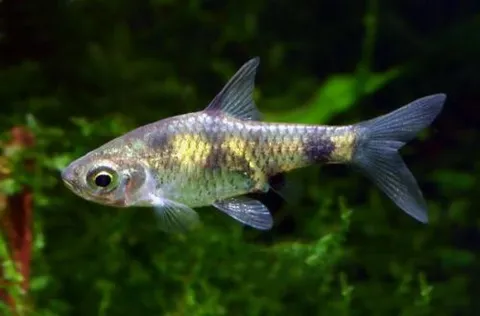
Pethia aurea
The small Golden Barb, scientifically known as Pethia aurea, belongs to the family Cyprinidae. This peaceful, undemanding, small-sized fish can be a wonderful addition to any small aquarium. Its care and breeding do not…
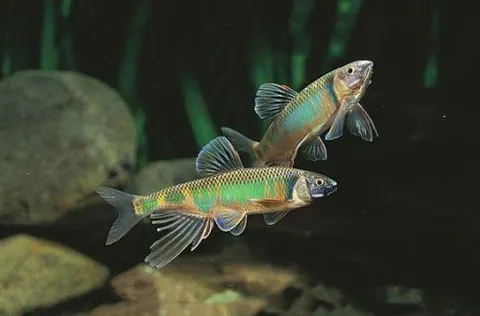
Zacco platypus
The scientific name Zacco platypus refers to the Common Zacco, a member of the family Cyprinidae, well-known as the carps. The habitat of this fish extends across East Asia, found in river systems from the northern…
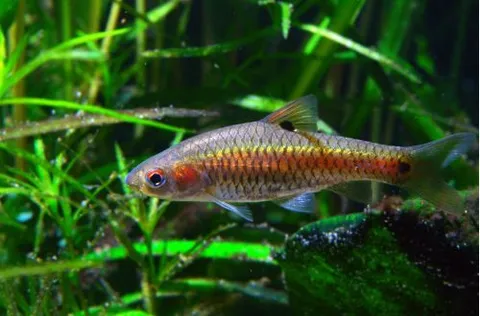
Puntius bimaculatus
Puntius bimaculatus, or the Two-Spot Barb, belongs to the family Cyprinidae. Kept in a school, these fish make a wonderful addition to almost any aquarium. They are undemanding in care, easy to breed, and compatible…
Puntius mahecola
The fish known as Mahecola Barb (scientific name Puntius mahecola) is classified within the family Cyprinidae. It is very popular in Asian countries, especially India, but outside of this region, in Europe and America,…