Temperature23 – 27 °C
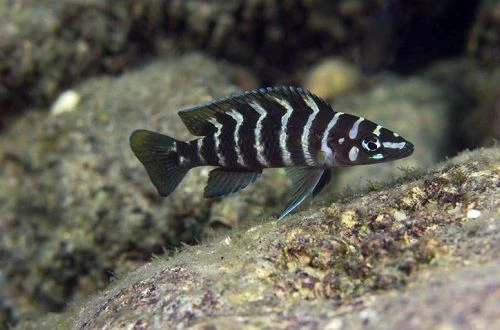
Lamprologus cylindricus, or Neolamprologus cylindricus, belongs to the family Cichlidae. It is an unpretentious fish to keep and is easy to breed. Nevertheless, its aggressive nature seriously limits the choice of compatible tank mates. Due to this difficult temperament, it should not be recommended to inexperienced aquarists.
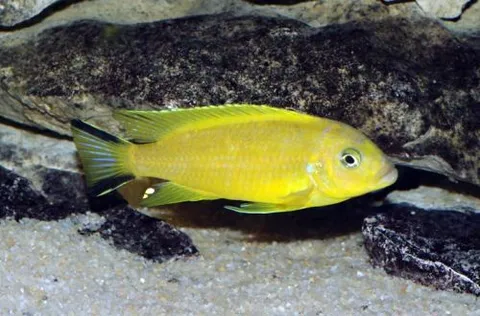
Adult males can reach 12 cm in length, while females are generally somewhat smaller. Otherwise, sexual differences are quite subtle. The fish have an elongated, cylindrical body, and their dorsal fin is long, extending from the head to the base of the tail. The fins have pointed rays resembling miniature spines. These formations serve as protection from predators but can create inconvenience when catching the fish with a net in the aquarium. The coloration is characterized by black with rows of vertical light stripes. Some subspecies feature a bluish fringe on the fins and tail.
This species is endemic to Lake Tanganyika, located in Africa. It is the second deepest lake in the world and the second largest by volume, known for its unique ecosystem. Lamprologus cylindricus are found in the southeastern part of the reservoir, along the Tanzanian coast. Their natural habitat is rocky shores with sandy substrate. These fish can be found both at the bottom and near the water surface, at depths of up to 15 meters.
The aggressiveness of alpha males prevents keeping Lamprologus cylindricus in groups. Either solitary keeping or a pair with one or more females is permissible. However, there is a significant limitation here: the fish must grow together from a young age. If adult individuals from different places are placed in the aquarium, it can lead to undesirable consequences. Relationships with representatives of other species are usually more benevolent. Good compatibility is observed with Tanganyikan fish of similar size that inhabit the water column. In small aquariums, keeping them with territorial species, such as Julidochromis, should be avoided.
For a pair of these fish, considering possible tank mates, an aquarium of at least 150 liters is recommended. The setup should include a sand-gravel substrate. Piles of rocks and stones forming various caves and grottoes are essential. Any suitable items can serve as shelters: from pet store decorations to ceramic pots or hollow tubes. Hiding places must be distributed evenly across the bottom of the aquarium, as each can become a territory for one of the fish. Lamprologus cylindricus do not pose a threat to plants, and their presence in the aquarium is not mandatory. If you want to green the aquarium, you can use hardy species capable of adapting to alkaline water of high hardness, such as Anubias, Vallisneria, as well as some mosses and ferns. It is important to ensure the stability of water parameters, imitating their natural habitat. In addition to maintaining the necessary hydrochemical indicators and temperature, regular aquarium maintenance is critically important. This includes timely removal of organic waste and weekly partial water changes (10–15% of the total volume).
This species is carnivorous and prefers live or frozen foods, which can be supplemented with plant components. In a home aquarium, you can offer pieces of earthworms, mussels, shrimp, as well as bloodworms and Artemia. It is important to include spirulina flakes or nori in the diet to ensure a sufficient amount of plant additives. Do not forget about dry foods, which will serve as a reliable source of vitamins and trace elements.
Breeding this species is quite simple, provided the fish are kept in suitable conditions and have access to shelters for their offspring. At the beginning of the breeding season, the male chooses a place for future spawning, where the female then lays her eggs. During the incubation period and in the first weeks after the fry hatch, the fish show fierce protection. At this time, the male becomes particularly aggressive, so it is recommended to breed them in a separate aquarium.
The main cause of most diseases in Lake Tanganyika cichlids is unsuitable keeping conditions and poor-quality food, which often leads, for example, to African Bloat. At the first symptoms, it is necessary first to check the water parameters and ensure there are no high concentrations of dangerous substances such as ammonia, nitrites, and nitrates. If the readings deviate from the norm, they should be brought into order, and only then should treatment begin.
When choosing Lamprologus cylindricus, attention should be paid to the fish's overall activity and the condition of its skin. Healthy individuals should be active, show interest in their surroundings, and have no visible injuries, sores, or spots on their bodies. It is important to ensure there are no signs of emaciation, such as a sunken belly or a sharp back, and that the fins are clean, spread out, and show no signs of damage. Since the species exhibits pronounced intraspecific aggression, fish in a retail aquarium often display territorial behavior. Avoid purchasing individuals that appear intimidated, constantly hide in corners, or show signs of recent fights. It is recommended to choose fish raised in conditions similar to those of an aquarium and to clarify their diet with the seller to ensure a smooth transition to familiar foods.
The essentials: size, tank volume, water parameters and care
An adult reaches 12 cm in length. Plan the tank around the maximum size: the fish quickly outgrows a cramped setup.
The recommended volume is 150 L. A smaller tank speeds up nitrate build-up and raises stress levels.
Temperature 23–27 °C, pH 7.5–9, hardness 10–25 dGH. Stability matters more than exact values: sudden swings are harder on the fish than a small deviation from the ideal.
Around 9 years when kept properly. Lifespan depends directly on tank volume, water quality and a varied diet.
Temperament: aggressive / incompatible / unfriendly. Keep this in mind when choosing tank mates.
Recommended setup: pair (male/female). Ignoring this is a common cause of stress and disease.
Diet type: mixed diet (meat + plant-based). Feed small portions that are finished within a couple of minutes — overfeeding does more harm than underfeeding.
The scientific name of the species is Neolamprologus cylindricus, family Cichlids (Cichlidae). It also appears in the literature as: Lamprologus adriani, Lamprologus cylindricus.
The water suits 114 of 208 plants in the catalogue — the easiest ones are shown first.
African Onion PlantAfzelius's AnubiasAmazon FrogbitAmazon SwordAnacharisAnubiasArrowhead CryptDwarf CloverDwarf CloverDwarf HygrophilaDwarf SagittariaDwarf ValGuppy GrassHornwortJava MossMoneywortMud SwordNair's LagenandraNarrow Leaf AnacharisNarrow-leaf CloverStringy MossTaiwan MossTape GrassUssuri Watermilfoil
Matched by family, categories and overlapping keeping conditions
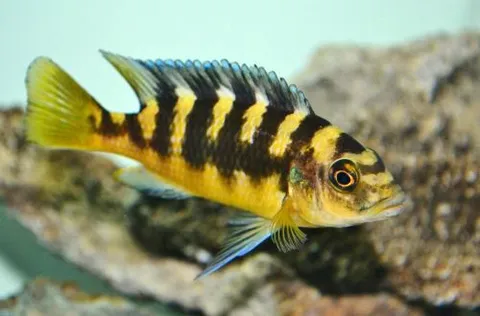
Pseudotropheus crabro
Pseudotropheus crabro, also known as the Chameleon Cichlid or Bumblebee Cichlid, has the scientific name Pseudotropheus crabro and belongs to the family Cichlidae. This fish is a representative of the Mbuna cichlid…
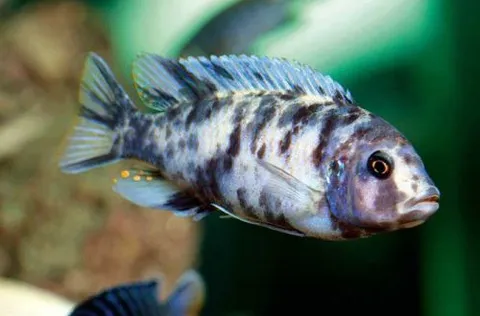
Pseudotropheus crabro
The OB Mbuna form (OB Mbuna) represents an example of natural polymorphism, characteristic of some species of Malawian cichlids. These fish inhabit the African Lake Nyasa and are distinguished by their peculiar…
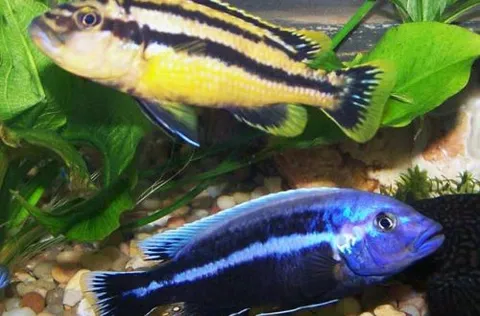
Melanochromis chipokae
Melanochromis chipokae, known scientifically as Melanochromis chipokae, belongs to the family Cichlidae. This species represents the Mbuna group of cichlids, characterized by their aggressive behavior. This particular…
Maylandia sp. Daktari
Pseudotropheus Daktari, scientifically named Maylandia sp. Daktari, belongs to the Cichlidae family. This species was once classified as Pseudotropheus, which is reflected in its trade name. It does not cause much…