Temperature23 – 27 °C
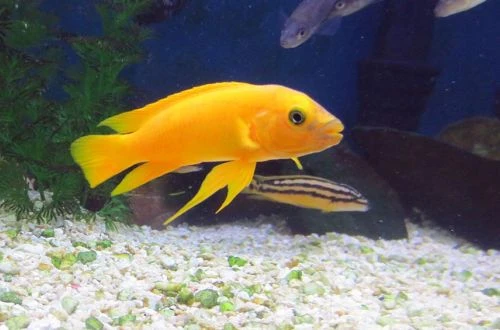
An endemic of the African Lake Tanganyika, located in East Africa, the orange lamprologus, or lemon cichlid (scientific name Neolamprologus leleupi), belongs to the family Cichlidae. These fish are found along rocky shorelines in the southern part of the lake. Thanks to its bright coloration, this species is considered one of the most sought-after cichlids. However, it is not the best choice for beginner aquarists, as it requires impeccable water quality and exhibits complex intraspecific relationships.
Adults reach no more than 10 cm in length. Their coloration is uniform, varying from yellow to brownish. Sexual dimorphism is weakly expressed; only small differences in the size of the pelvic fins, which are usually shorter in females.
The lemon cichlid is endemic to Lake Tanganyika in East Africa. In nature, the fish inhabits coastal areas with a rocky bottom, preferring to stay near rocky shores. It leads a secretive lifestyle, living in numerous cracks, caves, and crevices between stones, where it feeds on small invertebrates inhabiting the biological fouling of the substrate. The water in its habitat is characterized by high hardness and alkaline reaction.
This species is relatively peaceful towards other aquarium inhabitants, except during spawning periods when males may exhibit excessive aggression while defending their territory. Males show the most hostility towards each other, so it is recommended to keep only one adult pair in a single aquarium. Other fish from Lakes Tanganyika and Malawi (except Mbuna species), as well as any other species capable of adapting to similar conditions, are suitable as tank mates.
An aquarium of 70 liters or more will be sufficient for one pair of fish. The decor is simple: sandy substrate and piles of stones or rock formations creating caves and grottoes are necessary. Simple ceramic pots, turned on their side, also work as shelters. The success of keeping lemon cichlids depends on maintaining very clean water and high pH and dGH values. To maintain the required water quality, in addition to weekly water changes of 20–25% of the volume with fresh water, it is necessary to install an effective filtration system and regularly clean the substrate of organic debris.
The diet of these fish should primarily consist of meaty foods, such as live or frozen bloodworms and brine shrimp. In addition, vegetable flakes can be offered. To ensure a balanced diet, it is recommended to use specialized high-protein foods from reputable manufacturers.
This species is monogamous: fish form a permanent pair for life. It is important to note that not every male/female pair is compatible; if adult individuals are acquired and placed together, there is a high risk of one being killed. Pair formation occurs only among young fish as they mature while remaining in a group. Spawning is secretive, and often the aquarist discovers fry when they are already free-swimming. During the breeding period, the female chooses a secure shelter and lays up to 150 eggs, attaching them to the roof of a cave. The incubation period lasts 3–4 days, and then the fry remain in the shelter for 8–10 days. During this time, the parents will stay at the cave entrance, protecting their offspring from potential danger. Fry can remain with their parents for about 6 weeks, after which they should be moved to a separate tank to prevent them from being eaten.
The main cause of most diseases in Lake Tanganyika cichlids is unsuitable keeping conditions and poor-quality food, which often leads, for example, to African Bloat. At the first symptoms, it is necessary first to check the water parameters and ensure there are no high concentrations of dangerous substances such as ammonia, nitrites, and nitrates. If the readings deviate from the norm, they should be brought into order, and only then should treatment begin.
When choosing a Lemon Cichlid, preference should be given to active individuals with bright, vibrant coloration and no visible skin damage. It is important to avoid fish with signs of emaciation, sunken bellies, or damaged fins, as these may indicate hidden diseases or the effects of stress. In the store, pay attention to the fish's behavior: healthy individuals exhibit territoriality and curiosity, while an apathetic state or constant attempts to hide may be a sign of poor adaptation to aquarium conditions.
The essentials: size, tank volume, water parameters and care
An adult reaches 10 cm in length. Plan the tank around the maximum size: the fish quickly outgrows a cramped setup.
The recommended volume is 70 L. A smaller tank speeds up nitrate build-up and raises stress levels.
Temperature 23–27 °C, pH 7.5–9, hardness 8–25 dGH. Stability matters more than exact values: sudden swings are harder on the fish than a small deviation from the ideal.
Around 9 years when kept properly. Lifespan depends directly on tank volume, water quality and a varied diet.
Temperament: territorial (often aggressive). Keep this in mind when choosing tank mates.
Recommended setup: pair (male/female). Ignoring this is a common cause of stress and disease.
Diet type: mixed diet (meat + plant-based). Feed small portions that are finished within a couple of minutes — overfeeding does more harm than underfeeding.
The scientific name of the species is Neolamprologus leleupi, family Cichlids (Cichlidae). It also appears in the literature as: Lamprologus leleupi.
The water suits 114 of 208 plants in the catalogue — the easiest ones are shown first.
African Onion PlantAfzelius's AnubiasAmazon FrogbitAmazon SwordAnacharisAnubiasArrowhead CryptDwarf CloverDwarf CloverDwarf HygrophilaDwarf SagittariaDwarf ValGuppy GrassHornwortJava MossMoneywortMud SwordNair's LagenandraNarrow Leaf AnacharisNarrow-leaf CloverStringy MossTaiwan MossTape GrassUssuri Watermilfoil
Matched by family, categories and overlapping keeping conditions
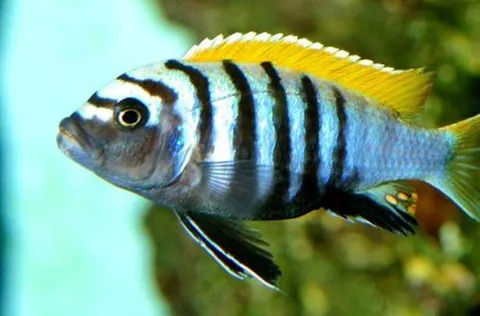
Cynotilapia afra
Cynotilapia afra, known among aquarists as the Dog Cichlid or Afra Cichlid, belongs to the family Cichlidae. Thanks to its original and diverse coloration, as well as its unpretentiousness in keeping, it has gained…
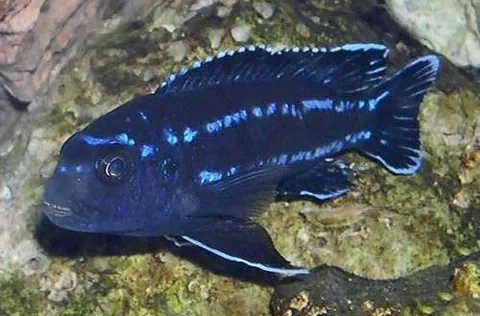
Pseudotropheus cyaneorhabdos
Melanochromis maingano, officially known as Pseudotropheus cyaneorhabdos, belongs to the family Cichlidae. This species is relatively new to science, having been described only in 1997. Although the fish was discovered…
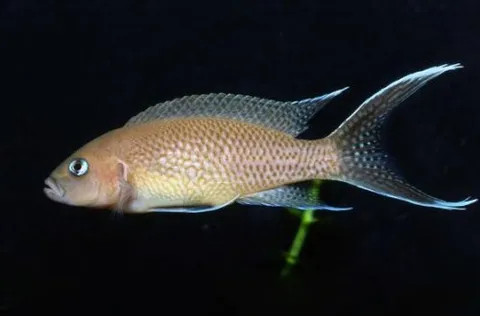
Neolamprologus brichardi
The Princess Cichlid, scientifically known as Neolamprologus brichardi, belongs to the Cichlidae family. This species is endemic to Lake Tanganyika, located in East Africa. Its natural habitat consists of rocky…
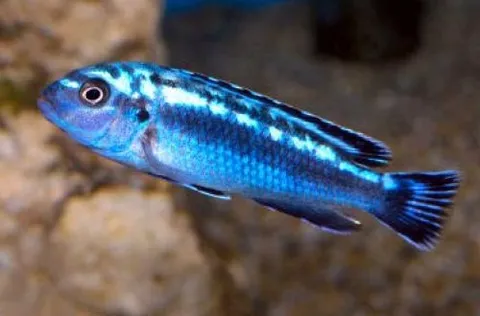
Pseudotropheus johannii
Melanochromis johannii, known in the scientific world as Pseudotropheus johannii (or Melanochromis johannii), belongs to the family Cichlidae. This cichlid is distinguished by its particular beauty and vibrancy.…