Temperature23 – 28 °C
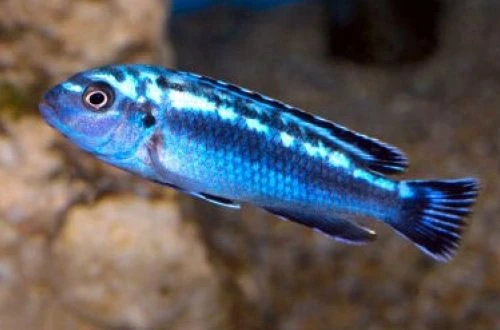
Melanochromis johannii, known in the scientific world as Pseudotropheus johannii (or Melanochromis johannii), belongs to the family Cichlidae. This cichlid is distinguished by its particular beauty and vibrancy. Interestingly, the coloration of males and females is so different that they are often mistaken for two completely different species: males have a blue coloration, while females are yellow.
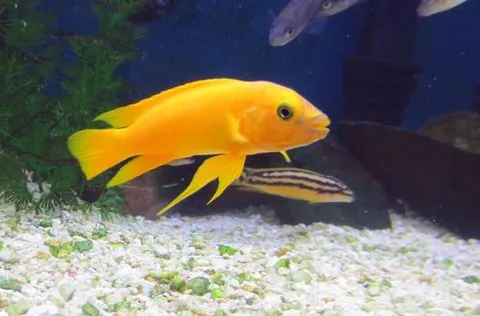
This fish has an elongated body, culminating in a rounded head. A long dorsal fin extends from the head to the tail. The coloration of Melanochromis johannii depends on its sex. Males display a light blue hue, adorned with parallel rows of dark stripes. Light spots, similar in size and color to eggs, can be seen on their anal fin. Females, like juveniles, have a golden-orange coloration with barely noticeable stripes on their bodies. Due to their external similarity, males are sometimes mistakenly identified as their close relative, Maingano.
The natural habitat of these fish is the African Lake Malawi. They are found locally in its eastern part, near the settlement of Mazinye and Cape Ngombo, in modern-day Malawi. They prefer rocky areas where they find shelter among accumulations of small and medium-sized rocks submerged in water up to 5 meters deep. In natural conditions, their diet consists of tough fibrous algae growing on rocks, as well as small benthic invertebrates living within these algae.
This species demonstrates relative tolerance towards other cichlids. However, aggression can occur between males, as well as towards fish of similar coloration, especially their Maingano relatives. For keeping, the following ratio is recommended: one male and 3–4 females, with each female having a reliable hiding place among the rocks. Paired keeping (male/female) is also possible, but in such a case, the level of aggression can significantly increase, which, in the presence of other tankmates, will provoke undesirable skirmishes. Suitable tankmates include other non-aggressive cichlids from Lake Malawi, such as Hummingbird Cichlid, Ocellaris Cichlid, Lombardi, Lemon Cichlid, and similar species.
Melanochromis johannii requires high-quality water with a stable chemical composition. Despite this, they are not particularly clean, so weekly water changes of 20% to 50% are required. The exact percentage depends on the size of the aquarium and the number of inhabitants: for example, for 3–4 individuals in a 150 L aquarium, 20% of the volume is sufficient. The water should mimic the natural conditions of Lake Malawi, being slightly alkaline and of medium hardness. More detailed information on the composition and methods for changing pH and dH parameters can be found in the section "Hydrochemical composition of water." An effective filtration system is necessary to maintain water purity; the most efficient filter available at an affordable price should be acquired. It will also provide the necessary internal current. Good water aeration is essential, especially in an aquarium without plants. It is recommended to install several air stones that create many small air bubbles. Other necessary equipment includes a heater and a lighting system. In the aquarium design, the natural habitat should be recreated: coarse sand as substrate with accumulations of large rock formations and stones rising to the surface. Hiding places are important and can be represented by various crevices and grottoes. Plants are not required in such an aquarium.
These cichlids are omnivorous, but it is important to provide them with a varied diet. Fish should not be offered the same type of food constantly. In a home aquarium, both live and frozen foods, such as bloodworms, Artemia, and Daphnia, can be used. These should be alternated with dry foods, such as flakes or pellets, and supplemented with plant-based components. Although it is sometimes claimed to be permissible to use animal products, such as beef heart or liver, it is best to avoid this. Mammalian meat is not a natural part of their diet and can contribute to digestive problems, even provoking "Malawi bloat" disease. Feeding is recommended 2–3 times a day, offering an amount of food that the fish can consume in approximately 5 minutes.
Melanochromis johannii is a polygamous species where a male and several females form a permanent family group. Under favorable conditions, spawning can begin at any time, and one of the main harbingers of the breeding season is a noticeable intensification of the male's coloration, which can become twice as vibrant. Females lay 10 to 60 eggs directly on the substrate, after which they immediately hide them in their mouths — this is a reliable evolutionary mechanism for protecting offspring. However, the eggs at this stage remain unfertilized, and there is an interesting way for their fertilization. The pattern on the male's anal fin mimics eggs, and the female mistakenly tries to swallow them. At this moment, the male releases milt, which the female inhales, and fertilization occurs. The incubation period lasts from 14 to 21 days, with the eggs remaining in the female's mouth throughout this time. After hatching, she continues to guard the fry for several more days; if danger arises, the fry hide in the mother's mouth. During this period, the fry can feed on finely crushed dry foods and Artemia nauplii (their larval stage).
The most common disease among representatives of this species is Malawi bloat. Its occurrence is often associated with poor quality food or a monotonous diet lacking plant additives. In addition, a weakened immune system due to poor water quality makes them vulnerable to various bacterial and fungal infections. The main preventive measure is to ensure proper water quality and optimal keeping conditions.
When purchasing Pseudotropheus johannii, choose active individuals with clean fins and no visible skin damage. It is important to pay attention to the condition of the belly: it should not be sunken, which may indicate chronic diseases or emaciation. In the store, the fish should display species-typical territoriality and interest in food. — avoid specimens with signs of apathy, rapid breathing, or a film on the body, as Malawian cichlids are sensitive to water quality and stress during transport — note that juveniles of both sexes and adult females have a yellow-orange coloration, while mature males are blue-azure, so it is better to acquire several individuals at once to form a group — inquire with the seller about keeping conditions and diet, as an abrupt change in conditions or type of food after purchase can negatively affect the health of the fish.
The essentials: size, tank volume, water parameters and care
An adult reaches 8–10 cm in length. Plan the tank around the maximum size: the fish quickly outgrows a cramped setup.
The recommended volume is 160 L. A smaller tank speeds up nitrate build-up and raises stress levels.
Temperature 23–28 °C, pH 7.6–8.8, hardness 10–18 dGH. Stability matters more than exact values: sudden swings are harder on the fish than a small deviation from the ideal.
Around 12 years when kept properly. Lifespan depends directly on tank volume, water quality and a varied diet.
Temperament: territorial (often aggressive). Keep this in mind when choosing tank mates.
Recommended setup: harem (1 male and several females). Ignoring this is a common cause of stress and disease.
Diet type: mixed diet (meat + plant-based). Feed small portions that are finished within a couple of minutes — overfeeding does more harm than underfeeding.
The scientific name of the species is Pseudotropheus johannii, family Cichlids (Cichlidae). It also appears in the literature as: Melanochromis johanni.
The water suits 114 of 208 plants in the catalogue — the easiest ones are shown first.
African Onion PlantAfzelius's AnubiasAmazon FrogbitAmazon SwordAnacharisAnubiasArrowhead CryptDwarf CloverDwarf CloverDwarf HygrophilaDwarf SagittariaDwarf ValGuppy GrassHornwortJava MossMoneywortMud SwordNair's LagenandraNarrow Leaf AnacharisNarrow-leaf CloverStringy MossTaiwan MossTape GrassUssuri Watermilfoil
Matched by family, categories and overlapping keeping conditions
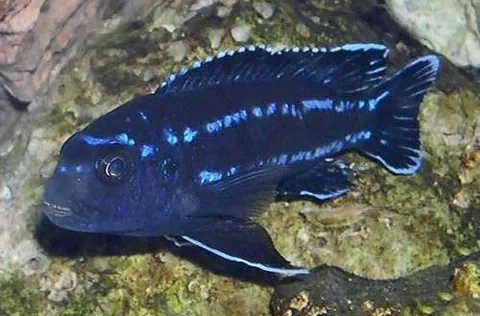
Pseudotropheus cyaneorhabdos
Melanochromis maingano, officially known as Pseudotropheus cyaneorhabdos, belongs to the family Cichlidae. This species is relatively new to science, having been described only in 1997. Although the fish was discovered…
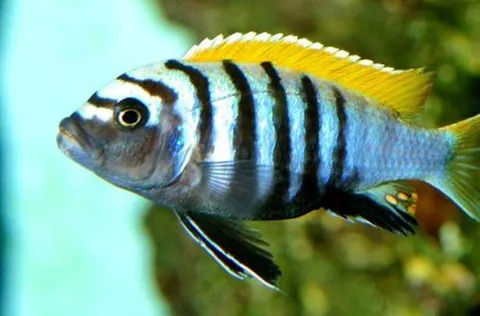
Cynotilapia afra
Cynotilapia afra, known among aquarists as the Dog Cichlid or Afra Cichlid, belongs to the family Cichlidae. Thanks to its original and diverse coloration, as well as its unpretentiousness in keeping, it has gained…
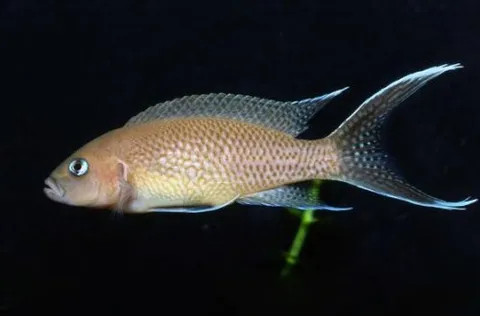
Neolamprologus brichardi
The Princess Cichlid, scientifically known as Neolamprologus brichardi, belongs to the Cichlidae family. This species is endemic to Lake Tanganyika, located in East Africa. Its natural habitat consists of rocky…
Neolamprologus leleupi
An endemic of the African Lake Tanganyika, located in East Africa, the orange lamprologus, or lemon cichlid (scientific name Neolamprologus leleupi), belongs to the family Cichlidae. These fish are found along rocky…