Temperature22 – 25 °C
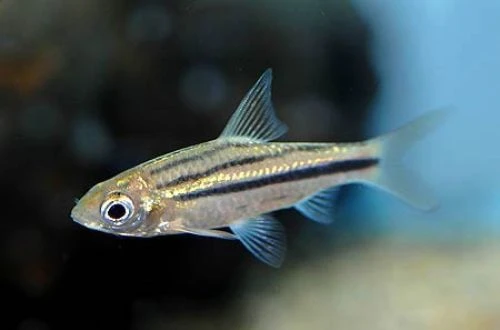
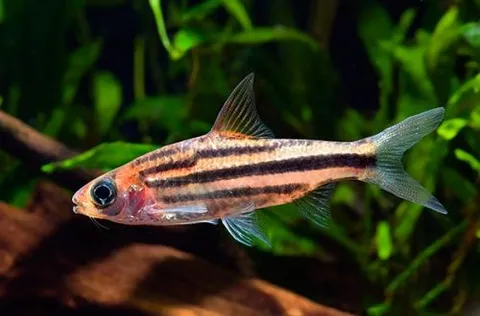
The Striped Barb, scientifically known as Striuntius lineatus, is a member of the Cyprinidae family. This active and friendly fish exhibits good compatibility with many common aquarium inhabitants. Possessing significant resemblance to several closely related species, its actual distribution in the hobby remains somewhat unclear.
Adults typically reach a length of about 5 cm. Their bodies are adorned with alternating horizontal black stripes set against a light silver background. Sexual dimorphism in this species is weakly expressed; females are distinguished only by a slightly larger body shape. The Striped Barb is closely related to the Three-stripe Barb and the Five-banded Barb, which is evident in their similar appearance. While it may be difficult for the average aquarist to identify the specific species, it is generally not necessary, as they all have similar care requirements.
Its natural habitat is on the island of Sumatra in Southeast Asia, where the fish inhabits shallow peat swamps and associated streams. A typical biotope is characterized by an abundance of fallen leaves, branches, and diverse root systems. The water in such places usually contains a high concentration of tannins and has very low pH values, which gives it a characteristic rich brown color.
This fish exhibits a peaceful and active nature. It will perfectly complement a community of species from Southeast Asia, including danios, rasboras, and other barbs. It is optimal to keep them in a school consisting of 8–10 individuals.
For a school of 8–10 fish, the recommended aquarium volume starts from 150–200 liters. The aquascape should preferably include numerous snags and dense thickets of shade-loving plants, such as Anubias, Cryptocoryne, as well as various aquatic mosses and ferns. Lighting should be subdued. Any soft, dark substrate is suitable. Experienced aquarists can add a layer of certain tree leaves to the bottom, which, as they decompose, contribute to giving the water a characteristic brown tint.
Being an omnivorous species, this fish readily accepts most common foods of appropriate size. An important condition is the presence of vegetable additives or components in the diet.
At the time of writing this article, no successful cases of breeding this species in home aquariums have been recorded. It is assumed that the reproduction process is similar to that of closely related species.
The Striped Barb is quite hardy, and diseases usually manifest only in weakened individuals, which may be a consequence of inadequate nutrition or unsuitable living conditions. Infection is also possible through contact with already sick fish.
When choosing a striped barb in a store, pay attention to the activity and appearance of the individuals. A healthy fish should show curiosity, actively move in the water column, and show no signs of emaciation or damage. Avoid buying fish with sunken bellies, damaged fins, film on the body, or unnatural behavior, such as constantly hovering near the surface or trying to hide in a corner when approached by a person. — Choose individuals with a clear, contrasting stripe pattern on their bodies. — Make sure the fish in the aquarium are kept in a group, as this reduces their stress and indicates proper pre-sale care. — Check for any signs of infectious diseases in other inhabitants of the same aquarium, as barbs are sensitive to water quality and living conditions. Since the species can be timid, fish in the store may appear paler than usual, but after adapting to home conditions, their coloration should become brighter. It is recommended to purchase a school of 8–10 individuals at once so that the fish feel confident and display natural behavior.
The essentials: size, tank volume, water parameters and care
An adult reaches 5–6 cm in length. Plan the tank around the maximum size: the fish quickly outgrows a cramped setup.
The recommended volume is 200 L. A smaller tank speeds up nitrate build-up and raises stress levels.
Temperature 22–25 °C, pH 4–7, hardness 1–10 dGH. Stability matters more than exact values: sudden swings are harder on the fish than a small deviation from the ideal.
Around 5 years when kept properly. Lifespan depends directly on tank volume, water quality and a varied diet.
Temperament: peaceful (regular). Keep this in mind when choosing tank mates.
Recommended setup: group (8–10 individuals). Ignoring this is a common cause of stress and disease.
Diet type: any (universal). Feed small portions that are finished within a couple of minutes — overfeeding does more harm than underfeeding.
The scientific name of the species is Striuntius lineatus, family Cyprinids (Cyprinidae). It also appears in the literature as: Barbus lineatus, Puntius lineatus.
The water suits 197 of 208 plants in the catalogue — the easiest ones are shown first.
Afzelius's AnubiasAnacharisAnubiasBrazilian PennywortDwarf CloverDwarf CloverDwarf HygrophilaDwarf SagittariaDwarf ValGuppy GrassHornwortJava FernJava MossMoneywortMud SwordNarrow Leaf AnacharisNarrow-leaf CloverStringy MossSüsswassertangTaiwan MossTape GrassTemple PlantUssuri WatermilfoilWater Wisteria
Matched by family, categories and overlapping keeping conditions
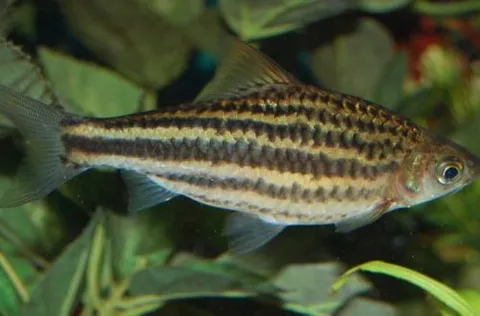
Desmopuntius johorensis
Desmopuntius johorensis, also known as the Five-banded Barb or Striped Barb, belongs to the Cyprinidae family. This fish is attractive due to its unique body pattern. Thanks to its unpretentiousness and peaceful nature,…
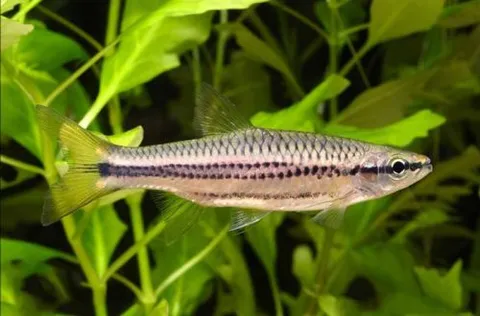
Rasbora cephalotaenia
Rasbora cephalotaenia, known in the aquarium hobby as the Two-striped Rasbora, is a member of the Cyprinidae family.
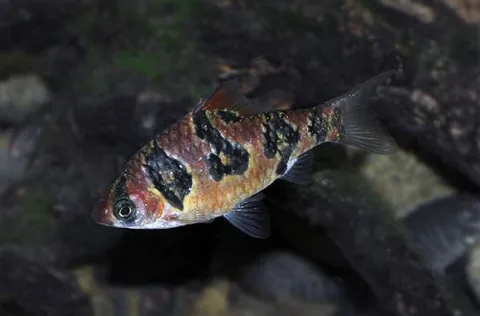
Desmopuntius rhomboocellatus
The Rhombus Barb, scientifically known as Desmopuntius rhomboocellatus, belongs to the family Cyprinidae. This small fish, with its distinctive body coloration and specific water chemistry requirements, thrives in…
Desmopuntius trifasciatus
The Three-banded Barb, scientifically known as Desmopuntius trifasciatus, belongs to the carp family (Cyprinidae). Its name vividly reflects the characteristic body pattern, adorned with rows of dark stripes. This…