Temperature22 – 26 °C
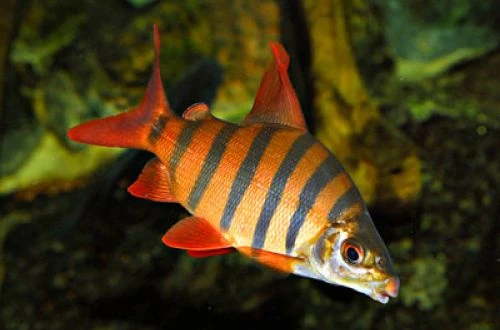
The Long-nosed Distichodus, scientifically known as Distichodus sexfasciatus, is a member of the family Distichodontidae. This rather large fish, characterized by its distinctive striped coloration, outwardly resembles a perch, yet it is not commonly encountered. It cannot be easily found in ordinary stores, making it an object of interest primarily for collectors and experienced aquarists willing to acquire an expensive species.
Among the distinctive features of the Long-nosed Distichodus are its elongated head and characteristic forked caudal fin. The body coloration varies from orange to golden, with prominent vertical black stripes noticeable across the entire body. Interestingly, this striking pattern becomes less distinct with age.
This representative of African characins inhabits large rivers and their tributaries in the Congo basin as well as Lake Tanganyika, preferring to stay in schools. Their diet primarily consists of soft vegetation, such as young shoots and leaves, but they will also readily consume worms and other benthic invertebrates when available.
Young individuals of this species are peaceful, but over time, their behavior can become quite unpredictable. They tend to show aggression towards smaller fish species and those with long fins. Juveniles school peacefully, but they grow increasingly intolerant of one another with age, so adults are kept singly: an enormous tank would be needed to house a group of adults. Even similarly sized tank mates are not always safe alongside this species. They coexist well with catfish and other species that prefer to stay at the bottom.
Since any large fish produces a significant amount of waste, the Long-nosed Distichodus is no exception, and maintaining water cleanliness becomes a key condition for its successful keeping. Installing an efficient filter, preferably an external canister type, and regular 30% water changes every two weeks, are usually sufficient for this task. Other necessary equipment includes an aerator, a lighting system, and a heater. The aquarium must be covered, as these fish are known for their jumping. For aquarium decoration, it is recommended to use artificial plants, arranging them in groups near shelters such as driftwood, grottoes, or imitations of castles or sunken ships. Smooth stones and coarse sand are suitable as substrate.
Although the Long-nosed Distichodus can be classified as an omnivorous species, it should be remembered that it prefers plant-based food. The lion's share of its diet should consist of plant products, such as flakes and pellets with vegetable components, fresh or frozen lettuce or spinach leaves, and peas. Meat supplements, such as bloodworms, can make up a smaller portion of the diet. It is important to provide sufficient main food, otherwise there is a risk that the fish will start nibbling on live aquarium plants.
Cases of successful breeding of the Long-nosed Distichodus in home aquarium conditions have not yet been recorded.
The long-nosed distichodus shows high endurance, and provided a balanced aquarium, health problems are generally absent.
When choosing a long-nosed distichodus, preference should be given to young specimens, as they adapt more easily to aquarium conditions. Carefully inspect the fish for intact fins, absence of spots, ulcers, or plaque on the scales, which may indicate bacterial infections. A healthy specimen should show high activity and have a good appetite. — Avoid purchasing fish with signs of emaciation or an unnaturally bloated belly. — Make sure the fish shows curiosity and does not constantly hide in the corners of the aquarium. — Ask the seller about the current diet to ensure a smooth transition to the foods you typically use.
The essentials: size, tank volume, water parameters and care
An adult reaches 38–76 cm in length. Plan the tank around the maximum size: the fish quickly outgrows a cramped setup.
The recommended volume is 600 L. A smaller tank speeds up nitrate build-up and raises stress levels.
Temperature 22–26 °C, pH 6.5–7, hardness 2–20 dGH. Stability matters more than exact values: sudden swings are harder on the fish than a small deviation from the ideal.
Around 12 years when kept properly. Lifespan depends directly on tank volume, water quality and a varied diet.
Temperament: territorial (often aggressive). Keep this in mind when choosing tank mates.
Recommended setup: solitary. Ignoring this is a common cause of stress and disease.
Diet type: mixed diet (meat + plant-based). Feed small portions that are finished within a couple of minutes — overfeeding does more harm than underfeeding.
The scientific name of the species is Distichodus sexfasciatus, family Distichodontidae. It also appears in the literature as: Distichodus tanganicae.
The water suits 197 of 208 plants in the catalogue — the easiest ones are shown first.
Afzelius's AnubiasAnacharisAnubiasBrazilian PennywortDwarf CloverDwarf CloverDwarf HygrophilaDwarf SagittariaDwarf ValGuppy GrassHornwortJava FernJava MossMoneywortMud SwordNair's LagenandraNarrow Leaf AnacharisNarrow-leaf CloverStringy MossSüsswassertangTaiwan MossTape GrassTemple PlantUssuri Watermilfoil
Matched by family, categories and overlapping keeping conditions
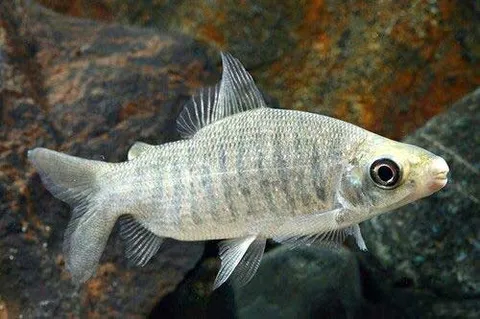
Distichodus fasciolatus
The scientific name Distichodus fasciolatus, or Banded Distichodus, indicates its belonging to the family Distichodontidae. This fish originates from the African continent, where it can be found in the vast Congo River…
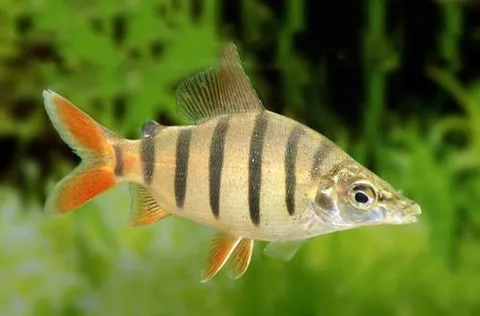
Distichodus lusosso
Distichodus lusosso, scientifically known as Distichodus lusosso, belongs to the family Distichodontidae. Its native habitat is equatorial Africa, where it is found in Cameroon, the Republic of the Congo, and the…
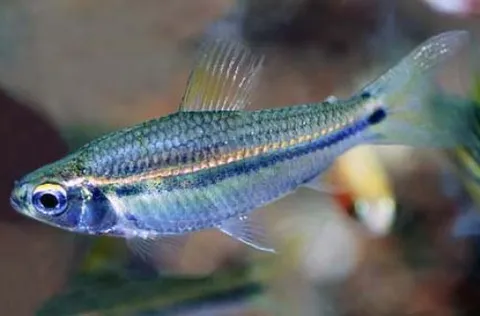
Nannaethiops unitaeniatus
Nannaethiops unitaeniatus, known as the One-striped Nannaethiops, belongs to the family Distichodontidae. These fish are rarely found in hobbyists' aquariums, although they have all the qualities to become truly…
Rhoadsia altipinna
Rhoadsia altipinna, or the high-finned Rhoadsia, belongs to the family Acestrorhamphidae and originates from the waters of South America. These fish inhabit river systems that primarily flow through Ecuador and empty…