Temperature23 – 27 °C
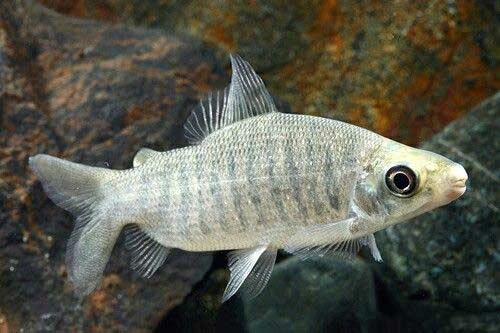
The scientific name Distichodus fasciolatus, or Banded Distichodus, indicates its belonging to the family Distichodontidae. This fish originates from the African continent, where it can be found in the vast Congo River basin. It prefers the main river channels, as well as floodplains, lakes, and backwaters, usually occupying the bottom layer along the shoreline. The diet of the Distichodus is quite varied, including insect larvae, aquatic plants, as well as seeds and fallen leaves from trees and shrubs.
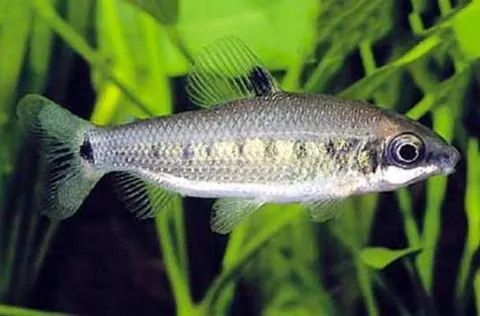
This fish grows to a rather impressive size; adults often reach 60 cm in length, which makes it a valuable food source for local residents. Within a single population, several geographical forms can be observed, differing in their main coloration: from gray-silver to pale gold. However, the characteristic pattern remains unchanged—the fish's body is adorned with vertical dark stripes.
The species is widespread in the Congo River basin, inhabiting large rivers, lakes, and their silted channels. The fish prefer to stay in the bottom layers of the water, often found in areas with a muddy bottom. In nature, water parameters vary in the range of pH 6.0–8.0, at a temperature of 23–27°C.
The Banded Distichodus differs from most of its relatives by its relatively peaceful disposition. Nevertheless, due to the significant size of this fish, it is recommended to keep only one adult specimen in a single aquarium. Confined spaces can provoke aggression, potentially endangering any smaller fish. This species coexists well only with large fish of comparable size, such as certain catfishes and other inhabitants of African rivers.
For successful long-term keeping, a very spacious aquarium is required, with a volume of at least 500 liters per fish. The filtration system must be high-performance, but it is necessary to avoid creating strong water movement, as the Banded Distichodus does not tolerate strong currents. Dim lighting should be maintained. The aquarium decor can be arbitrary, but it must include shelters created from rock formations and snags. Given its dietary preferences, the choice of aquarium plants requires caution: most species with soft, delicate leaves are likely to be damaged or completely eaten.
For a daily diet, dry sinking foods enriched with plant components are ideal. Additionally, blanched spinach, lettuce leaves, as well as frozen (to soften) pieces of cucumber, zucchini, carrots, and other vegetables can be offered.
Breeding in a home aquarium is not documented. Spawning in the wild is tied to the rainy season and the floods, and there is no parental care. A large adult size and the need for space make breeding attempts rare; no external sexual characters have been described.
No diseases that affect only this species have been described. Under suitable conditions — clean water, a balanced diet and calm tank mates — health problems usually do not arise. The most common cause of illness is a decline in conditions: it weakens the immune system, and the fish becomes vulnerable to infections that are always present in an aquarium. At the first signs of trouble — lethargy, wasting, refusal of food or clamped fins — check the basic water parameters and the levels of ammonia, nitrite and nitrate first. Restoring acceptable conditions often lets the fish recover on its own.
When selecting specimens, attention should be paid to the integrity of the fins and the absence of visible damage on the body. A healthy fish should be active and have clear eyes without cloudiness. Given the large size of adult Distichodus, it is important to assess whether the aquarium volume in the store meets the fish's needs, as overcrowding often leads to stress and the development of secondary infections.
The essentials: size, tank volume, water parameters and care
An adult reaches 60 cm in length. Plan the tank around the maximum size: the fish quickly outgrows a cramped setup.
The recommended volume is 500 L. A smaller tank speeds up nitrate build-up and raises stress levels.
Temperature 23–27 °C, pH 6–8, hardness 5–25 dGH. Stability matters more than exact values: sudden swings are harder on the fish than a small deviation from the ideal.
Around 10 years when kept properly. Lifespan depends directly on tank volume, water quality and a varied diet.
Temperament: semi-peaceful (including aggression during spawning / intraspecific conflicts). Keep this in mind when choosing tank mates.
Recommended setup: both solitary and in group (flexible). Ignoring this is a common cause of stress and disease.
Diet type: mixed diet (meat + plant-based). Feed small portions that are finished within a couple of minutes — overfeeding does more harm than underfeeding.
The scientific name of the species is Distichodus fasciolatus, family Distichodontidae. It also appears in the literature as: Distichodus fasciatus, Distichodus martini.
The water suits 197 of 208 plants in the catalogue — the easiest ones are shown first.
Afzelius's AnubiasAnacharisAnubiasBrazilian PennywortDwarf CloverDwarf CloverDwarf HygrophilaDwarf SagittariaDwarf ValGuppy GrassHornwortJava FernJava MossMoneywortMud SwordNair's LagenandraNarrow Leaf AnacharisNarrow-leaf CloverStringy MossSüsswassertangTaiwan MossTape GrassTemple PlantUssuri Watermilfoil
Matched by family, categories and overlapping keeping conditions
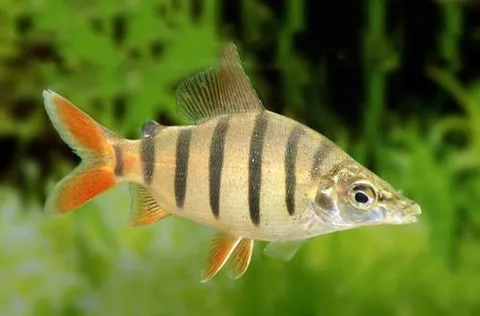
Distichodus lusosso
Distichodus lusosso, scientifically known as Distichodus lusosso, belongs to the family Distichodontidae. Its native habitat is equatorial Africa, where it is found in Cameroon, the Republic of the Congo, and the…
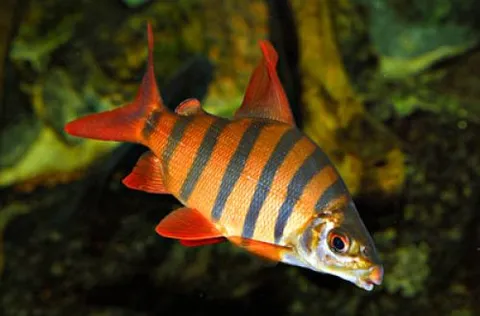
Distichodus sexfasciatus
The Long-nosed Distichodus, scientifically known as Distichodus sexfasciatus, is a member of the family Distichodontidae. This rather large fish, characterized by its distinctive striped coloration, outwardly resembles…
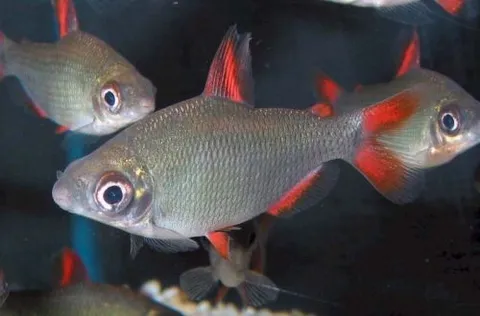
Distichodus affinis
The Red-finned Distichodus, known scientifically as Distichodus affinis, belongs to the family Distichodontidae. These are peaceful, large-sized fish that are not particularly decorative and are perceived more as…
Distichodus decemmaculatus
The Ten-spot Distichodus, or Distichodus decemmaculatus according to its scientific name, belongs to the family Distichodontidae. This species originates from the African continent, specifically from the central basin…