Temperature26 – 30 °C
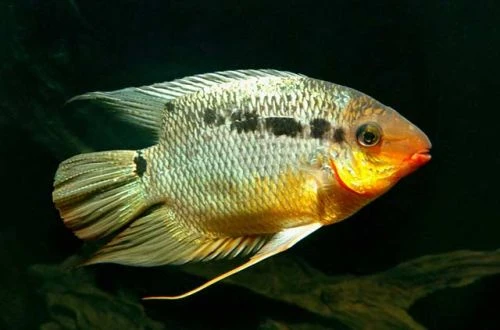
Mesonauta insignis, scientifically known as Mesonauta insignis, belongs to the family Cichlidae. Its natural habitat is located in South America, specifically in the basins of the Rio Negro and Orinoco rivers, extending across Colombia, Venezuela, and northern Brazil. In these waters, it prefers areas with dense aquatic vegetation.
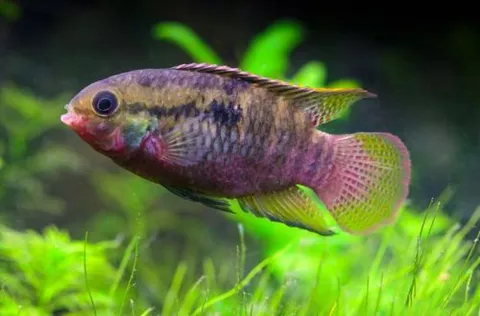
Adults of this fish reach approximately 10 cm in length, distinguished by their high body. They have elongated dorsal and anal fins, and their pelvic fins are elongated, ending in thin filaments. The coloration of Mesonauta insignis is primarily silvery, with a grayish back and a characteristic yellow belly. A distinctive feature is a black diagonal stripe that runs from the head and ends at the tip of the dorsal fin. It is important to note that this stripe consists of fused dark spots, which can sometimes be individually discernible. Outwardly, it is very similar to the Flag Cichlid (Mesonauta festivus), which often leads to these two species being confused and sold under the same name. It should be emphasized that in modern taxonomy, the genus Mesonauta is no longer classified as a true Cichlasoma, but the aquarium trade practice retains this name.
Mesonauta insignis inhabits South America, primarily in the basins of the Orinoco River and the upper reaches of the Rio Negro. Its range covers territories in Colombia, Venezuela, and northern Brazil. The fish populate areas of water bodies with slow currents, abundant aquatic vegetation, snags, and fallen leaves on the bottom. The natural environment is characterized by soft, acidic water, often rich in tannins, which give it a brownish tint.
This fish is distinguished by its peaceful and calm disposition, coexisting well with most aquarium inhabitants of similar size. Suitable tankmates include various species of Apistogramma and Geophagus from South American cichlids, as well as barbs, tetras, and small catfish like Corydoras. However, it is important to consider that during the breeding period, Mesonauta insignis may exhibit some aggression, protecting its offspring from other aquarium inhabitants.
For comfortable keeping of a pair of fish, an aquarium of at least 140 liters is needed. It is recommended to create a shaded environment with subdued lighting and plenty of aquatic vegetation, including floating species. The use of natural snags and a layer of fallen leaves on the bottom will not only give the decor a natural look but also serve as a source of tannins, coloring the water a brownish hue. The presence of these substances is acceptable, as they are part of the natural habitat of Mesonauta insignis. To maintain the fish's well-being in the long term, it is necessary to ensure warm, soft water and control the absence of organic waste – such as food remnants or excrement. This is achieved through weekly partial water changes, regular aquarium cleaning, and preventive equipment maintenance. This omnivorous species readily accepts most common foods, whether dry pellets, frozen, or live foods of appropriate size.
Fish of this species are omnivorous and readily accept a variety of popular foods. This includes dry, frozen, as well as live foods of appropriate size.
Under favorable conditions, the male and female form a stable pair. They lay up to 200 eggs, attaching them to a suitable surface, such as a flat stone. The incubation period usually lasts 2–3 days. After hatching, the adult fish carefully transfer the fry to a shallow pit they dug nearby in advance. In this "nursery," the fry spend another 3–4 days before starting free swimming. Throughout this time, the parents diligently guard their offspring, fending off any uninvited aquarium guests.
The species exhibits sensitivity to water quality, typical of South American cichlids. The accumulation of organic waste, such as food remnants and excrement, provokes the development of bacterial infections and skin lesions. Maintaining aquarium hygiene and regular water changes are the primary methods of disease prevention. Fish can also suffer from parasitic infestations when kept in unfavorable conditions or in the absence of quarantine for new individuals.
When selecting individuals, attention should be paid to their activity and the cleanliness of their skin. A healthy fish should have an even coloration without spots, ulcers, or fin damage, and exhibit natural curiosity. Avoid purchasing fish with signs of emaciation, sunken bellies, or atypical behavior, such as constantly hovering near the surface or attempting to rub against objects. In the store, it is important to clarify the keeping conditions and ensure there are no obvious signs of disease in other inhabitants of the communal aquarium.
The essentials: size, tank volume, water parameters and care
An adult reaches 10 cm in length. Plan the tank around the maximum size: the fish quickly outgrows a cramped setup.
The recommended volume is 140 L. A smaller tank speeds up nitrate build-up and raises stress levels.
Temperature 26–30 °C, pH 5–7, hardness 2–20 dGH. Stability matters more than exact values: sudden swings are harder on the fish than a small deviation from the ideal.
Around 8 years when kept properly. Lifespan depends directly on tank volume, water quality and a varied diet.
Temperament: peaceful (regular). Keep this in mind when choosing tank mates.
Recommended setup: mixed (solitary / pair / group). Ignoring this is a common cause of stress and disease.
Diet type: any (universal). Feed small portions that are finished within a couple of minutes — overfeeding does more harm than underfeeding.
The scientific name of the species is Mesonauta insignis, family Cichlids (Cichlidae). It also appears in the literature as: Heros insignis.
The water suits 175 of 208 plants in the catalogue — the easiest ones are shown first.
Afzelius's AnubiasAnacharisAnubiasBrazilian PennywortDwarf CloverDwarf CloverDwarf HygrophilaDwarf SagittariaDwarf ValGuppy GrassHornwortJava FernJava MossMoneywortMud SwordNair's LagenandraNarrow Leaf AnacharisNarrow-leaf CloverSüsswassertangTaiwan MossTape GrassTemple PlantUssuri WatermilfoilWater Wisteria
Matched by family, categories and overlapping keeping conditions
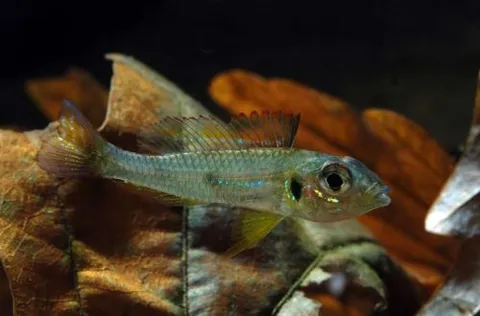
Biotoecus opercularis
Biotoecus opercularis, known as the Biotoecus cichlid, belongs to the family Cichlidae and originates from South America. Its natural habitat extends across almost the entire Amazon River basin. For keeping in home…
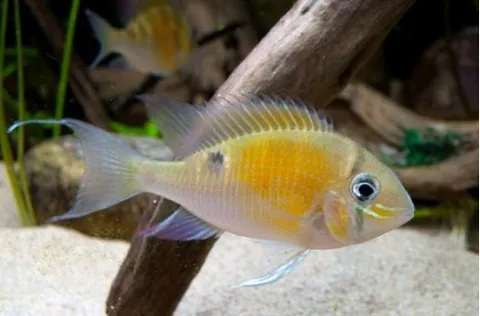
Biotodoma cupido
The Cupid Cichlid, or Biotodoma cupido (its Latin name is Biotodoma cupido), belongs to the Cichlidae family. This beautiful and peaceful fish can become an adornment for almost any freshwater aquarium. It is considered…
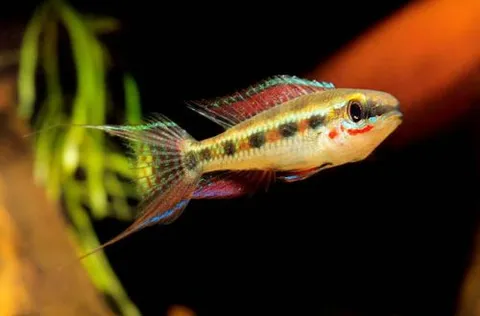
Dicrossus filamentosus
The Lyretail Crenicara, also known by its scientific name Dicrossus filamentosus or commonly as the Chessboard Cichlid, is a member of the family Cichlidae. It is sometimes also referred to as the “Checkerboard”…
Laetacara dorsigera
The Laetacara dorsigera, otherwise known as the Red-breasted Acara (scientific name Laetacara dorsigera), belongs to the family Cichlidae. This American cichlid is characterized by its peaceful disposition. It does not…