Temperature24 – 32 °C
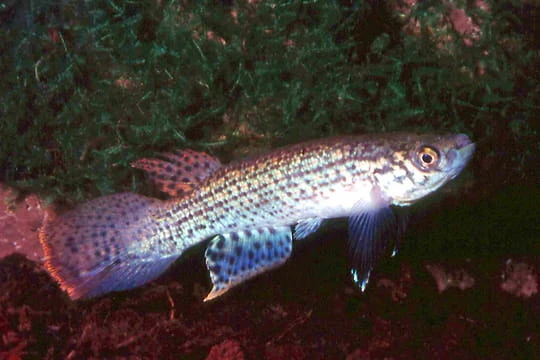
The scientific name Moema piriana belongs to a representative of the Rivuline family. This beautiful annual fish originates from South America, where it can be found in its natural habitat. The fish is widespread throughout the Amazon River basin, especially in Brazil.
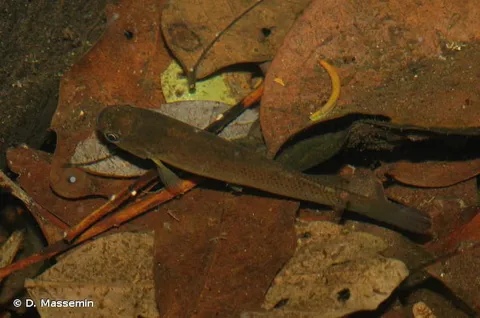
Adults of this fish can reach 12 cm in length, distinguished by their elongated, slender bodies. They possess large dorsal, anal, and caudal fins. Their coloration is silvery with an attractive blue sheen, adorned with numerous burgundy speckles arranged in horizontal rows. The dorsal fin and tail are red with dark spots, while the anal fin is blue, also with similar neat speckles. Sexual dimorphism in Moema piriana is not clearly pronounced; males and females are almost impossible to distinguish. It is noteworthy that while in natural conditions the lifespan of this fish is limited by the existence of temporary water bodies, in aquarium conditions it can live up to 1.5 years. In such a case, the fish continues to grow and can reach a size of up to 16 cm.
The species is endemic to the Amazon River basin in Brazil. It inhabits tropical freshwater bodies, preferring the bottom layers of water. In nature, these fish have adapted to seasonal environmental changes, which is characteristic of egg-laying killifish inhabiting temporary pools.
For these fish, it is recommended to create a species-specific aquarium, which can also potentially be used for breeding. Moema piriana gets along well with its own kind. Co-habitation with other peaceful fish species is also possible.
Moema piriana is rarely found in aquariums outside its historical range. Most often, this species is traded among aquarists on the South American continent, and only occasionally is it supplied to Europe. Maintaining these fish in an aquarium is quite challenging. Optimal environmental conditions require a narrow range of temperature values, as well as pH and GH parameters. Any deviations in water parameters can negatively affect the fish's development. An additional difficulty is the need for live or frozen food. Dry foods cannot serve as a full-fledged substitute for fresh, protein-rich products. The aquarium decor can be arbitrary. However, the fish will feel most comfortable in a shallow tank with a thick layer of soft, dark substrate resembling peat, preferably covered with a layer of fallen leaves and twigs. Lighting should be subdued. The presence of aquatic plants is not mandatory, but the use of undemanding floating species is permissible.
In its natural habitat, it feeds on small invertebrates, insect larvae, and other small aquatic organisms. In aquarium conditions, the diet should consist mainly of high-quality live or frozen foods, such as bloodworms, daphnia, or glassworms. Dry foods are accepted reluctantly and cannot form the basis of the diet.
Moema piriana reaches sexual maturity at 3–4 months of age. For reproduction, the fish need a soft substrate where they lay their eggs. An important stage is that the subsequent development of the eggs must occur in a dry substrate. The substrate is removed from the water and thoroughly dried, then placed in a container and stored in a dark place for 4–5 months. This procedure mimics the dry season in their natural habitat, when water bodies dry up, and the eggs remain in the soil layer, awaiting the rains. After the specified period, the substrate with the eggs is re-submerged in water. Soon after, the fry appear. It is worth noting that "dry" incubation can last up to 8 months without harm to the health of the eggs.
The species is considered extremely difficult to keep and sensitive to water parameters. The main health problems arise from deviations in the chemical composition of the water from natural conditions or from violations of the temperature regime. Prevention involves maintaining a stable environment and minimizing stress factors, as the immunity of individuals in captivity is often weakened.
Acquiring this species is associated with high risks due to the difficulty of adaptation to aquarium conditions. When choosing, attention should be paid to the fish's activity, the integrity of its fins, and the absence of external damage or film on its scales. It is recommended to clarify the keeping conditions in the store with the seller, as stress during transportation and changes in water parameters often lead to the death of individuals.
The essentials: size, tank volume, water parameters and care
An adult reaches 12 cm in length. Plan the tank around the maximum size: the fish quickly outgrows a cramped setup.
The recommended volume is 100 L. A smaller tank speeds up nitrate build-up and raises stress levels.
Temperature 24–32 °C, pH 6–7.2, hardness 1–10 dGH. Stability matters more than exact values: sudden swings are harder on the fish than a small deviation from the ideal.
Around 1.5 years when kept properly. Lifespan depends directly on tank volume, water quality and a varied diet.
Temperament: peaceful (regular). Keep this in mind when choosing tank mates.
Recommended setup: mixed (solitary / pair / group). Ignoring this is a common cause of stress and disease.
Diet type: high protein (predominantly meat). Feed small portions that are finished within a couple of minutes — overfeeding does more harm than underfeeding.
The scientific name of the species is Moema piriana, family Rivulidae.
The water suits 196 of 208 plants in the catalogue — the easiest ones are shown first.
Afzelius's AnubiasAnacharisAnubiasBrazilian PennywortDwarf CloverDwarf CloverDwarf HygrophilaDwarf SagittariaDwarf ValGuppy GrassHornwortJava FernJava MossMoneywortMud SwordNair's LagenandraNarrow Leaf AnacharisNarrow-leaf CloverStringy MossSüsswassertangTaiwan MossTape GrassTemple PlantUssuri Watermilfoil
Matched by family, categories and overlapping keeping conditions
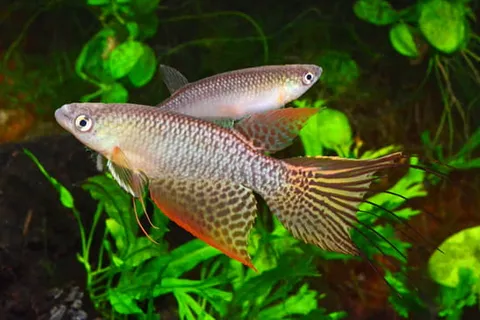
Pterolebias hoignei
Pterolebias hoignei, known as the Orinoco Pterolebias, is a member of the family Rivulidae, which includes many species of rivuline killifish. This vibrant annual fish lives in the wild in temporary water bodies that…
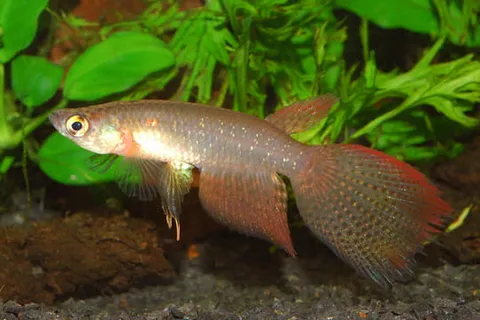
Pterolebias longipinnis
Pterolebias longipinnis, known as the Golden Pterolebias, belongs to the family Rivulidae. These fish are rarely found outside their natural habitat. The reason for this is their very short lifespan, usually not…
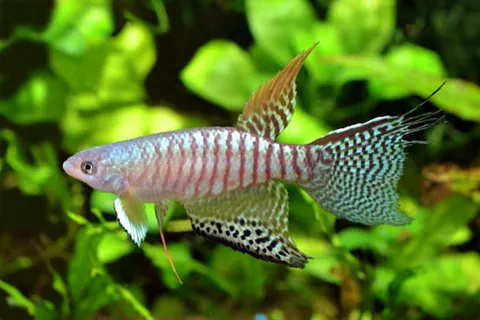
Pterolebias zonatus
Pterolebias zonatus, belonging to the family Rivulidae, is an annual fish whose habitat covers the Orinoco River basin in South America. Its lifespan is determined by the alternation of rainy and dry seasons, which is…
Anablepsoides igneus
The fish Rivulus igneus, scientifically known as Anablepsoides igneus, is a member of the Rivulidae family. Its natural habitat is South America, specifically the Oyapock River basin, located in the northeastern part of…