Temperature22 – 28 °C
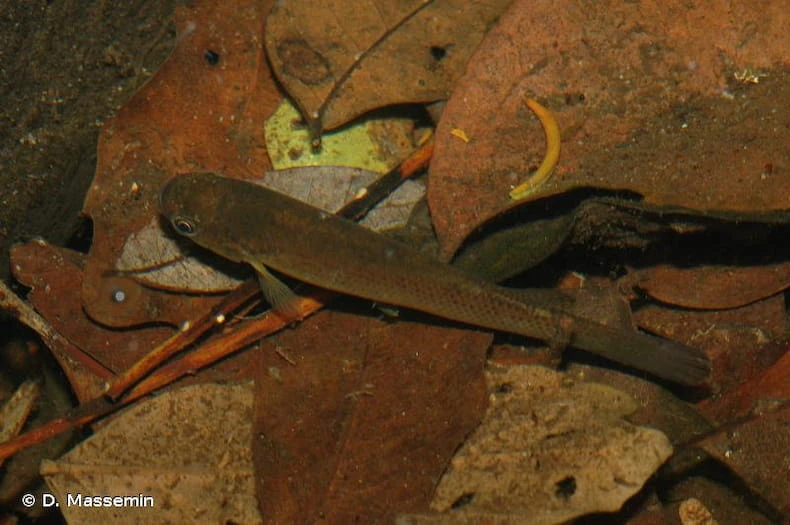
The fish Rivulus igneus, scientifically known as Anablepsoides igneus, is a member of the Rivulidae family. Its natural habitat is South America, specifically the Oyapock River basin, located in the northeastern part of the continent. This river serves as a natural border, separating French Guiana from the Brazilian state of Amapá.
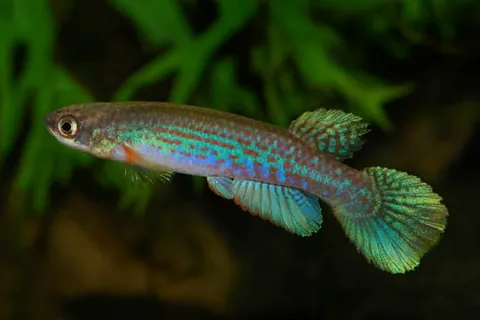
Males of this species reach a length of up to 15 cm, while females remain noticeably smaller, growing only up to 9 cm. The fish has an elongated body, characterized by large dorsal and anal fins positioned closer to the caudal peduncle. Its coloration features gray-blue hues, evenly distributed with numerous red speckles forming a pattern of horizontal dotted lines. Notably, unlike many of its relatives, this Killifish typically lives longer than one season and prefers to inhabit river systems rather than temporary pools.
The species inhabits South America, primarily the Oyapock River basin and adjacent coastal waters of French Guiana. The fish populate stagnant or slow-moving waters with a thick layer of fallen leaves on the bottom. In nature, they lead a sedentary lifestyle, preferring areas with low current intensity.
This species is considered territorial, actively defending its territory from other inhabitants. Despite this, Rivulus igneus can exist in groups where a strict hierarchy is formed: dominant individuals occupy the most preferred spots, while others are located at some distance. The best option for keeping them would be a species-specific tank. These fish do not get along well with members of their own size. However, larger fish species can coexist quite comfortably with Rivulus, which, unfortunately, cannot be said for the Rivulus themselves.
For keeping, an aquarium with a tightly fitting lid is necessary, as the fish are prone to jumping out even through minimal openings. Species-specific keeping is recommended due to their territorial behavior and aggression, especially with wild-caught specimens. The aquarium should be densely planted and provided with subdued lighting. Water parameters: temperature 22–28 °C, pH 6.0–7.5, general hardness up to 15 dGH. It is important to maintain water purity through filtration, avoiding strong currents.
In their natural environment, they are predators. In aquarium conditions, the diet should primarily consist of live foods. They can be accustomed to high-quality frozen foods, and less frequently, to dry foods. Feeding should be regular, considering the predatory nature of the species and its need for protein-rich food.
For aquarists, especially beginners, keeping this species can present certain difficulties. In addition to carefully selecting compatible inhabitants, maintaining stable water parameters requires attention. It is crucial to avoid sudden significant changes in pH and general hardness (GH), and to ensure the water is enriched with tannins. In natural conditions, tannins enter the water from the decomposition of plant debris such as leaves, branches, and driftwood. In an aquarium environment, specialized suspensions can be used, or natural leaves, bark, and cones from certain trees, such as oak or alder, can be placed. Breeding this species in aquarium conditions is quite achievable. Under optimal conditions, females can lay up to 100 fairly large eggs, each measuring about 3 mm. The incubation period usually takes 2 to 3 weeks. However, egg development can slow down due to diapause, which occurs under unfavorable external conditions, such as prolonged drought or shallowing of the water body. During this period, embryonic development pauses, and the eggs enter a waiting state that can last up to 3 months. Typically, diapause is not observed in aquariums. Information.
No specific species-specific diseases exclusively characteristic of Anablepsoides igneus have been identified. Like other members of the Rivulidae family, these fish are sensitive to water quality and prone to bacterial infections if husbandry conditions are violated, especially with the accumulation of organic waste and high levels of nitrogenous compounds. To prevent diseases, the following recommendations should be observed: — regular water changes to maintain stable parameters; — ensuring quality filtration without strong currents; — using an aquarium lid, as fish can jump out of the water, leading to injuries and death. When keeping wild-caught specimens, the introduction of ectoparasites is possible, so preliminary quarantine is recommended. In case of symptoms such as fin damage or changes in coloration, the biological balance in the aquarium should be assessed, as stress from unsuitable conditions is the main predisposing factor for disease development.
When purchasing, choose active fish without visible damage to scales and fins. It is important to note that wild-caught specimens may exhibit increased aggression compared to captive-bred individuals. In the store, it is recommended to observe the fish's behavior: healthy individuals show curiosity and should not appear emaciated or apathetic.
The essentials: size, tank volume, water parameters and care
An adult reaches 15 cm in length. Plan the tank around the maximum size: the fish quickly outgrows a cramped setup.
The recommended volume is 150 L. A smaller tank speeds up nitrate build-up and raises stress levels.
Temperature 22–28 °C, pH 6–7.5, hardness 2–15 dGH. Stability matters more than exact values: sudden swings are harder on the fish than a small deviation from the ideal.
Around 3 years when kept properly. Lifespan depends directly on tank volume, water quality and a varied diet.
Temperament: aggressive / incompatible / unfriendly. Keep this in mind when choosing tank mates.
Recommended setup: schooling (usually from 5–6 individuals and more). Ignoring this is a common cause of stress and disease.
Diet type: high protein (predominantly meat). Feed small portions that are finished within a couple of minutes — overfeeding does more harm than underfeeding.
The scientific name of the species is Anablepsoides igneus, family Rivulidae. It also appears in the literature as: Rivulus igneus.
The water suits 197 of 208 plants in the catalogue — the easiest ones are shown first.
Afzelius's AnubiasAnacharisAnubiasBrazilian PennywortDwarf CloverDwarf CloverDwarf HygrophilaDwarf SagittariaDwarf ValGuppy GrassHornwortJava FernJava MossMoneywortMud SwordNair's LagenandraNarrow Leaf AnacharisNarrow-leaf CloverStringy MossSüsswassertangTaiwan MossTape GrassTemple PlantUssuri Watermilfoil
Matched by family, categories and overlapping keeping conditions
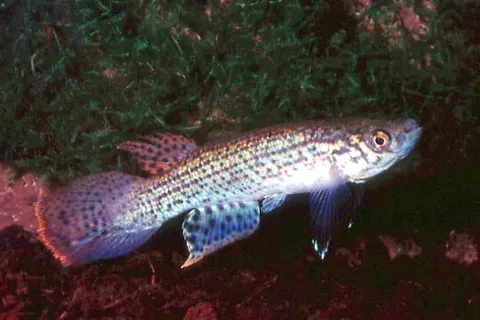
Moema piriana
The scientific name Moema piriana belongs to a representative of the Rivuline family. This beautiful annual fish originates from South America, where it can be found in its natural habitat. The fish is widespread…
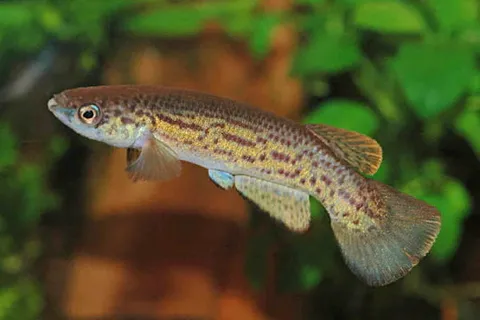
Anablepsoides amphoreus
The Golden Rivulus, scientifically known as Anablepsoides amphoreus, though previously called Rivulus amphoreus, is a member of the Rivulidae family. This fish originates from the waters of South America, where it is…
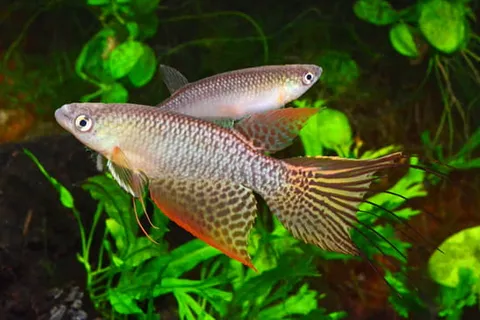
Pterolebias hoignei
Pterolebias hoignei, known as the Orinoco Pterolebias, is a member of the family Rivulidae, which includes many species of rivuline killifish. This vibrant annual fish lives in the wild in temporary water bodies that…
Laimosemion agilae
Laimosemion agilae, also known as Rivulus agilae, belongs to the family Rivulidae. These fish originate from South America, where they can be found in French Guiana, Suriname, and Guyana. They are named after the…