Temperature23 – 27 °C
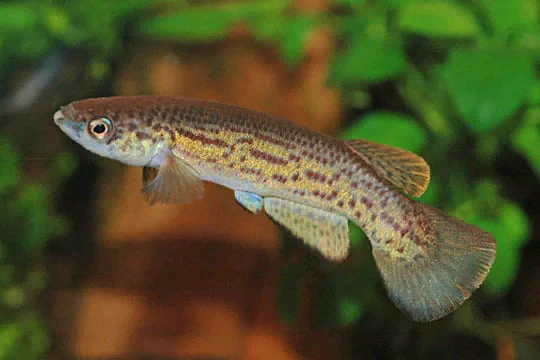
The Golden Rivulus, scientifically known as Anablepsoides amphoreus, though previously called Rivulus amphoreus, is a member of the Rivulidae family. This fish originates from the waters of South America, where it is particularly common in the flowing waters of Suriname.
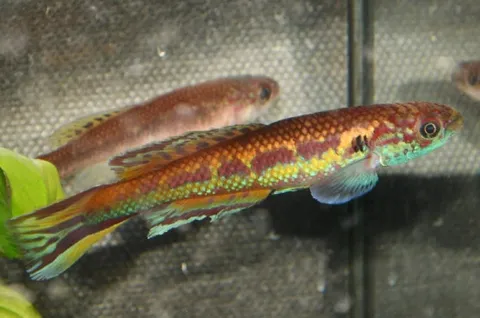
Adult Golden Rivulus typically reach a length of about 6 cm. Their body is elongated, with the dorsal and anal fins positioned closer to the caudal peduncle. The coloration of the fish can vary, depending on both geographical origin and keeping conditions. Most commonly, fish with a light yellowish-red hue are found, adorned with a pattern of reddish-brown spots across the body. In males, these spots are usually more pronounced and contrasting, while the fins have a bluish tint with a thin light edge.
The species is endemic to Suriname in north-eastern South America. Unlike many of its relatives in the genus Rivulus, this species does not inhabit stagnant and swampy areas. Its preferred environment is streams and small rivers with moderate currents, where the water is rich in oxygen. The coastal zones of such bodies of water are teeming with aquatic vegetation, and the bottom often features numerous snags formed by roots, fallen branches, and tree trunks.
The Golden Rivulus is considered a conditionally peaceful aquarium inhabitant. While females are quite peace-loving, males often engage in conflicts among themselves, vying for hierarchical position. In a small aquarium, the optimal solution is to keep one male with several females. These rivulus usually do not show aggression towards other fish species, but it is advisable to avoid cohabitation with large and predatory inhabitants. These fish typically stay near the water surface, preferring areas with dense vegetation. They are known for their jumping ability, especially males, so the aquarium must be equipped with a secure and tight-fitting lid.
For comfortable existence, Golden Rivulus require an aquarium of at least 60 liters, providing ample swimming space. The water should be soft, with a hardness of 3 to 8 dH, and slightly acidic, with a pH within 5.5-7. Keeping them in water with hardness up to 15 dH is also acceptable. The optimal temperature range for these fish is 23-27°C. Maintaining high water quality requires an effective filtration system and regular aquarium cleaning. Both rooted and floating aquatic plants, as well as natural shelters made of snags, are important elements of the decor.
In nature, this species is a predator, feeding on small invertebrates. In aquarium conditions, the diet should consist mainly of live or frozen foods, such as daphnia, artemia, bloodworms, or mosquito larvae. High-quality dry foods can be used as a supplement. Feeding should be done in small portions several times a day, so that the fish have time to eat it before it sinks to the bottom.
To obtain a large number of fry, the best approach is to place a pair or trio of fish in a separate tank of about 10 liters, equipped with a small air-lift filter. The bottom of such a spawning tank should be covered with dark substrate and planted with aquatic moss, where the fish will lay their eggs. When fed a varied diet of live food, such as Artemia nauplii, the fish will spawn throughout their adult lives, laying 5 to 15 eggs daily. The amber-colored eggs, about 1.6 mm in size, should be collected manually and stored for approximately 14 days in a separate small container. To prevent fungal infections, it is recommended to add an antifungal agent to the water where the eggs are kept. After hatching, the fry successfully feed on fresh Artemia nauplii. They reach sexual maturity in 4-5 months. A predominance of males in the offspring is often observed. It has been noted that lower pH values during incubation contribute to an increased proportion of females. To achieve this effect, water acidifiers can be used, such as alder cones, which also release tannins that inhibit fungal growth. Data.
The species has moderate resilience but is sensitive to sharp changes in water hydrochemical parameters and the accumulation of organic waste. The main dangers are bacterial infections and parasitic diseases arising from improper keeping conditions or overcrowding. Prevention includes weekly partial water changes, maintaining stable environmental parameters, and ensuring proper filtration without strong currents.
When purchasing, choose active individuals with clean fins and no visible skin damage. It is important to pay attention to the fish's behavior in the store: healthy specimens show curiosity and do not constantly hide in corners. Avoid buying fish with signs of lethargy, clamped fins, or atypical spots on the body, as the adaptation of weakened individuals in a new aquarium often comes with complications.
The essentials: size, tank volume, water parameters and care
An adult reaches 6 cm in length. Plan the tank around the maximum size: the fish quickly outgrows a cramped setup.
The recommended volume is 60 L. A smaller tank speeds up nitrate build-up and raises stress levels.
Temperature 23–27 °C, pH 5.5–7, hardness 4–15 dGH. Stability matters more than exact values: sudden swings are harder on the fish than a small deviation from the ideal.
Around 3 years when kept properly. Lifespan depends directly on tank volume, water quality and a varied diet.
Temperament: semi-peaceful (including aggression during spawning / intraspecific conflicts). Keep this in mind when choosing tank mates.
Recommended setup: harem (1 male and several females). Ignoring this is a common cause of stress and disease.
Diet type: high protein (predominantly meat). Feed small portions that are finished within a couple of minutes — overfeeding does more harm than underfeeding.
The scientific name of the species is Anablepsoides amphoreus, family Rivulidae. It also appears in the literature as: Rivulus amphoreus.
The water suits 198 of 208 plants in the catalogue — the easiest ones are shown first.
Afzelius's AnubiasAnacharisAnubiasBrazilian PennywortDwarf CloverDwarf CloverDwarf HygrophilaDwarf SagittariaDwarf ValGuppy GrassHornwortJava FernJava MossMoneywortMud SwordNair's LagenandraNarrow Leaf AnacharisNarrow-leaf CloverStringy MossSüsswassertangTaiwan MossTape GrassTemple PlantUssuri Watermilfoil
Matched by family, categories and overlapping keeping conditions
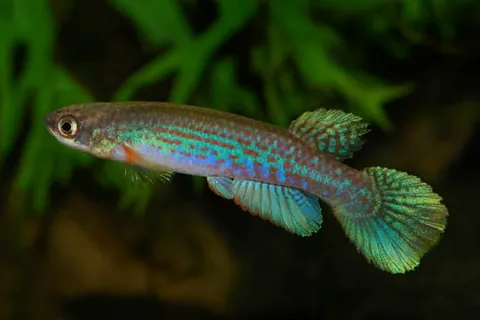
Laimosemion agilae
Laimosemion agilae, also known as Rivulus agilae, belongs to the family Rivulidae. These fish originate from South America, where they can be found in French Guiana, Suriname, and Guyana. They are named after the…
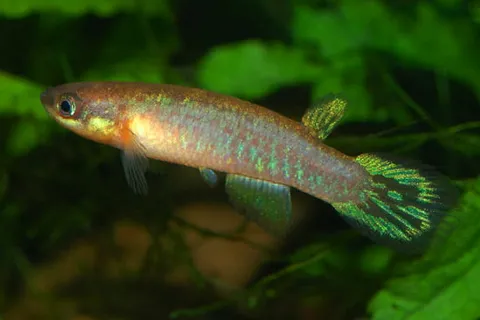
Atlantirivulus luelingi
The fish, known by the scientific name Atlantirivulus luelingi (formerly Rivulus luelingi) and belonging to the family Rivulidae, is Rivulus luelingi. This species originates from shallow waters in the southern regions…
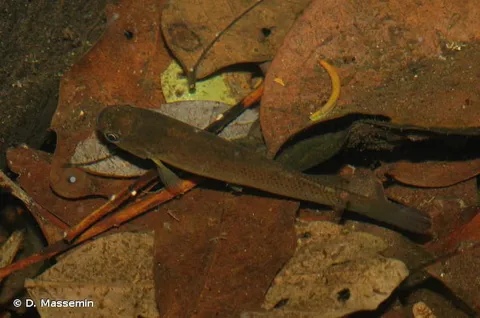
Anablepsoides igneus
The fish Rivulus igneus, scientifically known as Anablepsoides igneus, is a member of the Rivulidae family. Its natural habitat is South America, specifically the Oyapock River basin, located in the northeastern part of…
Callopanchax huwaldi
The fish Roloffia huwaldi, known scientifically as Callopanchax huwaldi (formerly Roloffia huwaldi), belongs to the family Nothobranchiidae, or nothobranchs. Its homeland is West Africa, where it is found in Sierra…