Temperature22 – 28 °C
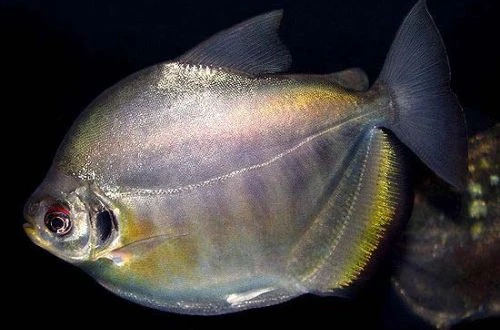
The fish Mylossoma duriventre, known as Mylossoma duriventre, belongs to the family Serrasalmidae, or piranhas. Its natural range covers the tropical and subtropical regions of South America, found in the Amazon, Orinoco, Paraguay, and Paraná river basins. Thus, these fish inhabit vast territories extending from Venezuela through Brazil to Paraguay and the northern regions of Argentina.
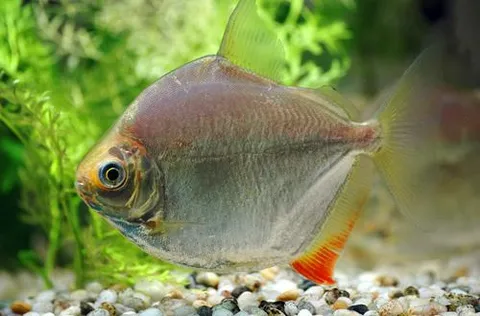
Adults of this fish can grow up to 25 cm in length and reach a weight of about 1 kg. Mylossoma duriventre has a high, laterally compressed, disc-shaped body. Its anterior part, called the keel, is significantly enlarged, giving it a resemblance to an enlarged version of the popular Hatchetfish. The coloration varies from dark silver to light with yellow hues, depending on the fish's age and keeping conditions. Young individuals are distinguished by the presence of dark vertical stripes on the sides of the body. The fins and tail are translucent, with the anal fin sometimes having a red tint.
Mylossoma duriventre inhabits tropical and subtropical regions of South America. Its natural range is restricted to the La Plata basin: the Paraguay, lower Paraná and Uruguay rivers. Earlier records from the Amazon and Orinoco refer to the closely related Mylossoma albiscopum, recognised as a separate species when the genus was revised. In nature, the fish inhabit various freshwater bodies, including floodplain areas of rivers. The species is potamodromous, undertaking migrations within river systems.
Both young and adult Mylossoma prefer to stay in schools rather than alone. Therefore, it is recommended to acquire them in groups of 4–5 individuals. These fish exhibit a peaceful attitude towards other species of comparable size. However, despite their herbivorous diet, smaller aquarium neighbors may be accidentally eaten.
For a group of 4–5 fish, the optimal aquarium size should start from 300 liters. The aquarium setup can be anything, but it is important to provide hiding places, for example, from driftwood. Dim lighting is recommended. Since Mylossoma is a "vegetarian," it tends to damage the soft parts of live plants and can completely destroy plant cover. It is advisable to use artificial green plants or try planting plants with tough leaves, such as Anubias. For long-term keeping, it is critically important to maintain high water quality, avoiding the accumulation of organic waste such as food residues and excrement. To do this, regularly change part of the water for fresh, combining this with siphoning the substrate, and ensure the continuous operation of the filtration system. Mylossoma duriventre can adapt to a fairly wide range of pH and dH values, which simplifies water preparation for the aquarist. The diet changes with age: fry and young fish feed mainly on aquatic invertebrates (crustaceans, insect larvae, worms, and others), while adults switch to plant-based food, the basis of which is plant leaves, fallen fruits, and seeds. Accordingly, the choice of aquarium feeds should take into account the age of the fish. Young fish in the aquarium can consume universal feeds. If there are no stripes on the fish's body, it is an adult individual that needs to be offered plant-based feeds (with algae, vegetables). Many manufacturers offer special feeds for such fish in the form of flakes and granules. To diversify the diet, ordinary feeds with protein supplements, as well as live or frozen bloodworms and Artemia, can be added.
Fry and juveniles of this fish feed primarily on aquatic invertebrates, such as crustaceans, insect larvae, and worms. With age, their diet changes significantly, and plant leaves, fallen fruits, and seeds begin to form the basis of their nutrition. The selection of aquarium feeds, therefore, must be based on the age of the fish. Young individuals in aquarium conditions can consume universal feeds. Adult fish, lacking stripes on their bodies, require feeds with plant components, such as algae and vegetables. Many specialized feeds for such fish are available on the market in the form of flakes and granules. It is beneficial to diversify their diet by adding regular feeds with protein components, as well as live or frozen bloodworms and Artemia. Young and adult Mylossoma prefer to stay in schools, so it is recommended to acquire them in groups of 4–5 individuals. They are peaceful towards other fish of similar size. Nevertheless, despite their herbivorous diet, there is a possibility of accidentally eating smaller aquarium neighbors. Keeping the fish in optimal conditions and providing a properly balanced diet minimizes the risk of diseases. Conversely, dirty water and improper nutrition negatively affect the fish's health, weakening its immunity and making it susceptible to environmental infections. At the first symptoms of illness, it is important to first check the water parameters and the quality of the offered feeds. Only after correcting care problems can treatment begin.
The species is not bred in aquaria. It is a migratory fish: during the flood season, from December to March, the shoals leave the floodplain lakes for the channels of the large rivers and move upstream to the spawning grounds, then spread out over the flooded forest. The eggs and larvae are carried downstream into the floodplain, where the young grow up. Such a cycle cannot be reproduced in an aquarium.
Maintaining the fish in a suitable habitat and providing a balanced diet minimize the risk of diseases. Conversely, polluted water and poor nutrition negatively affect the fish's body, reducing its immunity and making it vulnerable to infections. At the first signs of illness, the water parameters and feed quality should be checked first. After eliminating the identified problems in care, treatment can begin.
When purchasing, choose active individuals without visible skin damage, fin damage, or signs of parasitic diseases. It is important to note that young fish may have a different coloration than adults, specifically the presence of dark vertical stripes on their sides. It is recommended to acquire a group of 4–5 individuals, as this species is schooling and experiences severe stress when alone. At the store, it is necessary to clarify the keeping conditions and current diet to ensure gradual adaptation of the fish to new water parameters and food.
The essentials: size, tank volume, water parameters and care
An adult reaches 25 cm in length. Plan the tank around the maximum size: the fish quickly outgrows a cramped setup.
The recommended volume is 300 L. A smaller tank speeds up nitrate build-up and raises stress levels.
Temperature 22–28 °C, pH 6–7.8, hardness 3–20 dGH. Stability matters more than exact values: sudden swings are harder on the fish than a small deviation from the ideal.
Around 10 years when kept properly. Lifespan depends directly on tank volume, water quality and a varied diet.
Temperament: semi-peaceful (dangerous to smaller ones). Not a predatory species, but small fish that fit in its mouth will eventually be eaten.
Recommended setup: small group (3–4 individuals). Ignoring this is a common cause of stress and disease.
Diet type: plant-based (algae, vegetables). Feed small portions that are finished within a couple of minutes — overfeeding does more harm than underfeeding.
The scientific name of the species is Mylossoma duriventre, family Piranhas (Serrasalmidae). It also appears in the literature as: Metynnis unimaculatus, Myletes albiscopus, Myletes duriventris.
This fish damages plants, especially when its diet is short of vegetable food.
African Onion PlantAfrican Water FernAfzelius's AnubiasAmazon FrogbitAmazon SwordAnacharisAnubiasArrowhead CryptAsian WatermossBalansa Water TrumpetBanana PlantBarth's SwordBeckett's Water TrumpetBladderwort CarpetBlue BuceBog MossBoivin's AponogetonBolivian Chain SwordBrazilian PennywortBroad-leaf Water SpriteBrookweedBrown's LimnophilaBuceCardinal PlantCaribbean MintCarolina Micro SwordChristmas MossCognac AmmanniaCongo AnubiasCreeping JennyCreeping RushCreeping SpotflowerCreeping StaurogyneCrinkled AponogetonCupheaCutleaf WatermilfoilCylindricfruit LudwigiaDark SwordDelta ArrowheadDense Mayaca
Matched by family, categories and overlapping keeping conditions
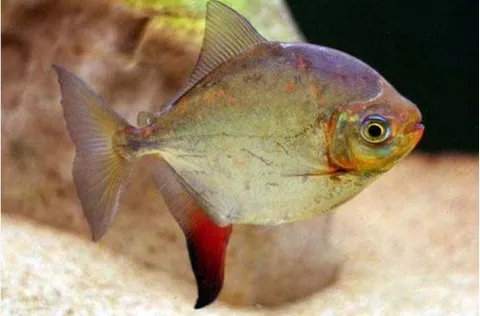
Myloplus rubripinnis
The Moon Myloplus, or Redhook Myloplus (scientific name Myloplus rubripinnis), belongs to the family Serrasalmidae, also known as the Piranha family. This is a large schooling fish that exhibits a peaceful temperament…
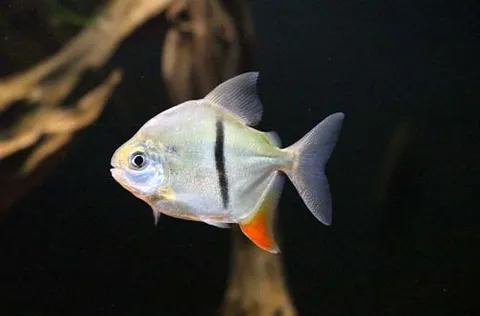
Myloplus schomburgkii
Myloplus schomburgkii, also known as the Schomburgk's Myloplus or Disk Tetra, bears the scientific name Myloplus schomburgkii and belongs to the family Serrasalmidae (Piranhas). This species is a herbivorous relative of…
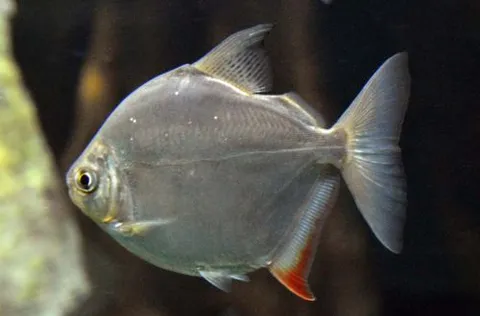
Metynnis hypsauchen
The Common Metynnis, also known by its scientific name Metynnis hypsauchen, belongs to the family Serrasalmidae, which also includes piranhas. However, unlike its formidable relatives, this fish exhibits much more…
Metynnis argenteus
Metynnis argenteus, known as the Silver Dollar or Silver Metynnis, belongs to the family Serrasalmidae, also called the Piranha family. This fish got its name due to its widespread popularity among North American…