Temperature24 – 28 °C
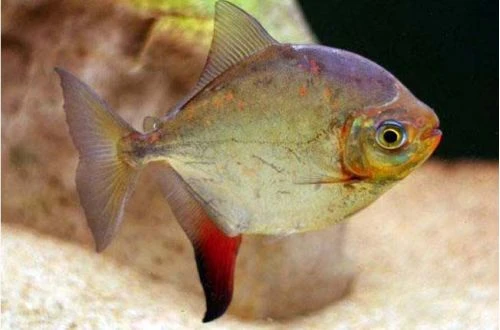
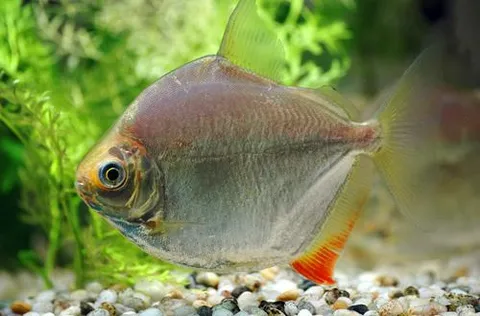
The Moon Myloplus, or Redhook Myloplus (scientific name Myloplus rubripinnis), belongs to the family Serrasalmidae, also known as the Piranha family. This is a large schooling fish that exhibits a peaceful temperament towards other aquarium inhabitants of comparable size. However, it should be noted that smaller fish may accidentally become its prey. Caring for these fish is quite straightforward if they are provided with an adequate and balanced diet, predominantly consisting of plant-based components, as well as a sufficiently spacious aquarium.
These fish are characterized by a high, disc-shaped body. Adult individuals can reach a length of up to 25 cm. Their coloration is predominantly silvery and monochromatic. Males can be distinguished from females by their more elongated, red anal fin.
The natural habitat of this species covers South America. The Redhook Myloplus is found in almost all major river systems of the continent's tropical belt. It prefers sections of rivers with slow currents, especially in coastal areas where aquatic and overhanging vegetation grows abundantly.
As a schooling species, these fish need the company of their conspecifics; it is recommended to keep a group of 4–5 individuals. They are peaceful towards aquarium fish species of comparable size, but smaller fish may be at risk. Since the Redhook Myloplus prefers to swim in the middle and upper water layers, excellent tank mates for them would be bottom dwellers, such as Plecostomus or various species of Armored Catfish.
For a group of 4–5 individuals, an aquarium with a volume of 260–300 liters will be required. When choosing a tank, special attention should be paid to its length and width, which are more important than the overall height (depth). Ideal keeping conditions include soft, slightly acidic, oxygen-rich water, and subdued lighting is preferable. In the aquarium setup, it is important to provide both open areas for unobstructed swimming and secluded spots, for example, created from natural snags. The use of thickets of live plants as shelters is impractical, as the Moon Myloplus is a typical herbivorous species. In their natural environment, their diet consists mainly of plant leaves, including emergent species (shrubs, trees) that become submerged during the rainy season. In a home aquarium, their diet should primarily consist of foods with a high content of plant components. Many manufacturers offer special diets for such fish in the form of dry flakes and pellets. Additionally, pieces of vegetables and soft fruits can be offered, such as cucumbers, zucchini, green peas, fresh lettuce leaves, or spinach. Although plant-based food is key, protein supplements also play a significant role. Therefore, it is advisable to use universal dry foods, and also periodically include live or frozen brine shrimp, bloodworms, and other small invertebrates in their diet. In some cases, they may pose a threat to smaller tank inhabitants.
In their natural habitat, the main food source for the Moon Myloplus is plant leaves, including those that grow above water (shrubs, trees) and become submerged during the rainy season. In aquarium conditions, the diet should primarily consist of plant-based foods. Many manufacturers offer specialized dry foods in the form of flakes and pellets specifically designed for such fish. The diet can be supplemented with pieces of vegetables and soft fruits, such as cucumbers, zucchini, green peas, fresh lettuce leaves, spinach, and so on. Although plant-based food is key, protein supplements are also important. Therefore, it is recommended to use balanced dry foods, and also periodically offer live or frozen brine shrimp, bloodworms, and other small invertebrates. Occasionally, they may prey on smaller aquarium inhabitants. Being a schooling species, they need the company of conspecifics, so it is advisable to keep a group of 4–5 individuals. They are peaceful towards fish of comparable size, while smaller species may be in danger. Since the Redhook Myloplus prefers the middle and upper water layers, good tank mates for them would be bottom-dwelling fish, for example, catfish from the genera Plecostomus and Armored Catfish. The main threat to the health of these fish is an unbalanced diet. Insufficient or improper nutrition reduces immunity, making them susceptible to various diseases, the pathogens of which are always present in the environment. If a disease is detected, the first thing to do is to pay attention to the diet.
Breeding the Moon Myloplus in aquarium conditions is considered a challenging task. Spawning is communal and requires a spacious aquarium at least 150 cm long with dark substrate and intense lighting. To stimulate the process, the breeders are fed abundantly, and water parameters are maintained in a soft environment with hardness up to 4° dH and a temperature of 23–27 °C. Eggs are laid among dense thickets of fine-leaved plants, which serve as a substrate. Fry begin to swim freely 5–6 days after spawning.
The primary threat to the health of this species is an unbalanced diet. Insufficient or improper feeding weakens the fish's immune system, making it vulnerable to various diseases, the pathogens of which are constantly present in the environment. If signs of illness are detected, the first step is to analyze and adjust the basic diet.
When selecting individuals, attention should be paid to the integrity of the fins and the absence of external damage, as these fish are prone to injury when startled. A healthy Myloplus should be active, have clean scales without white spots or ulcers, and display a strong appetite. It should be noted that these fish have powerful jaws and can inflict painful bites when stressed or handled carelessly. It is recommended to acquire a group of 6 or more individuals at once, as solitary keeping leads to timidity and constant stress.
The essentials: size, tank volume, water parameters and care
An adult reaches 25 cm in length. Plan the tank around the maximum size: the fish quickly outgrows a cramped setup.
The recommended volume is 300 L. A smaller tank speeds up nitrate build-up and raises stress levels.
Temperature 24–28 °C, pH 6–7, hardness 1–15 dGH. Stability matters more than exact values: sudden swings are harder on the fish than a small deviation from the ideal.
Around 8 years when kept properly. Lifespan depends directly on tank volume, water quality and a varied diet.
Temperament: semi-peaceful (dangerous to smaller ones). Not a predatory species, but small fish that fit in its mouth will eventually be eaten.
Recommended setup: small group (5–6 individuals). Ignoring this is a common cause of stress and disease.
Diet type: plant-based (algae, vegetables). Feed small portions that are finished within a couple of minutes — overfeeding does more harm than underfeeding.
The scientific name of the species is Myloplus rubripinnis, family Piranhas (Serrasalmidae). It also appears in the literature as: Aphyocharax rubripinnis, Myletes luna, Myletes rubripinnis.
The water suits 196 of 208 plants in the catalogue — the easiest ones are shown first.
Afzelius's AnubiasAnacharisAnubiasBrazilian PennywortDwarf CloverDwarf CloverDwarf HygrophilaDwarf SagittariaDwarf ValGuppy GrassHornwortJava FernJava MossMoneywortMud SwordNair's LagenandraNarrow Leaf AnacharisNarrow-leaf CloverStringy MossSüsswassertangTaiwan MossTape GrassTemple PlantUssuri Watermilfoil
Matched by family, categories and overlapping keeping conditions
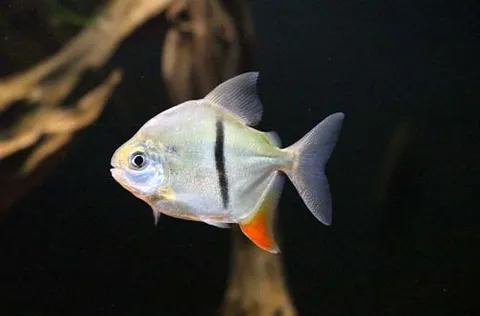
Myloplus schomburgkii
Myloplus schomburgkii, also known as the Schomburgk's Myloplus or Disk Tetra, bears the scientific name Myloplus schomburgkii and belongs to the family Serrasalmidae (Piranhas). This species is a herbivorous relative of…
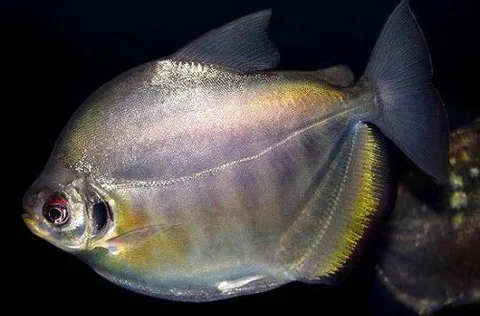
Mylossoma duriventre
The fish Mylossoma duriventre, known as Mylossoma duriventre, belongs to the family Serrasalmidae, or piranhas. Its natural range covers the tropical and subtropical regions of South America, found in the Amazon,…
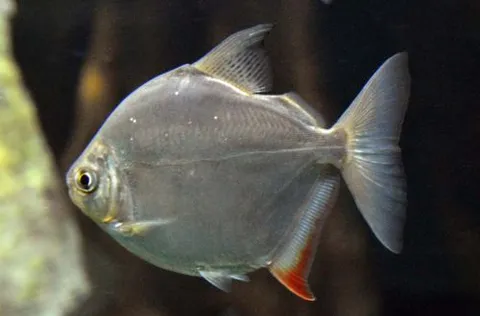
Metynnis hypsauchen
The Common Metynnis, also known by its scientific name Metynnis hypsauchen, belongs to the family Serrasalmidae, which also includes piranhas. However, unlike its formidable relatives, this fish exhibits much more…
Metynnis argenteus
Metynnis argenteus, known as the Silver Dollar or Silver Metynnis, belongs to the family Serrasalmidae, also called the Piranha family. This fish got its name due to its widespread popularity among North American…