Temperature22 – 25 °C
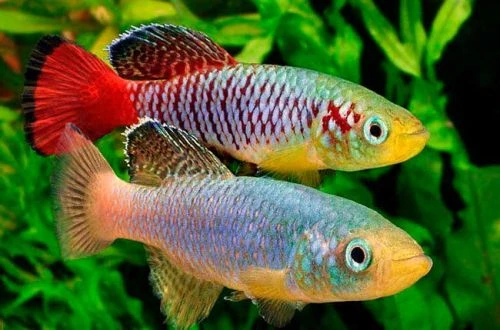
The fish, known by its scientific name Nothobranchius guentheri, belongs to the family Nothobranchiidae, or African killifishes. It was named after Albert Günther, a British ichthyologist of German origin (1830–1914); the species itself was described in 1893 by Georg Pfeffer.
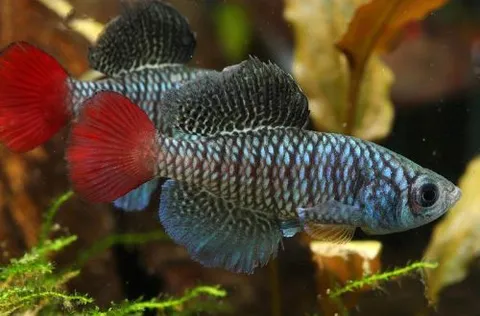
Adults reach a length of approximately 5 cm. This species exhibits pronounced sexual dimorphism. Males attract attention with their bright coloration, transitioning from yellowish or turquoise hues on the head to a rich red on the tail. Females, in contrast, are much more modestly colored: their bodies are predominantly gray or dull silver. Like many other members of the genus Nothobranchius, Nothobranchius guentheri lives for only one wet season in its natural habitat before the water body dries up. Its lifespan, from fry to adult fish, is about one year. In aquarium conditions, they rarely live for more than two years.
Small water bodies, such as shallow puddles, ephemeral streams, and other shallow formations located on Zanzibar Island, off the coast of Tanzania in Africa, are the natural habitat of this fish. It is endemic to this island.
Males of these fish actively compete with each other to attract the attention of females. Sometimes such rivalry can be quite fierce, so in small aquariums, it is better to form groups where females predominate. It is desirable to keep them in the company of their own kind, just as they would be in the wild. In more spacious aquariums, cohabitation with fish of similar size is permissible.
For a group of 4–5 individuals, an aquarium of at least 40 L is required. Recommended water parameters: temperature 22–25°C, pH 6.0–7.0, hardness 4–10 dGH. As substrate, it is preferable to use a soft fibrous material, such as coconut fiber, which is necessary for spawning. The aquarium should be covered, as the fish are prone to jumping. The decor can be arbitrary, but dense plant thickets and floating species are recommended to create shaded areas. Filtration should be moderate, not creating a strong current. Weekly partial water changes are required, along with the removal of organic debris.
In natural conditions, the primary food for these fish consists of mosquito larvae. In a home aquarium, it is optimal to use a similar diet, supplementing it with live or frozen bloodworms, brine shrimp, and daphnia. Dry foods are also acceptable.
This hardy species does not require special care and is considered undemanding. For a group of 4–5 individuals, an aquarium of at least 40 L is recommended. The aquarium decor can be anything, but it is desirable to include dense thickets of aquatic plants and a soft substrate, such as dense clumps of coconut fibers. A soft substrate is necessary for spawning and is also convenient because it is easy to remove from the aquarium, as egg development occurs outside the aquatic environment, in the air. Typically, the substrate with eggs is placed in a closed container and left in a dark place for 8–12 weeks. After this time, the material is returned to the water, and after some time, tiny fry emerge from it. Thus, the full breeding cycle can take six months or even longer. It is important to provide the aquarium with a lid to prevent the fish from accidentally jumping out. For the same purpose, thickets of floating plants on the water surface can be used. Weekly aquarium maintenance includes partial water changes and removal of organic waste; these procedures are conveniently combined. In their natural habitat, the diet consists mainly of mosquito larvae. In a home aquarium, it is advisable to offer similar food, as well as live or frozen bloodworms, brine shrimp, and daphnia. Dry foods are also acceptable.
The species is highly sensitive to water quality, so the accumulation of organic matter quickly provokes the development of bacterial infections. Typical problems with poor care include fin and skin lesions. Prevention involves maintaining water cleanliness and controlling for the absence of stress factors. Due to their short life cycle, fish are susceptible to age-related changes, which are often mistakenly taken for diseases.
When choosing, attention should be paid to the activity of the fish and the cleanliness of their skin without visible spots or damage. Healthy individuals should show interest in food and actively swim in the water column. Avoid buying fish with signs of lethargy, clamped fins, or unnatural behavior. Given their short life cycle, it is preferable to acquire young individuals to be able to observe their development for as long as possible.
The essentials: size, tank volume, water parameters and care
An adult reaches 5 cm in length. Plan the tank around the maximum size: the fish quickly outgrows a cramped setup.
The recommended volume is 40 L. A smaller tank speeds up nitrate build-up and raises stress levels.
Temperature 22–25 °C, pH 6–7, hardness 4–10 dGH. Stability matters more than exact values: sudden swings are harder on the fish than a small deviation from the ideal.
Around 1 years when kept properly. Lifespan depends directly on tank volume, water quality and a varied diet.
Temperament: territorial (often aggressive). Keep this in mind when choosing tank mates.
Recommended setup: pair (male/female). Ignoring this is a common cause of stress and disease.
Diet type: plant-based (algae, vegetables). Feed small portions that are finished within a couple of minutes — overfeeding does more harm than underfeeding.
The scientific name of the species is Nothobranchius guentheri, family Nothobranchiidae. It also appears in the literature as: Adiniops guentheri, Aphyosemion guentheri, Fundulus guentheri.
The water suits 196 of 208 plants in the catalogue — the easiest ones are shown first.
Afzelius's AnubiasAnacharisAnubiasBrazilian PennywortDwarf CloverDwarf CloverDwarf HygrophilaDwarf SagittariaDwarf ValGuppy GrassHornwortJava FernJava MossMoneywortMud SwordNarrow Leaf AnacharisNarrow-leaf CloverStringy MossSüsswassertangTaiwan MossTape GrassTemple PlantUssuri WatermilfoilWater Wisteria
Matched by family, categories and overlapping keeping conditions
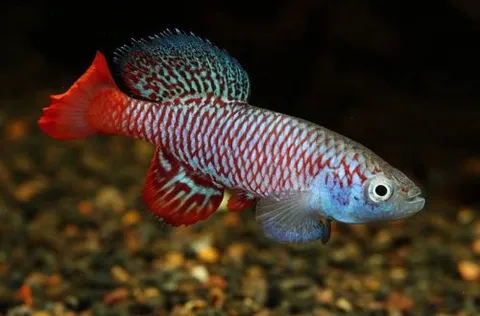
Nothobranchius kirki
Nothobranchius kirki, scientifically known as Nothobranchius kirki, belongs to the family Nothobranchiidae, or African Rivulines. This is an attractive fish with a distinct personality, especially the males. While…
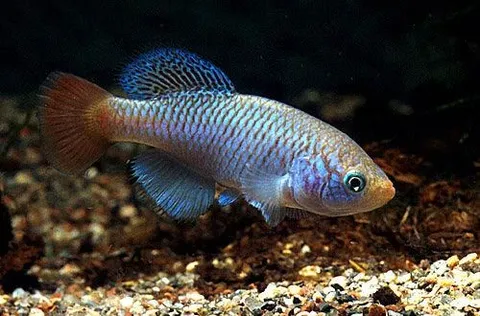
Nothobranchius ugandensis
Nothobranchius ugandensis, more commonly known as the Uganda killifish, belongs to the family Nothobranchiidae, or African rivulines. These are energetic fish with a vibrant disposition, quite easy to care for, and…
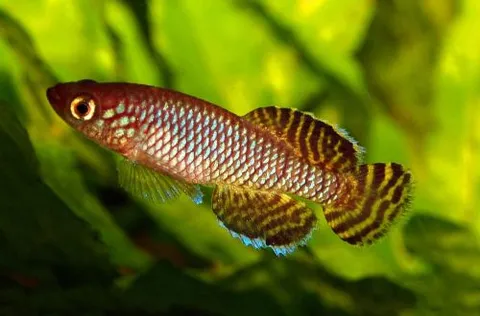
Nothobranchius korthausae
Nothobranchius korthausae, or Korthaus' Nothobranch, is a species belonging to the family Nothobranchiidae, and although its coloration is not particularly original, the overall appearance of the fish is quite…
Nothobranchius patrizii
Nothobranchius patrizii is a representative of the family Nothobranchiidae, also known as African Rivulines. These fish are characterized by their bright, lively nature, especially the males. Although their keeping is…