Temperature24 – 30 °C
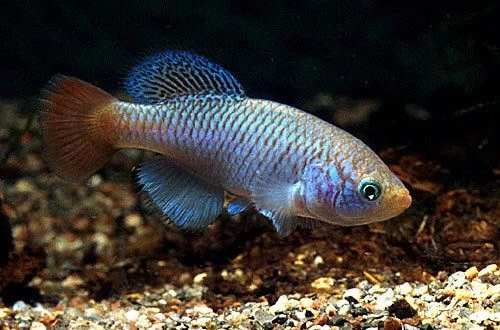
Nothobranchius ugandensis, more commonly known as the Uganda killifish, belongs to the family Nothobranchiidae, or African rivulines. These are energetic fish with a vibrant disposition, quite easy to care for, and their breeding method is particularly unique.
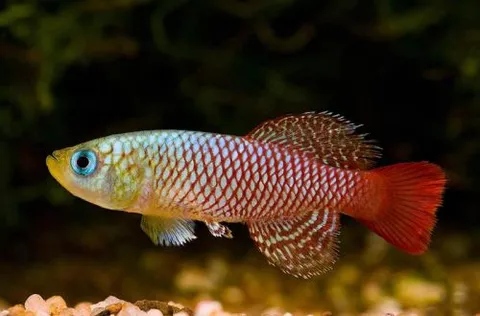
Adults reach a length of about 6 cm. Males are generally larger than females and have more intense coloration. Their bodies are colored in blue hues, with each scale having a burgundy edge. Red pigment predominates on the back, dorsal fin, and tail. Females, on the other hand, are characterized by light gray tones and translucent, colorless fins.
This fish is native to Africa. It can be found in shallow streams and rivers that form the drainage system of Lakes Albert, Kyoga, and Victoria in Kenya and Uganda. Its habitat is typically a shallow, murky body of water with a silty bottom, which is prone to drying out during the dry season. Usually, there is no aquatic vegetation in such places.
Males exhibit pronounced territorial behavior and can be aggressive towards other males. Females, in contrast, are peaceful. In a small aquarium, it is recommended to keep one male with several females. This species coexists well with other fish of comparable size, excluding, however, closely related Nothobranchius species.
For a group of 4–5 fish, the minimum aquarium volume should be 40 liters. They are undemanding in terms of care: it is sufficient to maintain optimal water parameters (pH and dGH) within acceptable temperature limits and regularly remove organic waste, such as food remnants and excrement. The aquarium decor can be chosen at your discretion. If breeding is planned, it is recommended to use special fibrous peat, pre-treated for aquarium conditions, coconut fibers, or a specialized spawning substrate as the bottom material. Lighting should be subdued, as excessive light can lead to a loss of color intensity in males. Floating plants will not only create the necessary shade but also prevent fish from jumping out of the aquarium.
It is important to clarify the diet with suppliers. Most often, the diet consists of live or frozen foods. Nevertheless, some breeders successfully acclimate these fish to alternative types of food, such as dry flakes, granules, and other specialized feeds.
The breeding process of Nothobranchius ugandensis is a long and challenging endeavor that is unlikely to be suitable for a beginner aquarist. This is due to the need to recreate natural conditions. In their natural environment, the fish spawn at the end of the wet season, as drought approaches. The eggs are laid in the substrate, and as the body of water dries up, the fertilized eggs remain “preserved” in the semi-dry substrate for several months. They remain in this state until the start of the rains. As soon as the bodies of water fill with water again, fry begin to emerge, which grow very quickly and reach sexual maturity by 6–7 weeks.
The fish are hardy and undemanding. Diseases usually manifest only with a significant deterioration in keeping conditions. In a balanced aquarium ecosystem, health problems are generally absent.
When choosing Nothobranchius ugandensis, carefully inspect the fish for any signs of oodiniosis, to which this species is extremely susceptible. A healthy specimen should be active, with clean fins and no plaque or white spots on the body. Avoid purchasing fish that appear lethargic, stay near the surface, or have damaged scales. Given the short life cycle of the species, it is advisable to acquire young specimens to be able to observe their development for the longest possible time.
The essentials: size, tank volume, water parameters and care
An adult reaches 5–6 cm in length. Plan the tank around the maximum size: the fish quickly outgrows a cramped setup.
The recommended volume is 40 L. A smaller tank speeds up nitrate build-up and raises stress levels.
Temperature 24–30 °C, pH 6–7, hardness 4–10 dGH. Stability matters more than exact values: sudden swings are harder on the fish than a small deviation from the ideal.
Around 1 years when kept properly. Lifespan depends directly on tank volume, water quality and a varied diet.
Temperament: territorial (often aggressive). Keep this in mind when choosing tank mates.
Recommended setup: pair (male/female). Ignoring this is a common cause of stress and disease.
Diet type: plant-based (algae, vegetables). Feed small portions that are finished within a couple of minutes — overfeeding does more harm than underfeeding.
The scientific name of the species is Nothobranchius ugandensis, family Nothobranchiidae.
The water suits 196 of 208 plants in the catalogue — the easiest ones are shown first.
Afzelius's AnubiasAnacharisAnubiasBrazilian PennywortDwarf CloverDwarf CloverDwarf HygrophilaDwarf SagittariaDwarf ValGuppy GrassHornwortJava FernJava MossMoneywortMud SwordNair's LagenandraNarrow Leaf AnacharisNarrow-leaf CloverStringy MossSüsswassertangTaiwan MossTape GrassTemple PlantUssuri Watermilfoil
Matched by family, categories and overlapping keeping conditions
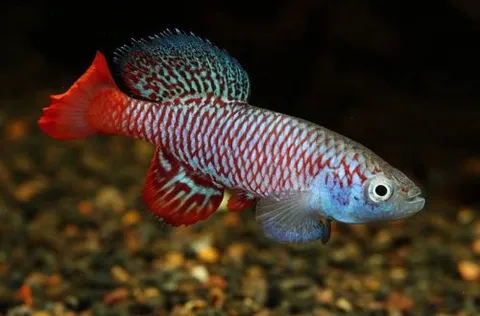
Nothobranchius kirki
Nothobranchius kirki, scientifically known as Nothobranchius kirki, belongs to the family Nothobranchiidae, or African Rivulines. This is an attractive fish with a distinct personality, especially the males. While…
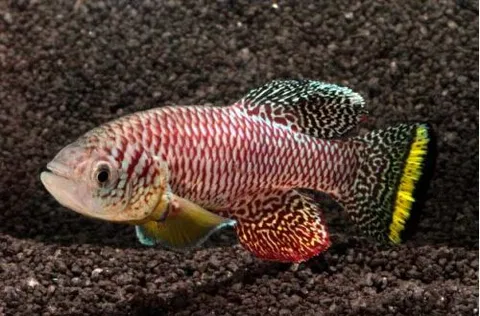
Nothobranchius furzeri
Nothobranchius furzeri, scientifically known as Nothobranchius furzeri, belongs to the family Nothobranchiidae, known as Nothobranchs. This species was named after Richard E. Furzer, who first discovered it. In their…
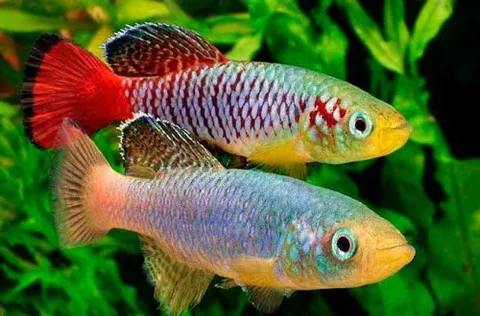
Nothobranchius guentheri
The fish, known by its scientific name Nothobranchius guentheri, belongs to the family Nothobranchiidae, or African killifishes. It was named after Albert Günther, a British ichthyologist of German origin (1830–1914);…
Nothobranchius palmqvisti
The fish Nothobranchius palmqvisti, known scientifically as Nothobranchius palmqvisti, is a member of the family Nothobranchiidae, which includes African rivulines, or Nothobranchius. It is named in honor of G.…